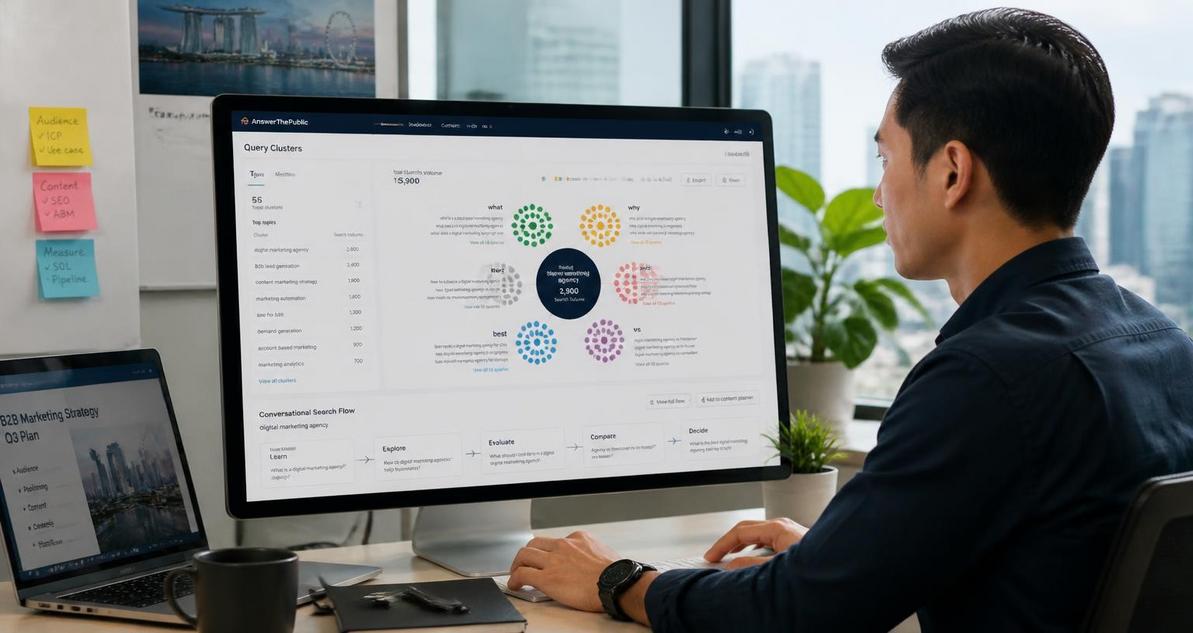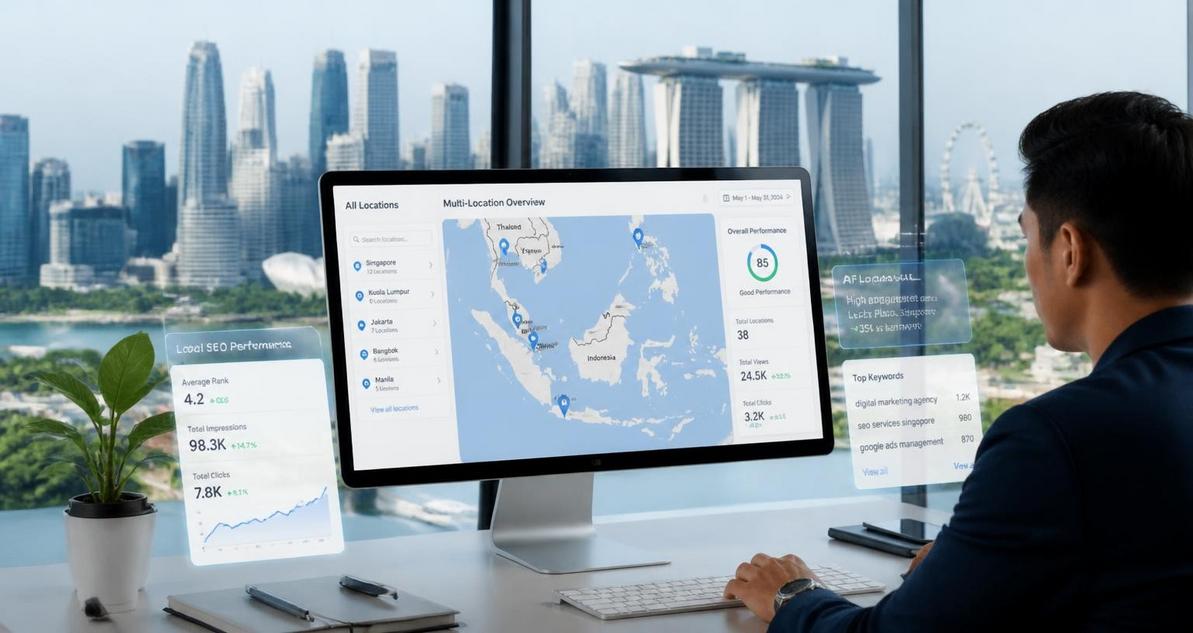
For brands operating across Singapore and the Philippines, local search is no longer just about ranking a storefront on Google Maps. It now extends to how accurately a business appears across search engines, map platforms, directory ecosystems, and emerging augmented reality overlays that consumers use to discover nearby locations. When a customer points a mobile device at a street or storefront and sees business information layered into an AR map experience, the quality of the underlying local data determines whether the listing is useful, trustworthy, and conversion-ready. That makes multi-location management a technical SEO discipline, not just a marketing task.
Multi-location businesses in fast-moving urban markets face a distinct problem set. Singapore has dense retail corridors, mixed-use developments, and highly specific location intent, while the Philippines has a broader geographic spread, varied address formats, and stronger dependence on mobile-first discovery. In both markets, local SEO tools must do more than update a name, address, and phone number. They need to normalize location data, push consistent attributes to publishers, track duplicate suppression, monitor review signals, and support structured data that can be reused across map and AR environments. The best tools reduce operational friction while improving data integrity at scale.
What Multi-Location AR Map Management Actually Requires
Managing AR maps across multiple branches starts with a clean location data layer. That layer includes canonical business names, geocoded coordinates, service areas, store hours, categories, attributes, images, and location-specific landing page URLs. AR systems and map layers depend on precise latitude and longitude because visual overlays often trigger from proximity, line-of-sight, or camera orientation. If the backend location record is incomplete or inconsistent, the AR layer can surface the wrong store, an outdated pin, or an incorrect call-to-action.
The local SEO platform you choose should support field-level governance. That means one source of truth for each location, controlled editing permissions, audit logs, and the ability to syndicate updates to major directories. For businesses in Singapore and the Philippines, this matters because local competition can be intense around commercial hubs, transport nodes, and shopping centers, where even small ranking shifts affect foot traffic. It also matters because address conventions vary widely, especially in the Philippines, where users may search by barangay, district, city, or landmark rather than a standard postal format.
Core Technical Capabilities to Prioritize
A reliable tool for multi-location AR maps should support geospatial accuracy, duplicate suppression, structured data distribution, and listing synchronization. It should also expose reporting at the location level, not just the brand level. If a franchise in Cebu has strong visibility but a branch in Quezon City is missing from map surfaces because of a data mismatch, the platform must make that variance obvious. This is where enterprise local SEO differs from basic listing management.
Look for platforms that let you manage attributes by location type. A mall kiosk, a corporate office, and a service center do not need the same fields or schema. The best systems allow conditional fields, bulk import with validation rules, and API access for integration with CRM, CMS, or store-locator stacks. For AR use cases, integration with location intelligence and custom map front ends is especially valuable because it lets teams keep the same data layer synchronized across web, mobile, and immersive discovery experiences.
The Best Tool Categories for Multi-Location Local SEO
No single platform solves every local search problem. The strongest stack usually combines a location data platform, a reputation management layer, a site-level schema workflow, and a monitoring tool. Businesses that treat these as separate but connected systems tend to manage multi-location visibility more effectively than teams relying on one all-in-one dashboard alone.
Location Data Management Platforms
These tools act as the system of record for business location information. They centralize NAP data, hours, categories, attributes, photos, and store details, then distribute them to aggregators, directories, and map ecosystems. For AR map management, this layer is essential because it determines the authoritative version of each location. If a business opens a new branch in Makati or changes operating hours in Orchard, the platform should support rapid propagation without manual edits across dozens of profiles.
Strong examples in this category typically include enterprise listing platforms, API-based syndication, and bulk update controls. The best fit depends on how many locations you manage and how customized your store-locator or AR experience is. Businesses with complex hierarchies, such as parent brand, region, country, and branch, should prioritize tools that can manage inheritance rules and exceptions without creating data conflicts.
Local Rank Tracking and Grid Tools
Rank tracking tools measure visibility across a geographic grid rather than a single keyword position. This is especially useful for AR maps because spatial visibility is local by nature. A location may rank well near the business district but poorly a few kilometers away, which affects how often it appears in mobile discovery or location-based overlays. Grid tools help teams see these micro-patterns and identify where proximity, prominence, or relevance is hurting performance.
For Singapore, grid tracking is useful around dense clusters such as Marina Bay, Jurong, or Tampines, where multiple businesses compete within small radii. In the Philippines, it can reveal how visibility changes across metro centers such as Metro Manila, Cebu, and Davao, where traffic patterns and local intent can shift rapidly. When paired with business category analysis, grid data can inform which attributes, photos, and landing pages need optimization for each branch.
Reputation and Review Management Tools
Customer reviews influence both trust and local ranking signals. For multi-location brands, review management tools help teams respond at scale without losing branch-level nuance. A location that receives repeated complaints about parking, accessibility, or long wait times may need operational fixes, not just a templated response. The strongest tools route reviews by location, highlight sentiment trends, and connect feedback to service quality issues.
In AR map experiences, ratings and reviews can be surfaced contextually when users point their camera at nearby places. That makes consistency important. If one location has strong ratings on Google but incomplete data elsewhere, the brand risks creating a fragmented trust experience. Review management platforms help maintain a coherent reputation layer across the same entity set used for maps and AR.
SEO Features That Matter Most for AR Map Visibility
AR maps and local search depend heavily on structured data. Schema markup, especially LocalBusiness and more specific subtype schemas, helps search engines understand business identity and location attributes. If the site architecture includes one page per location, each page should carry accurate schema, embedded map coordinates, opening hours, service areas where appropriate, and unique content that reflects the actual branch. Tools that validate schema at scale are valuable because even one malformed property can reduce consistency across a large network.
Another priority is duplicate management. Duplicate listings confuse users, dilute ranking signals, and create inconsistent paths into the map ecosystem. The best tools detect duplicates, suppress them where possible, and flag discrepancies in business names or coordinates. This is critical for locations in shared buildings or malls, common across Singapore and major Philippine cities, where multiple entrances and tenant naming conventions can produce conflicting signals.
Structured Data and Landing Page Governance
Local SEO tools should support template-driven landing pages with controlled, location-specific fields. This helps avoid thin content while preserving brand consistency. For example, a hospital chain, retail network, or food service brand can use the same page framework but populate branch-specific amenities, transport instructions, and operating hours. When the location page is canonical and accurate, it becomes a stronger asset for both organic search and AR-enabled map interactions.
Governance matters because branch teams often make ad hoc edits. A good workflow includes approval states, content versioning, and change history. That way, if a store manager updates hours during a holiday schedule or a compliance team updates the legal name of an entity, the change is tracked, reviewed, and synchronized. This reduces mismatches between the website, directory listings, and map surfaces.
Operational Workflows for Teams in Singapore and the Philippines
Multi-location SEO succeeds when the workflow is practical for regional teams. Central marketing may own policy and templates, while local operators supply real-time updates. This hybrid model is common in Southeast Asia because brands need both control and responsiveness. If a location closes early due to weather, construction, or holiday observance, the update should be easy to submit, but it still needs approval before syndication.
Singapore-based teams often benefit from tighter governance because of the country’s compact geography and highly competitive search environment. Precision is critical when multiple locations sit within the same transport corridor or commercial district. Philippine teams often need stronger normalization controls because location data may reference local landmarks, mixed-language naming patterns, or partial address formats. A tool that handles both cases without manual cleanup saves significant operational time.
Integration with CRM, POS, and Store-Locator Systems
The most effective local SEO stacks integrate with upstream systems. CRM data can confirm branch ownership and service segments. POS or operational systems can trigger hours updates, inventory notes, or service availability changes. Store-locator software can feed the same location IDs into the website and into AR-ready map layers. This reduces the risk of mismatch between what the customer sees and what the business can actually deliver.
API-first tools are especially useful here. They allow teams to automate updates instead of relying on bulk spreadsheet uploads. For brands with dozens or hundreds of locations, automation improves speed and reduces the possibility of human error. It also supports future expansion into voice search, in-app navigation, and immersive map interfaces that rely on the same normalized location dataset.
How to Evaluate Vendors Without Getting Trapped by Feature Lists
Vendors often advertise broad capabilities, but the real test is how well the platform handles scale, exceptions, and reporting. Ask whether the system supports multi-brand hierarchies, location-level permissions, API access, duplicate detection, and geospatial reporting. Verify whether the vendor can handle updates across major directories used in your markets and whether it supports your preferred map ecosystem and schema workflow.
Also assess data portability. A serious enterprise platform should let you export clean location records, audit changes, and preserve canonical IDs. This becomes important when you expand into new countries or migrate technology stacks. If your business is building an AR map layer now, you do not want to rework the data model later because the platform locked you into an inflexible structure.
Support quality matters as well. Look for implementation assistance, documentation, and regional knowledge. A platform can only deliver value if your team knows how to configure it correctly, and if the vendor understands the address and discovery patterns in Singapore and the Philippines. Local market nuance often determines whether a deployment succeeds or becomes a maintenance burden.
Implementation Checklist for a Multi-Location AR Map Stack
Use this checklist to operationalize the right toolset and avoid common local SEO gaps:
- Define a canonical location data model with unique IDs, standardized names, verified coordinates, and required branch attributes.
- Choose a listing management platform that supports bulk updates, API integration, change approval, and duplicate suppression.
- Deploy grid-based local rank tracking to measure visibility around each branch, not only at one generic search point.
- Connect review management workflows to local branch ownership so responses reflect the correct operational context.
- Standardize location landing pages with unique copy, schema markup, operating hours, and branch-specific content.
- Validate structured data regularly to ensure LocalBusiness and related schemas render correctly across every location page.
- Integrate with CRM, POS, and store-locator systems so operational data stays synchronized with public location profiles.
- Audit every location quarterly for duplicate listings, missing attributes, inconsistent hours, and incorrect geocoding.
- Map responsibilities by role so central marketing, regional managers, and local operators know which fields they can edit.
- Prepare AR-ready metadata for location overlays, including coordinates, imagery, and verified descriptions that match the live site and listings ecosystem.
Brands that treat local SEO as a connected data infrastructure problem usually outperform those that manage it as a set of disconnected listing tasks. In Singapore and the Philippines, where location intent is highly commercial and mobile usage is central to discovery, the value of a disciplined tool stack is immediate. The best local SEO tools for managing multi-location AR maps are the ones that protect data quality, automate distribution, and give teams enough control to scale without sacrificing precision.

I am Tricia Huang Mei, an Advertising Partner in Sotavento Medios with over two decades of experience in the Singapore advertising and business sectors. My career is defined by a commitment to driving high-impact marketing campaigns and fostering sustainable growth for the diverse business portfolios I manage.