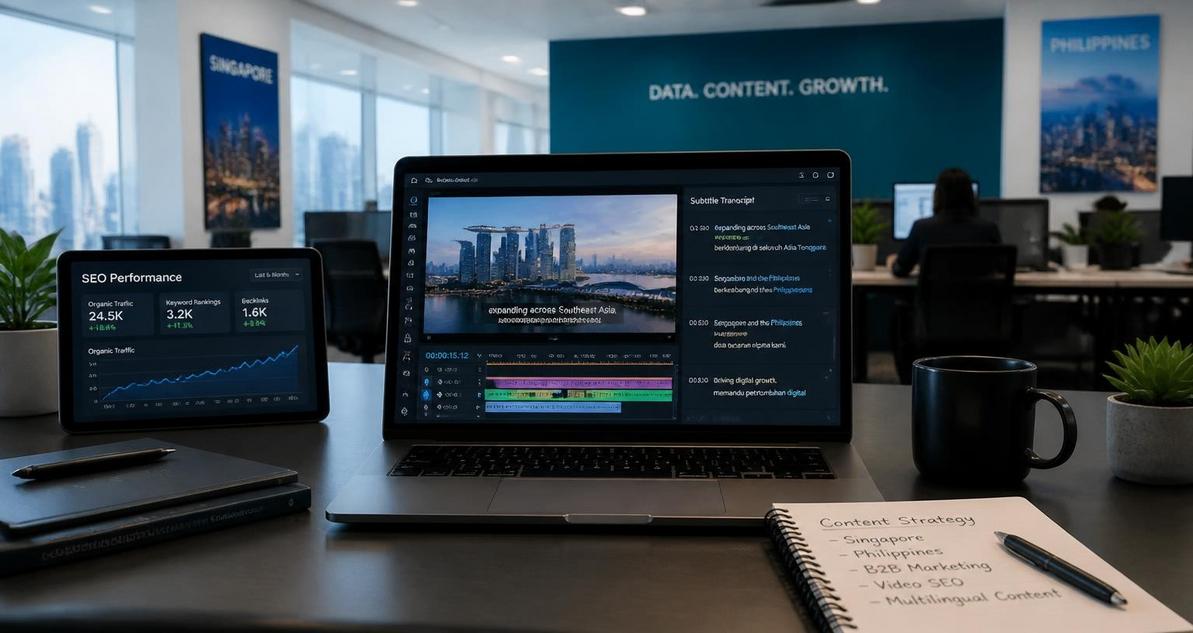
For businesses in Singapore and the Philippines, video has moved from a branding asset to a search visibility asset. Teams are no longer producing video only for awareness campaigns; they are using short-form clips, product explainers, and multilingual snippets to capture search demand, support conversion pages, and improve engagement on channels like YouTube, LinkedIn, and embedded website players. The challenge is not simply creating more video. It is producing video snippets that align with keyword intent, metadata standards, accessibility requirements, and platform-specific ranking signals. That is where AI video tools have become operationally relevant. They can accelerate editing, transcription, repurposing, caption generation, and content adaptation, but not every platform is equally strong for SEO-oriented output. The most effective choice depends on how well the tool supports semantic metadata, transcript quality, chaptering, subtitle accuracy, multilingual workflows, and integration with your broader content stack.
What Makes a Video Snippet SEO-Friendly
SEO-friendly video snippets are not defined only by length. They are built to help search engines, video platforms, and users understand what the clip covers, who it serves, and why it should rank. For B2B marketers in Singapore and the Philippines, this matters because buyers often research software, services, and technical solutions through a mix of search, social, and embedded video on landing pages. A snippet that is optimized for discovery should have a clear topic, a concise title, a strong transcript, and text assets that reinforce relevance.
From a technical SEO perspective, the strongest video snippets usually include a keyword-aligned title, descriptive captions, a full transcript, a relevant thumbnail, and schema markup on the hosting page. If the video sits on a website, VideoObject structured data can help search engines interpret the content more reliably. On YouTube, a clean transcript, chapter markers, and a compelling first line in the description improve the platform’s understanding of the video topic. For snippets embedded in service pages, a short summary paragraph around the video can strengthen topical relevance and support indexation.
Core SEO Signals That AI Video Tools Should Support
An AI video tool should help you operationalize the following signals consistently across content production:
- Accurate speech-to-text transcription for captions and on-page text extraction.
- Subtitle formatting that improves readability and watch retention.
- Scene detection for editing chapters, highlights, and clip boundaries.
- Metadata generation that reflects search intent without keyword stuffing.
- Multilingual captioning for English, Tagalog, and regional variations when required.
- Export options compatible with CMS, YouTube, LinkedIn, and paid media workflows.
When these outputs are weak, the snippet may still look polished, but it will underperform in organic discovery and on-page engagement.
Comparison Framework for AI Video Tools
Comparing AI video tools for SEO-friendly snippets requires more than looking at editor features. The relevant lens is workflow fit. A marketing team in Manila may need fast social snippet production with multilingual captions and low-friction approvals. A technical services firm in Singapore may prioritize transcript fidelity, brand control, and integration with a content management system. The best tool is the one that maps to your publication process and your search objectives.
1. Transcription Accuracy and Speaker Handling
Transcription quality is foundational because search engines and platform indexing rely heavily on text signals. Tools that handle accents, overlapping speech, and domain-specific terminology perform better for business content, especially when the video includes product names, compliance language, or technical acronyms. In Southeast Asian markets, this matters because many teams produce English-language content with local pronunciation patterns. AI transcription should also distinguish speakers where possible, since dialogue-heavy videos benefit from cleaner caption files and more usable excerpts for blog repurposing.
2. Clip Extraction and Scene Intelligence
SEO-friendly snippets often come from long-form webinars, product demos, or interviews. AI tools that can identify topic shifts, pause patterns, and visual scene changes reduce manual editing time. Scene detection is especially useful when repurposing one source asset into multiple micro-snippets for YouTube Shorts, LinkedIn, and website embeds. However, automation should be reviewed by a human editor, because AI may select a clip that is visually strong but semantically weak. For SEO, the clip must still answer a search-driven question or support a specific intent stage.
3. Metadata and Caption Workflow
Some tools produce captions only. Others help generate titles, descriptions, and thumbnail text suggestions. The latter is more useful for SEO, provided the output is editable and not overly generic. Strong systems support SRT, VTT, and text transcript exports, allowing marketing teams to reuse the same asset across platforms. They also make it easier to insert relevant keywords naturally into page copy, video descriptions, and content briefs.
4. Multilingual and Regional Content Support
For Singapore and the Philippines, multilingual content capability is a practical differentiator. Singapore-based teams may need English and Mandarin support for regional campaigns, while Philippine businesses may need English-first assets with Tagalog support for audience segmentation or customer education. AI tools that produce accurate subtitles in multiple languages help broaden reach without rebuilding the entire asset. This is particularly relevant for regional B2B firms targeting cross-border buyers, where a single master video can be localized into multiple snippet variants.
How Leading AI Video Tools Compare for SEO Use Cases
The market includes a range of AI video tools, but their strengths differ by workflow. Some are built for fast social clip generation, while others are better at transcript-driven production or enterprise collaboration. For SEO use cases, the right comparison criteria are not just speed and visual polish. You should assess transcript quality, export flexibility, brand control, and how well the tool supports repurposing into search-aligned assets.
Tools Oriented Toward Rapid Social Snippet Creation
Tools in this category are efficient for extracting short clips from webinars, interviews, and livestreams. They are useful when marketing teams need a high volume of derivative assets for organic social and paid amplification. Their strength is speed, especially when identifying engaging moments automatically. The tradeoff is that SEO precision can be limited if the platform prioritizes virality signals over semantic clarity. These tools are effective when paired with a content editor who can adjust titles, captions, and on-screen framing to preserve search relevance.
Tools Focused on Transcription and Content Repurposing
Some AI platforms are stronger at turning video into text and structured content. These are particularly valuable for SEO because they support transcript-led workflows. A marketing team can use the transcript to create a blog post, FAQ section, landing page enhancement, or video description with keyword alignment. This type of tool is often better for B2B content operations because it helps extend the lifecycle of one video into multiple search assets. It is especially useful when the goal is not just to publish a clip, but to build topical authority around a service line or product category.
Tools with Enterprise Governance and Workflow Controls
For larger organizations, governance matters. Enterprise-grade tools may offer user permissions, approval flows, shared libraries, and template controls. These features reduce inconsistency when multiple departments publish content. If a regulated or high-complexity business wants to maintain brand and compliance alignment, governance is not optional. It also protects SEO quality by ensuring that titles, transcripts, and descriptions follow a consistent naming logic. Consistency improves indexing clarity and makes cross-channel content audits much easier.
Technical SEO Considerations When Using AI Video Tools
AI tools do not replace video SEO strategy. They support execution, but the technical layer still needs human oversight. The most common mistake is assuming that a polished clip automatically performs well in search. In practice, the surrounding metadata and page architecture determine whether the content is discoverable, indexable, and relevant.
Schema Markup and Page Context
If you host the video on your site, use VideoObject schema to help search engines interpret the asset. Include the title, description, thumbnail URL, upload date, and duration where applicable. Place the snippet near supporting copy that reinforces the target keyword and the user problem it solves. This helps connect the visual asset to the broader topical context of the page. AI-generated transcripts can also be embedded below the video to expand indexable text.
Transcript Optimization Without Keyword Stuffing
Transcripts should remain natural, but they can still be optimized. If the transcript is accurate, you can refine the surrounding title, summary, and chapter headings to reflect the primary intent. For example, a product demo snippet can be framed around use case language rather than feature jargon alone. That approach is more useful for organic discovery because it aligns with how buyers search. Avoid forcing keywords into spoken lines or captions. Search engines and users both respond better to clarity than repetition.
Engagement Signals and Watch Behavior
Video performance is influenced by engagement, not just metadata. Better openings, tighter edits, and clearer value propositions improve retention. AI can help identify dead air, filler phrases, and weak segments, but the editorial team still needs to define the message architecture. For snippets intended for search landing pages, the first few seconds should confirm relevance quickly. A good hook reduces abandonment and helps the page deliver a stronger user experience.
Practical Selection Criteria for Singapore and Philippines Teams
When shortlisting AI video tools, business teams should evaluate how the platform fits local operational realities. In Singapore, where many organizations run lean marketing teams with high quality expectations, workflow efficiency and compliance controls often matter most. In the Philippines, where content production may scale quickly across services, e-commerce, or B2B lead generation, cost efficiency and ease of use may carry more weight. The correct tool depends on content volume, review complexity, and channel mix.
Before committing to a platform, review these operational criteria:
- Does the tool produce reliable captions for English and the languages your market requires?
- Can your team export transcripts, subtitle files, and editable descriptions without friction?
- Does it support collaboration, approvals, and brand consistency across users?
- Can it handle long-form source videos and convert them into short snippets efficiently?
- Does it integrate with your CMS, cloud storage, or publishing workflow?
- Will the output support SEO assets beyond the video itself, such as blog excerpts and FAQ content?
These questions are more useful than feature checklists alone because they measure operational value, not just interface design. A tool that saves ten minutes in editing but adds confusion to metadata governance may not improve SEO outcomes at all.
Implementation Checklist for SEO-Friendly Video Snippets
To operationalize AI video tools effectively, start with a repeatable process rather than a one-off experiment. Use the same production logic across webinars, demos, interviews, and customer stories so every snippet can be measured against the same SEO and engagement criteria. A disciplined workflow also makes it easier to scale across business units and regions.
- Define the target search intent before editing any source video.
- Choose a source asset with clear subject matter and strong audio quality.
- Use AI transcription to generate a clean base transcript and review it manually for accuracy.
- Extract one short clip per intent theme, not one clip per arbitrary highlight.
- Write a keyword-aligned title that reflects the user problem, not just the internal product name.
- Add captions, chapter markers, and a concise description with supporting terminology.
- Embed the snippet on a relevant page with surrounding copy and VideoObject schema.
- Repurpose the transcript into a blog excerpt, FAQ block, or social post to reinforce topical authority.
- Track performance by page engagement, video watch time, and assisted conversions, not by views alone.
- Audit output monthly to refine clip selection, metadata quality, and localization priorities.
Teams that follow this process can turn AI video tools into a measurable SEO asset rather than a simple production shortcut. The value comes from disciplined reuse, consistent metadata, and a workflow that connects video editing to search strategy, content operations, and regional market requirements.

I am Tricia Huang Mei, an Advertising Partner in Sotavento Medios with over two decades of experience in the Singapore advertising and business sectors. My career is defined by a commitment to driving high-impact marketing campaigns and fostering sustainable growth for the diverse business portfolios I manage.