
Why We Need “AI Nutrition Labels” for Hardware and Model Transparency
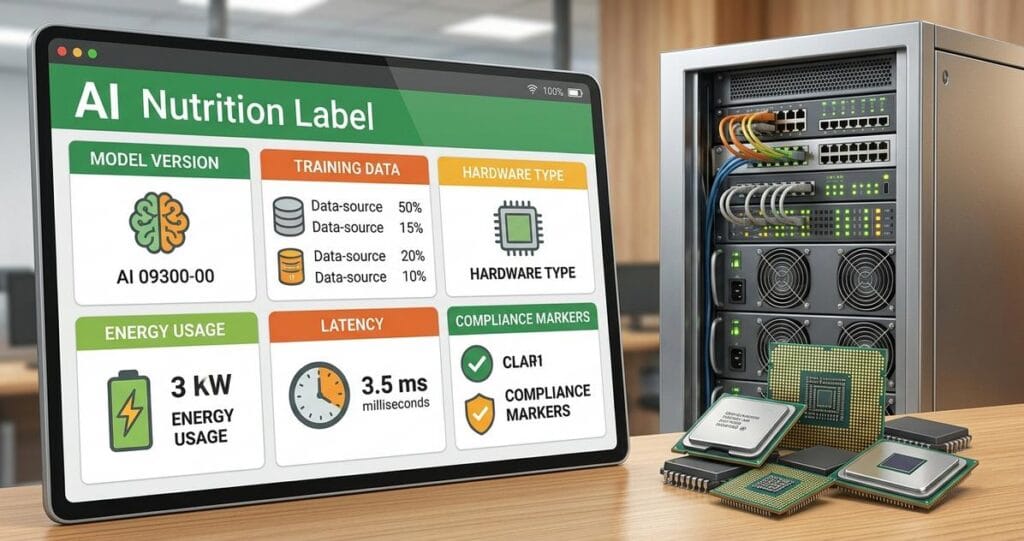
Singapore and the Philippines are moving fast into AI adoption, but the commercial stakes are very different from a consumer app experiment. In both markets, enterprises are deploying AI inside procurement workflows, customer service stacks, fraud detection engines, logistics planning, and regulated decision systems where model behavior is only one side of the risk equation. […]
How AI is Designing Its Own Successor: The Loop of Recursive Self-Improvement

Singapore and the Philippines are not watching artificial intelligence evolve from the sidelines. Both markets are already using AI to compress service delivery cycles, optimize operations, and reduce dependency on scarce specialist talent. That matters because the next competitive shift is not only about using AI tools more efficiently, but about whether AI systems can […]
Why “Ambient Computing” Means You’ll Never Have to Type a Command Again

For business leaders in Singapore and the Philippines, ambient computing is not a consumer novelty. It is a practical shift in how people interact with software, devices, and operational workflows. Instead of opening an app, typing a command, or navigating layered menus, users will increasingly rely on systems that understand context, infer intent, and act […]
The Future of Work: How Humanoid Robots and AI Agents Co-exist in 2026
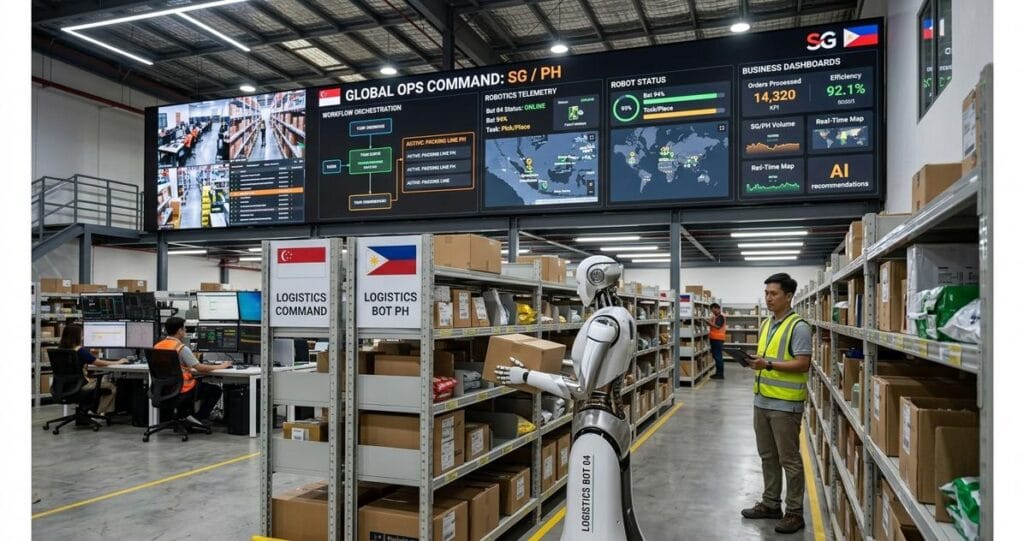
By 2026, the workplace in Singapore and the Philippines will not be defined by a single wave of automation. It will be shaped by two very different classes of machine labor working side by side: humanoid robots handling physical tasks in structured environments, and AI agents coordinating information work across systems, teams, and customer channels. […]
AI-Native Operating Systems: Why Windows and macOS are Being Rebuilt for 2026
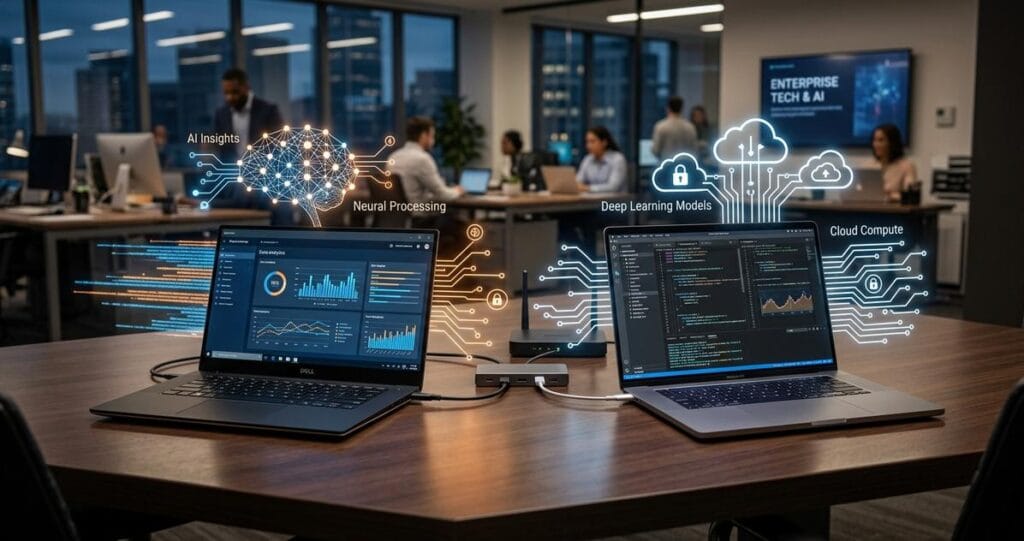
For business leaders and technical teams in Singapore and the Philippines, the operating system is no longer a passive layer that simply launches applications and manages files. It is becoming the control plane for on-device AI, secure automation, and identity-aware workflows. As enterprises adopt copilots, local inference, speech interfaces, semantic search, and agentic task execution, […]
The Rise of “Small Language Models” (SLMs) on Consumer Hardware

Small language models are moving from experimental side projects to practical production assets, and the shift matters for businesses across Singapore and the Philippines. For teams balancing privacy, latency, cost control, and edge deployment, SLMs offer a compelling alternative to large, cloud-dependent foundation models. The real story is not that smaller models are replacing larger […]
How Decentralised AI Models (DeAI) are Challenging Centralised Big Tech

For technology leaders in Singapore and the Philippines, the rise of decentralised AI models, often called DeAI, is more than a philosophical shift. It is becoming a practical response to the same structural issues that have defined enterprise AI adoption for years: dependence on a small number of cloud providers, opaque model governance, rising inference […]
Data-Driven: The Energy Cost of One AI Query in 2026 vs 2023

For business leaders in Singapore and the Philippines, the energy cost of an AI query is no longer an abstract sustainability talking point. It now affects cloud operating budgets, data center planning, procurement decisions, and the architecture choices behind customer service, analytics, software development, and search experiences. In 2023, most AI teams still treated inference […]
Why Domain-Specific Semiconductors are the Key to Faster, Cheaper AI Models

As AI adoption accelerates across Singapore and the Philippines, the pressure is no longer just on model quality. Business teams now need inference that is faster, cheaper, more energy efficient, and easier to deploy at scale across cloud, edge, and hybrid environments. That requirement is exposing a hard truth in AI infrastructure: general-purpose computing was […]