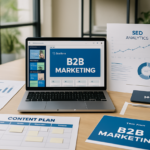
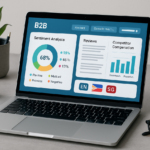
The B2B digital marketing landscape in Singapore and the Philippines is undergoing a profound transformation. As businesses in these dynamic Southeast Asian economies strive for competitive advantage, the traditional approaches to reaching decision-makers are no longer sufficient. The advent of artificial intelligence, the imperative for hyper-personalization, and the strategic utilization of data are not merely trends; they are fundamental pillars shaping the future of B2B engagement. For business decision-makers and technical professionals across industries, understanding and integrating these advanced strategies is paramount to unlocking new growth opportunities and establishing enduring market leadership. This article explores how AI, personalization, and data-driven insights are redefining B2B digital marketing, offering actionable strategies for businesses operating within the unique contexts of Singapore and the Philippines.
The AI Revolution in B2B Marketing: Beyond Automation
Artificial intelligence is no longer a futuristic concept; it is an active force reshaping every facet of B2B digital marketing. In Singapore and the Philippines, where digital adoption rates are high and competition is fierce, AI offers unprecedented capabilities for efficiency, insight, and competitive differentiation. Its impact extends far beyond simple task automation, venturing into sophisticated areas like predictive analytics, content optimization, and hyper-personalized customer journeys.
AI-Powered Predictive Analytics for Lead Generation and Sales Forecasting
One of AI’s most significant contributions to B2B marketing is its ability to analyze vast datasets and predict future outcomes. For businesses in Singapore and the Philippines, this means moving beyond reactive lead qualification to proactive identification of high-potential accounts. AI algorithms can process historical data, firmographics, technographics, and behavioral patterns to score leads with remarkable accuracy, indicating which prospects are most likely to convert. This allows sales and marketing teams to prioritize their efforts, focusing resources on accounts that offer the highest return on investment. Furthermore, AI can forecast sales trends, helping businesses anticipate market shifts and adjust their strategies accordingly, a critical advantage in fast-evolving markets.
Intelligent Content Creation and Optimization
Content remains king in B2B marketing, but the sheer volume required to engage diverse audiences can be overwhelming. AI tools are now assisting in content creation, generating outlines, drafting initial content pieces, and even optimizing existing content for SEO and readability. For instance, AI can analyze search trends specific to Singaporean or Philippine markets, identifying keywords and topics that resonate with local business decision-makers. Beyond creation, AI-driven platforms can personalize content delivery, ensuring that the right message reaches the right individual at the optimal time, whether through email, website experiences, or social media channels. This level of precision enhances engagement and strengthens the brand’s authority.
Enhancing Customer Experience with AI-Driven Chatbots and Virtual Assistants
In B2B, customer experience is a key differentiator. AI-powered chatbots and virtual assistants provide instant, 24/7 support, answering common queries, qualifying leads, and guiding prospects through the sales funnel. For businesses serving clients across different time zones or with varying operational hours in Singapore and the Philippines, these AI tools ensure consistent and immediate engagement. They free up human sales and support teams to focus on complex issues and strategic interactions, ultimately improving customer satisfaction and operational efficiency.
Hyper-Personalization at Scale: Tailoring the B2B Journey
The days of one-size-fits-all marketing are over, especially in the B2B sector where buying cycles are longer and decisions involve multiple stakeholders. Hyper-personalization, driven by data and AI, is about delivering highly relevant, individualized experiences to each prospect and customer. This approach acknowledges the unique needs, challenges, and preferences of every business, fostering deeper relationships and accelerating conversion paths.
Leveraging First-Party Data for Deeper Insights
The foundation of effective hyper-personalization lies in robust data collection and analysis, particularly first-party data. This includes website interactions, CRM data, email engagement, and past purchase history. For B2B marketers in Singapore and the Philippines, understanding the specific pain points of local industries, the regulatory environment, and cultural nuances is crucial. By meticulously analyzing this data, businesses can segment their audience with precision, creating buyer personas that reflect the actual decision-makers they aim to reach. This granular understanding allows for the crafting of messages and offers that directly address specific business challenges.
Account-Based Marketing (ABM) Enhanced by Personalization
Account-Based Marketing (ABM) is a strategic approach that treats individual high-value accounts as markets of one. When combined with hyper-personalization, ABM becomes incredibly powerful. In the context of Singapore and the Philippines, where key industries like finance, technology, and manufacturing have distinct needs, ABM allows agencies like Sotavento Medios to develop bespoke campaigns for target companies. This involves identifying all key stakeholders within an account, understanding their roles and influence, and then delivering personalized content and outreach that speaks directly to their individual concerns. Dynamic website content, personalized email sequences, and targeted advertising campaigns can all be orchestrated to create a cohesive and highly relevant experience for each account.
Dynamic Content and Personalized User Experiences
Beyond email, personalization extends to every touchpoint. Websites can dynamically adjust content based on a visitor’s industry, company size, or past interactions. For example, a visitor from a manufacturing firm in the Philippines might see case studies relevant to their sector, while a finance professional in Singapore might be presented with different thought leadership articles. This dynamic content delivery ensures that every interaction feels tailored, increasing engagement and guiding prospects more effectively through their buyer journey. Implementing such systems requires robust CRM integration and advanced content management capabilities.
Data-Driven Strategies for Competitive Advantage and Measurable ROI
In the complex world of B2B digital marketing, decisions must be grounded in data, not guesswork. Data-driven strategies provide the clarity needed to optimize campaigns, allocate budgets effectively, and demonstrate tangible return on investment (ROI). For businesses operating in the competitive markets of Singapore and the Philippines, this analytical rigor is essential for sustained growth.
Advanced Analytics and Attribution Modeling
Understanding which marketing efforts contribute to conversions is critical. Advanced analytics platforms provide deep insights into customer behavior, campaign performance, and funnel progression. Attribution modeling, in particular, helps B2B marketers assign credit to various touchpoints along the customer journey. Whether it is first-touch, last-touch, linear, or time-decay attribution, selecting the right model allows businesses to understand the true impact of their content, advertising, and engagement strategies. This is especially important in B2B, where the journey can be long and involve multiple interactions across different channels. By accurately attributing success, businesses can refine their spending and focus on channels that yield the best results.
Leveraging First-Party Data for Strategic Decision-Making
The strategic collection and analysis of first-party data are invaluable. This proprietary data, gathered directly from customer interactions, provides a unique and accurate view of your audience. For companies in Singapore and the Philippines, this means understanding local market nuances, customer preferences, and competitive dynamics that third-party data might miss. By integrating data from CRM, marketing automation platforms, website analytics, and sales systems, businesses can create a unified customer profile. This holistic view enables more informed decisions regarding product development, service offerings, and marketing campaign targeting, ensuring that strategies are aligned with real customer needs and market opportunities.
Predictive Lead Scoring and Customer Lifetime Value (CLV)
Beyond identifying immediate leads, data analytics allows for predictive lead scoring, which assesses the likelihood of a lead becoming a valuable customer based on their attributes and behaviors. Furthermore, calculating Customer Lifetime Value (CLV) helps businesses understand the long-term profitability of their customer relationships. By focusing marketing efforts on acquiring and nurturing high-CLV customers, businesses can maximize their profitability and ensure sustainable growth. This is particularly relevant in B2B, where customer relationships are often long-term and high-value.
Navigating the Evolving Landscape: Privacy, Trust, and Ethical AI
As B2B digital marketing becomes more sophisticated, the importance of data privacy, ethical AI use, and building trust cannot be overstated. In Singapore and the Philippines, stringent data protection regulations, such as the Personal Data Protection Act (PDPA) in Singapore and the Data Privacy Act (DPA) in the Philippines, mandate how businesses collect, process, and store personal data. Adherence to these regulations is not just a legal requirement; it is a cornerstone of building and maintaining customer trust.
Compliance with Data Protection Regulations
For B2B marketers, understanding and implementing robust data governance frameworks is essential. This includes obtaining explicit consent for data collection, ensuring data security, and providing transparency about how data is used. Non-compliance can lead to significant penalties and, more importantly, a loss of reputation. Businesses must regularly audit their data practices, train their teams on privacy protocols, and ensure that all marketing technologies and platforms are compliant with local regulations. This proactive approach builds a foundation of trust with prospects and clients.
Ethical AI and Transparency
The deployment of AI in marketing raises ethical considerations. Businesses must ensure that AI systems are used responsibly, without bias, and with transparency. For example, if AI is used for lead scoring, the criteria should be fair and explainable. Transparency in AI usage, such as clearly indicating when a customer is interacting with a chatbot, helps maintain trust. As AI becomes more integrated into decision-making processes, ensuring its ethical application will be critical for long-term success and brand integrity in the B2B space.
Future-Proofing Your B2B Marketing in Southeast Asia
The digital marketing landscape is in constant flux. For B2B businesses in Singapore and the Philippines, staying ahead requires a commitment to continuous learning, agile adaptation, and strategic integration of emerging technologies. Future-proofing your marketing efforts means building a resilient, adaptable framework that can respond to technological advancements and evolving customer expectations.
Embracing Continuous Learning and Agile Methodologies
The pace of technological change demands that marketing teams adopt a mindset of continuous learning. This involves staying updated on the latest AI advancements, personalization techniques, and data analytics tools. Agile marketing methodologies, which emphasize iterative development, rapid experimentation, and continuous feedback, are particularly well-suited for this dynamic environment. By implementing agile practices, B2B marketers can quickly test new strategies, optimize campaigns based on real-time data, and adapt to market changes more effectively.
Integrating Emerging Technologies and Platforms
Beyond AI, other emerging technologies like blockchain for data security and privacy, augmented reality (AR) for immersive product demonstrations, and advanced voice search optimization will play increasingly significant roles. While these may seem niche today, forward-thinking B2B marketers should explore their potential applications. Strategic integration of these technologies, where they add genuine value to the customer journey, will provide a distinct competitive edge. The key is to evaluate new technologies not just for their novelty, but for their ability to solve specific business problems and enhance the customer experience.
Building a Culture of Innovation and Collaboration
Ultimately, future-proofing B2B marketing is about fostering a culture of innovation and collaboration within the organization. This means breaking down silos between marketing, sales, and IT departments. Successful implementation of AI, personalization, and data-driven strategies requires a unified approach, where insights are shared, and efforts are coordinated. Encouraging experimentation, celebrating successes, and learning from failures will create an environment where B2B marketing can thrive amidst constant change.
The future of B2B digital marketing in Singapore and the Philippines is undeniably shaped by the transformative power of AI, the imperative for hyper-personalization, and the strategic leverage of data. For businesses aiming to establish thought leadership and drive tangible growth, embracing these advanced strategies is not optional; it is essential. By investing in AI-driven insights, crafting deeply personalized customer journeys, and making decisions rooted in robust data analytics, B2B organizations can navigate the complexities of the modern digital landscape. Sotavento Medios empowers businesses to harness these forces, turning challenges into opportunities and securing a dominant position in their respective markets. The time to act is now, transforming your B2B marketing into a precision-driven, customer-centric engine for success.

I am Tricia Huang Mei, an Advertising Partner in Sotavento Medios with over two decades of experience in the Singapore advertising and business sectors. My career is defined by a commitment to driving high-impact marketing campaigns and fostering sustainable growth for the diverse business portfolios I manage.