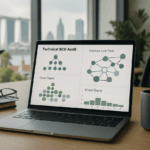
Singapore and the Philippines are both under pressure to keep urban infrastructure reliable while controlling lifecycle costs. Dense transport networks, coastal exposure, aging water assets, high-rise buildings, and climate-related stress all push maintenance budgets upward. This is where digital twins have moved from pilot projects into practical operational tools. A digital twin is not just a 3D model. It is a dynamic digital representation of a physical asset, system, or district that continuously ingests operational data from sensors, inspection records, weather feeds, work orders, and engineering models to support better maintenance decisions. For city operators, the value is direct: fewer emergency repairs, better asset prioritization, longer asset life, and lower unplanned downtime.
The strongest use cases are already visible in public transit, utilities, drainage systems, bridges, roads, airports, and large municipal buildings. In Singapore, where infrastructure is heavily instrumented and planning is data-centric, digital twins align well with smart nation strategies and asset-intensive public operations. In the Philippines, where urban resilience and maintenance efficiency are essential in fast-growing metro areas, twins can help agencies and private operators move from reactive maintenance to condition-based and predictive maintenance. The financial impact comes not from visualization alone, but from improving inspection targeting, work scheduling, failure prediction, and capital renewal timing.
What a City Digital Twin Actually Does
A city digital twin connects the physical and digital layers of infrastructure management. At minimum, it includes a baseline asset model, telemetry from IoT devices or SCADA systems, GIS layers, maintenance history, and analytics logic that can identify patterns or anomalies. Advanced implementations add machine learning models, simulation engines, and scenario analysis so operators can test what happens if a pump fails, a road segment reaches a threshold crack density, or a drainage basin receives rainfall beyond design assumptions. That ability to simulate and predict is what changes maintenance economics.
For maintenance teams, the twin becomes a decision support environment. Instead of relying only on periodic inspections, operators can compare expected performance against actual performance in near real time. They can rank assets by risk, not just age. They can also identify correlated failures, such as how heat stress, vibration, salinity, or flooding increase deterioration rates in specific asset classes. This is especially relevant for coastal cities and tropical climates where environmental loading accelerates wear.
Core data sources that make the twin useful
A digital twin only creates value when the data layer is strong. Common inputs include IoT sensor telemetry, building management system feeds, CCTV analytics, LiDAR scans, aerial imagery, utility meter data, computer-aided design files, geographic information system layers, maintenance logs, and inspection findings. For transportation and water utilities, SCADA and edge sensor data are critical because they provide continuous condition monitoring. For civil structures, computer vision and inspection analytics help detect surface defects, spalling, corrosion, or deformation before they become major failures.
Integration quality matters as much as data volume. If maintenance work orders, asset registers, and sensor streams are inconsistent, the twin will not reliably recommend interventions. That is why asset hierarchy, metadata governance, and master data management are foundational. In practice, many city programs start with a high-value district or asset class rather than trying to twin the entire city at once.
How Digital Twins Reduce Maintenance Spend
The cost savings come from several operational levers. First, digital twins reduce unnecessary preventive maintenance. Traditional schedules often replace or inspect assets on fixed intervals, regardless of condition. A twin allows teams to shift toward condition-based maintenance, which focuses interventions where deterioration is actually occurring. Second, they reduce emergency repair costs by detecting abnormal behavior earlier. Emergency work is expensive because it often requires overtime labor, expedited procurement, traffic disruption, and service interruption.
Third, digital twins improve maintenance planning. When teams know which assets are most likely to fail and when, they can bundle work orders, reduce mobilization costs, and coordinate lane closures or shutdown windows more efficiently. Fourth, they help optimize capital expenditure by extending useful asset life through better operational decisions. That means fewer premature replacements and more accurate renewal planning. These gains are particularly important for cities where budget cycles are tight and infrastructure portfolios are large.
Predictive maintenance versus reactive maintenance
Reactive maintenance addresses failure after it occurs, which usually creates the highest total cost. Preventive maintenance follows a calendar or usage threshold. Predictive maintenance uses condition signals and analytics to estimate the probability of failure before it happens. Digital twins make predictive maintenance operational because they combine sensor data, engineering rules, and asset-specific degradation models. For example, a pumping station twin can flag an efficiency drop caused by impeller wear, while a bridge twin can correlate strain gauge readings with traffic loading and temperature changes to estimate deterioration trends.
This approach does not eliminate maintenance. It changes maintenance timing and scope. A city that can intervene at the right moment avoids cascade effects, secondary damage, and service outages. Over a large portfolio, even small efficiency gains compound into substantial budget relief.
Where Cities Are Seeing the Highest Returns
Not every asset class yields the same return. The best candidates are high-value, failure-prone, and service-critical systems with measurable condition signals. In Singapore, transport corridors, underground assets, district cooling systems, and water infrastructure are strong candidates because they are complex, heavily utilized, and already managed with strong data discipline. In the Philippines, flood control assets, drainage networks, bridges, ports, utilities, and major commercial estates can benefit from twins because weather, congestion, and operational complexity increase maintenance volatility.
The highest return typically comes from asset classes where a failure has both direct repair cost and indirect business disruption cost. A faulty pump in a drainage system can trigger localized flooding and broader economic losses. A structural issue in a bridge can create traffic rerouting, logistics delays, and inspection escalation. A malfunctioning HVAC system in a critical building can affect tenant continuity and energy bills. Digital twins help identify these risks earlier and manage them more cheaply.
Case pattern: flood management and drainage
Flood-prone urban areas are strong candidates for digital twin deployment because hydrology can be modeled against live rainfall and drainage performance data. A twin can combine catchment topology, pump station telemetry, water level sensors, weather forecasts, and maintenance status to reveal bottlenecks before rainfall peaks. When integrated properly, the system can recommend where to clear silt, which pumps need servicing, and which retention assets are underperforming. This is especially relevant in Southeast Asia, where extreme rainfall events can rapidly overwhelm infrastructure.
For agencies, the benefit is not just reduced repair cost after a storm. It is the ability to perform targeted preventive work before the event, reducing flood damage, call-out frequency, and reputational impact. The same logic applies to sewer systems, retention basins, and coastal pumping infrastructure.
The Technical Architecture Behind a Maintenance-Grade Digital Twin
Many organizations underestimate the architecture required to support a twin that actually changes maintenance outcomes. A useful implementation usually has five layers: sensing, integration, modeling, analytics, and workflow execution. The sensing layer captures field conditions. The integration layer normalizes data from SCADA, CMMS, ERP, GIS, and inspection tools. The modeling layer represents the asset and its dependencies. The analytics layer predicts degradation or detects anomalies. The workflow layer sends recommendations into maintenance planning systems so actions are assigned and tracked.
Without workflow integration, the twin becomes a reporting dashboard. That is a common failure mode. Maintenance value is realized only when predictions feed work prioritization, spare parts planning, service scheduling, and budget allocation. To support that shift, operators need closed-loop processes that connect insight to action. This includes approval rules, SLA definitions, escalation paths, and post-maintenance feedback so the model can learn from actual outcomes.
Standards and best practices that improve trustworthiness
Organizations should anchor digital twin programs in recognized asset management and information standards. ISO 55000 provides the asset management framework for lifecycle value, risk, and governance. ISO 19650 helps structure information management for built assets and BIM-related workflows. For geospatial context, GIS standards and interoperable data schemas reduce integration friction. Cybersecurity is also essential because connected operational systems create an expanded attack surface. Segmenting OT and IT networks, enforcing role-based access, and logging model changes are part of a trustworthy deployment.
Data quality controls are equally important. Asset naming conventions, unique identifiers, version control for engineering drawings, and timestamp alignment across systems are not administrative details. They determine whether the twin can support reliable maintenance recommendations. Cities that invest in data governance early usually realize value faster because they spend less time reconciling conflicting records later.
Procurement, ROI, and Common Implementation Mistakes
For business decision-makers, the key question is how to justify the investment. The business case should compare current maintenance spend against projected savings from reduced emergency work, optimized inspections, lower downtime, fewer service disruptions, and extended asset life. It should also include avoided indirect costs, such as traffic delays, tenant loss, or service continuity penalties. Because benefits accrue across operations, engineering, finance, and risk teams, procurement should not treat the digital twin as a standalone software purchase. It is an operating capability that changes how maintenance decisions are made.
One of the most common mistakes is starting with a visually impressive model that lacks live data or operational ownership. Another mistake is building a twin without clear maintenance use cases. If the use case is too broad, teams lose focus and adoption stalls. Cities also struggle when they ignore data stewardship, because outdated asset records will corrupt analytics and reduce confidence among maintenance managers. A third mistake is failing to define who acts on the twin’s output. If no one owns the recommended work order, the system will not create savings.
Vendor selection should prioritize interoperability, engineering credibility, and support for integration with existing asset systems. Open APIs, configurable analytics, and strong mapping between physical assets and digital records are essential. For large portfolios, phased rollout is usually more effective than a big-bang deployment. Start with a critical corridor, pump station cluster, transport interchange, or district energy system, then scale based on measured impact.
Technical Implementation Checklist for City Operators
Use the checklist below to turn a digital twin initiative into a maintenance cost reduction program:
- Define the target asset class by failure cost, service criticality, and data availability.
- Map the current maintenance process, including inspections, work orders, spare parts, and approval steps.
- Audit data quality across CMMS, GIS, SCADA, BIM, and inspection databases.
- Assign unique asset identifiers and establish a governed asset hierarchy.
- Select the minimum viable sensor set needed to detect condition change and operational anomalies.
- Build the twin around specific maintenance decisions, not generic visualization.
- Integrate predictive outputs into work order systems and maintenance planning workflows.
- Define KPIs such as mean time between failures, emergency work ratio, inspection cost per asset, downtime hours, and service interruption frequency.
- Establish cybersecurity controls for OT and IT integration, including access control and network segmentation.
- Validate the model against historical failure data before expanding to additional districts or asset classes.
- Create a post-maintenance feedback loop so field outcomes improve model accuracy over time.
For Singapore and the Philippines, the most effective programs will be the ones that combine engineering discipline, operational data, and governance. Digital twins save money when they help cities inspect less blindly, fix issues earlier, and renew assets with precision rather than guesswork. That is where maintenance budgets stop being consumed by surprises and start being managed as a measurable performance system.

I am Tricia Huang Mei, an Advertising Partner in Sotavento Medios with over two decades of experience in the Singapore advertising and business sectors. My career is defined by a commitment to driving high-impact marketing campaigns and fostering sustainable growth for the diverse business portfolios I manage.