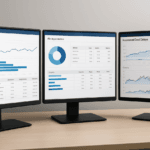
I believe that a data-driven ROI analysis in 2026 must move beyond simple “last-click” attribution to a unified, AI-assisted framework. To accurately measure your return, you must integrate your CRM with first-party data signals and account for “zero-click” visibility in AI search results. A modern analysis evaluates not just immediate revenue, but also Customer Lifetime Value (CLV) and “Share of Citation” in AI assistants like Gemini and ChatGPT. For businesses in Singapore and the Philippines, this means tracking every Singapore dollar (SGD) against a holistic dashboard that balances short-term conversions with long-term brand equity.
The 2026 Digital Marketing ROI Formula
While the basic formula remains the same, I suggest including all operational costs, such as AI tool subscriptions and creator fees, to get a true picture of your profitability.

- Net Profit: Revenue generated minus Cost of Goods Sold (COGS) and specific campaign expenses.
- Total Investment: Includes ad spend, agency retainers, software costs, and internal team salaries.
2026 ROI Benchmarks by Channel (Singapore & Philippines)
In my experience, “good” ROI varies significantly by channel. I use these 2026 benchmarks to help my clients determine if their campaigns are under-performing or ready to scale.
3 Critical Shifts in ROI Measurement for 2026
I have seen the most successful brands in Singapore move away from “vanity metrics” (likes and shares) toward “Business Outcome” metrics.
- From Clicks to Citations: In an era where 60% of searches result in “zero clicks” due to AI Overviews, I track how often your brand is the cited source. This builds brand gravity that leads to direct-to-site traffic later.
- Predictive ROI Modelling: I use AI-driven analytics to forecast campaign performance before we launch. By analysing historical data, we can reallocate budget to the 20% of segments likely to drive 80% of the return.
- Incremental Lift Testing: I recommend running “Geo-experiments” (comparing a test region like Cebu vs. a control region like Davao) to see the true “lift” your digital ads provide over your organic baseline.
How to use First-Party Data to improve ROI accuracy?
I believe that First-Party Data is your most reliable signal in a cookie-less world. Without it, your ROI analysis is just an educated guess.
- Server-Side Tracking: I implement server-to-server tracking (like Meta CAPI) to ensure that 100% of conversions are captured, even if a user has a restrictive browser or ad-blocker.
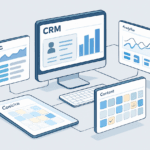
- CRM Integration: By linking your ad platforms directly to your CRM, I can track a lead from the first “Answer Box” interaction in Singapore all the way to a closed contract in the Philippines.
- Value-Based Bidding: I feed your “High-Value Customer” data back into Google and Meta. This teaches the AI to ignore “tyre-kickers” and only bid on users who match your most profitable customer profiles.
Identifying and Fixing “ROI Leaks”
If your ROI is falling below a 2:1 ratio, I usually find the issue in one of three areas:
- The M%CAC Leak: Your marketing costs are taking up too much of your Customer Acquisition Cost, indicating inefficient ad targeting or poor organic support.
- The Conversion Friction: You are driving high traffic, but your mobile site speed (INP) or checkout process is scaring users away.
- The Attribution Gap: You are using “Last-Touch” attribution, which ignores the 5–10 other touchpoints (like a TikTok video or an AI summary) that actually convinced the user to buy.
If you are ready to stop guessing and start measuring what truly matters for your bottom line, the next step is a “Measurement Stack Audit.”

Alyssa Camille Azanza is a dedicated digital specialist and a key professional within the Sotavento Medios team. I focus on the strategic management and growth of diverse business portfolios, ensuring that each brand achieves a high level of digital authority. My work is centered on navigating the complexities of modern search and content strategy, helping businesses stay relevant in the rapidly changing digital world.