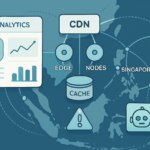
Singapore and the Philippines are both operating in a market environment where digital engagement is high, customer expectations are rising, and regulators are paying closer attention to how personal data is collected, stored, and activated. For B2B teams, the pressure is particularly sharp because buyers expect relevant experiences across web, email, paid media, CRM, and sales touchpoints, yet they also increasingly question opaque tracking practices. A privacy-first marketing stack is no longer a compliance project sitting beside growth activity. It is the architecture that allows growth to continue under tighter consent rules, browser restrictions, and platform changes. The practical challenge is not whether to personalise, but how to design identity, data, and activation layers so that personalisation still works when third-party signals weaken and consent becomes a core input to the system.
A strong privacy-first stack starts with a simple principle: collect less, govern more, and use first-party data with precision. That means building around consent, data minimisation, durable customer records, and event-level visibility rather than relying on broad cross-site surveillance. In Singapore, organisations are expected to align with the Personal Data Protection Act and its consent, purpose limitation, and accountability requirements. In the Philippines, the Data Privacy Act and National Privacy Commission guidance push the same operational direction. The most effective B2B teams use these constraints as a design advantage. They create cleaner datasets, stronger trust signals, and more reliable segmentation models than teams that still depend on fragile third-party identifiers.
Design the data foundation around consent and purpose, not around channels
The most common mistake in stack design is to start with ad tech or CRM tools and then try to force compliance later. A privacy-first stack should begin with a data inventory and a purpose map. Every data element should be tied to a documented business purpose, a lawful basis, and a retention rule. This reduces the scope of what must be tracked, secured, and synchronized across systems. It also makes downstream activation more predictable because teams know which attributes are available for which use cases.
For B2B organisations in Singapore and the Philippines, this is especially important when marketing, sales, and customer success all contribute to lead nurture and account expansion. A job title may be appropriate for routing and segmentation, but not every field should be replicated into every platform. A privacy-first model forces teams to classify data by sensitivity and utility. For example, company name and role may be used for lifecycle scoring, while sensitive notes from sales calls should remain in a restricted CRM environment with access controls and limited downstream propagation.
Start with a data map and consent ledger
A data map shows where data enters the ecosystem, where it flows, and which systems transform it. A consent ledger records the status of opt-in, opt-out, and preference changes, ideally with timestamps, source channels, and policy version references. These two assets are operationally more important than another martech integration. They make it possible to answer basic governance questions quickly: What did the user agree to? Which platform received the signal? What happens when consent is revoked?
This matters because personalisation is only trustworthy when the activation layer respects the user’s current permissions. A lead who opted in to product updates may not have consented to retargeting. A webinar attendee may allow event follow-up but not ongoing promotional suppression rules. If those distinctions are not machine-readable, the stack will either over-communicate or under-use available data. Both outcomes hurt performance.
Apply data minimisation without flattening the customer view
Data minimisation is often misunderstood as data scarcity. It is actually precision. You can maintain rich personalisation by keeping a narrower but better-governed set of attributes. For most B2B journeys, the highest-value fields are not dozens of inferred demographic variables. They are firmographic data, declared interests, content engagement, product usage events, account-level relationships, and lifecycle stage indicators. These data points support account-based marketing, segmentation, lead scoring, and sales alignment without unnecessary exposure to risk.
Privacy-first design also benefits from shorter retention windows. If website event data remains useful for 12 months but not 36 months, keep the policy tight and enforce deletion automatically. This reduces storage overhead and decreases the chance that stale or non-consented records affect targeting logic. Good governance is not just legal defensibility. It improves the quality of recommendations, scoring, and attribution because the underlying dataset is fresher and more relevant.
Move from third-party dependency to first-party activation
Third-party cookies and opaque cross-site tracking have already become unreliable inputs for many teams. Browser policies, mobile platform restrictions, ad tech changes, and consent requirements have all reduced the stability of the old model. A privacy-first stack compensates by building first-party and zero-party data channels that directly capture user intent with permission. This does not eliminate personalisation. It shifts personalisation closer to the source of truth.
The most effective pattern is to use owned properties as the primary data capture layer. Website forms, gated assets, product demos, event registrations, preference centers, and authenticated portals all create consent-based signals. When those signals are connected to a clean identity graph, marketing teams can still deliver segment-specific campaigns, triggered journeys, and account-level orchestration. The difference is that the data lineage is clearer and the signals are stronger.
Use progressive profiling and value exchange
Progressive profiling is one of the most practical ways to preserve UX while gathering useful data over time. Instead of asking for a long form on the first touch, collect the minimum viable data and enrich the profile through later interactions. A user downloading a white paper may only need to submit name, email, and company. A later webinar registration can collect role, business size, and top priorities. A product demo request can capture implementation timelines and buying stage. This incremental model improves completion rates and aligns collection with intent.
Value exchange is equally important. People are more willing to share data when they receive a clear benefit, such as customised content, event reminders, benchmark reports, or account-specific recommendations. This is especially relevant in B2B markets where buying cycles are long and stakeholders expect education before commercial outreach. Personalisation should feel like relevance, not surveillance. That distinction drives better engagement and reduces unsubscribe or complaint rates.
Design activation around first-party identifiers
Email addresses, hashed identifiers, login credentials, and authenticated sessions can support high-confidence personalisation without excessive tracking. A mature stack uses these identifiers across CRM, marketing automation, CDP, analytics, and ad platforms with privacy controls applied at each layer. If a user is authenticated, on-site recommendations can be generated from session history and account metadata. If they are anonymous, the site can still use context such as page category, referral source, and consent status to personalize content without exposing identity unnecessarily.
Many B2B teams also overlook the role of account-level personalisation. In enterprise sales, the buying unit matters more than the individual. That means the stack should support account scoring, role-based content streams, and coordinated outreach by sales and marketing. A privacy-first architecture can still do this by relying on account domain matching, declared company data, and behavioural signals gathered within approved contexts. The key is to avoid creating shadow profiles through unauthorised data merging.
Architect the stack for controlled activation and measurable outcomes
Personalisation is only effective if the stack can activate it consistently across channels. This requires more than a clean database. It requires orchestration logic, governance controls, and measurement design that survive privacy constraints. Teams that treat consent as a one-time checkbox tend to break when data moves between tools. Teams that treat consent as a real-time control layer keep campaigns compliant and more resilient.
A privacy-first architecture usually includes a customer data platform or equivalent identity layer, a marketing automation system, a CRM, a consent management platform, analytics infrastructure with event governance, and a tag management setup that respects consent modes. The exact vendor mix matters less than the operating model. Each system should know what it is allowed to receive, retain, and activate. This reduces leakage and creates a clearer audit trail.
Implement consent-aware orchestration
Consent-aware orchestration means that the journey logic changes based on permission state. For example, if a lead has consented only to transactional communication, the automation layer should suppress promotional nurture and limit contact to service-related messages. If the same lead later updates preferences, the orchestration engine should branch into a richer content sequence immediately. This dynamic behaviour requires synchronised preference data and event triggers, not manual list management.
In practice, this can improve personalisation quality because messages are more relevant to the channel and the user’s expressed intent. Instead of blasting all contacts with the same sequence, the stack can personalise based on role, industry, content category, and behavioural stage. That kind of logic works well for B2B campaigns in Singapore and the Philippines, where multiple stakeholders often influence a purchase and timing differs significantly across accounts.
Measure incrementality, not just click-based attribution
Privacy-first marketing often forces teams to rethink measurement. When tracking becomes less deterministic, click-based attribution alone becomes misleading. Better practice is to combine server-side events, CRM outcomes, holdout testing, and campaign incrementality analysis. This provides a more accurate view of what is driving pipeline and revenue. It also reduces dependence on browser-level identifiers that may not be available consistently.
For instance, if a content syndication campaign generates more MQLs but not more sales-qualified opportunities, the stack should reveal that discrepancy quickly. If account-level nurture improves demo-to-opportunity conversion, that signal can justify additional investment even if last-click metrics look weaker. Privacy-first measurement is not about collecting less insight. It is about using more defensible methods to understand what works.
Adopt governance, security, and vendor controls as part of the marketing operating model
A privacy-first marketing stack fails when governance is treated as a legal afterthought. Marketing operations, IT, security, legal, and data protection teams must share responsibility for standards, access, and audits. In regulated markets, vendor risk is especially important because data can pass through multiple processors and subprocessors. If one platform has weak controls, the entire stack inherits that exposure.
Vendor due diligence should cover data residency, encryption, role-based access, breach notification obligations, subprocessors, retention settings, deletion workflows, and support for consent propagation. Teams should also inspect whether the vendor supports API-level consent checks, pseudonymisation, and audit logs. If a tool cannot enforce basic policy alignment, it should not sit in the core stack, regardless of how strong its interface looks.
Limit access and log every transformation
Access controls should reflect job function. A performance marketer does not need raw PII if aggregated segment IDs are enough. A CRM admin may require broader access than a campaign manager, but even then role separation should apply. Every export, sync, and transformation should be logged. These logs are not just security evidence. They help teams diagnose data quality issues, prevent accidental overexposure, and prove that operational controls are working.
Where possible, use pseudonymised identifiers in analytics and activation workflows. If a system can operate on hashed email or tokenised IDs instead of raw personal data, exposure decreases without eliminating usability. This is particularly useful when multiple agencies, vendors, or regional teams collaborate across a shared stack. The fewer unnecessary copies of PII that exist, the lower the operational risk.
Implementation checklist for a privacy-first, personalised stack
Teams that want to modernise without sacrificing personalisation should implement the stack in phases. The sequence matters because governance failures at the start become expensive to fix later. Begin with the data map, consent model, and identity strategy. Then align tools, activation rules, and measurement. Finally, test the stack under real campaign conditions and refine based on observed behaviour.
- Inventory every data source, destination, and transformation in the marketing ecosystem.
- Document lawful basis, consent scope, retention period, and business purpose for each data category.
- Deploy or review a consent management process that synchronises preferences across CRM, automation, analytics, and ad platforms.
- Reduce unnecessary collection by removing low-value fields from forms, events, and integrations.
- Build progressive profiling flows for high-intent assets and authenticated experiences.
- Centralise first-party identifiers and maintain a clean identity resolution logic.
- Implement consent-aware journey rules, suppression logic, and preference-based segmentation.
- Move toward server-side or privacy-respecting event capture where appropriate.
- Restrict access to raw PII and use pseudonymised data for analytics wherever possible.
- Review vendor contracts, subprocessors, encryption controls, deletion procedures, and audit logging.
- Test campaign measurement with holdouts, cohort analysis, and pipeline-based success metrics.
- Run regular cross-functional reviews between marketing, IT, legal, and security to keep the stack aligned with policy and business goals.
For B2B organisations in Singapore and the Philippines, this approach creates a stack that is more resilient than the legacy model. It improves trust, reduces compliance friction, and gives teams a more accurate view of their audience. It also supports personalisation that is grounded in declared intent and verified behaviour, which is the kind of relevance buyers actually respond to.

I am Tricia Huang Mei, an Advertising Partner in Sotavento Medios with over two decades of experience in the Singapore advertising and business sectors. My career is defined by a commitment to driving high-impact marketing campaigns and fostering sustainable growth for the diverse business portfolios I manage.