Ad fatigue is not just a creative problem. It is a delivery problem, a measurement problem, and a budget efficiency problem that can quietly erode performance long before a team notices a drop in click-through rate or a rise in cost per acquisition. For brands running paid media across Singapore and the Philippines, the risk is amplified by dense mobile usage, fast-scrolling social behavior, and highly competitive auction environments where even a small decline in engagement can cascade into worse placement, higher media costs, and weaker conversion rates. AI gives performance teams a practical way to detect those patterns earlier, connect them to the right signals, and respond before ROAS starts to slip.
What makes this especially relevant in Southeast Asian markets is the pace at which users move across platforms and devices. A campaign may look healthy in aggregate while a specific audience segment in Meta Ads, TikTok Ads, or Google Display is already saturated. AI is useful because it can inspect changes across creative variants, audience cohorts, frequency curves, placement-level performance, and conversion lag faster than a manual dashboard review. The objective is not to replace media buyers or analysts. The objective is to create an early warning system that helps teams pause, refresh, or reallocate before waste becomes visible in the P and L.
Understanding Ad Fatigue as a Performance Signal, Not Just a Creative Issue
Ad fatigue happens when the same audience sees the same or similar message too often, causing attention and response to decline. In platform terms, it often shows up as rising frequency, falling click-through rate, lower conversion rate, weaker thumb-stop rate, higher cost per click, and eventually higher cost per acquisition. On some channels, the first sign may be a drop in impression quality or a shift in engagement mix, such as more video skips or fewer landing page views. The important point is that fatigue is rarely one metric. It is a pattern of correlated declines that appear before revenue impact is obvious.
For business decision-makers, the financial effect is straightforward. Once fatigue sets in, the marginal cost of additional impressions increases because the same media spend buys less qualified engagement. In auction-based systems, weaker response can also reduce relevance or engagement-based ranking signals, which can further inflate costs. This is why the best teams treat fatigue as a predictive indicator. They do not wait for CPA to spike. They monitor the leading indicators that usually move first.
Common fatigue indicators worth monitoring
- Rising ad frequency within a fixed audience window.
- Declining click-through rate by creative, audience, and placement.
- Increasing cost per click or cost per thousand impressions with flat spend.
- Falling video completion rate, view-through rate, or dwell time.
- Lower conversion rate after stable traffic quality.
- Higher negative feedback, hides, skips, or irrelevant engagement signals.
Teams in Singapore and the Philippines often see this most clearly in mobile-first campaigns where audience pools can saturate quickly, especially for niche B2B offers. If you are targeting procurement leaders, enterprise IT teams, or senior finance stakeholders, the reachable audience can be smaller than expected. AI helps quantify that saturation before it becomes a wasted impression problem.
How AI Detects Fatigue Earlier Than Manual Reporting
Traditional reporting is often lagging. A weekly dashboard might show that performance dropped, but it usually does not explain whether the cause was creative exhaustion, audience overlap, placement dilution, seasonality, or conversion friction. AI improves this by combining time-series detection, anomaly detection, clustering, and predictive scoring. That means the system can identify unusual movement in performance metrics, associate it with structural campaign variables, and rank the most likely causes.
At a practical level, AI can ingest platform exports or warehouse data from Google Ads, Meta Ads, TikTok Ads, GA4, CRM, and offline conversion feeds. Once the data is normalized, models can compare each creative and audience segment against its own historical baseline. If a new creative variant typically maintains a 1.8 percent CTR for nine days and then declines by 30 percent while frequency climbs, that pattern can be flagged automatically. This is more useful than a simple threshold rule because fatigue does not affect every campaign at the same pace.
Useful AI methods for fatigue detection
Anomaly detection: Identifies sudden or gradual deviations from expected performance. This is useful when creative decay does not happen in a neat straight line.
Time-series forecasting: Builds a predicted performance curve and flags when actual results fall below expected ranges. This helps teams distinguish fatigue from normal volatility.
Clustering: Groups ads with similar decay profiles so strategists can see which formats, messages, or placements wear out faster.
Classification models: Predict whether a campaign is likely to fatigue based on early signals like frequency, audience size, and engagement slope.
NLP-based feedback analysis: Reviews comments, sentiment, and negative reactions to detect creative mismatch or message wear-out.
For organizations with larger data maturity, combining these methods in a marketing data warehouse or BI environment produces better precision than relying on one platform alert. The most effective setup is usually a layered one: platform-level rules for immediate warnings, and model-based scoring for more accurate prioritization.
Building a Fatigue Prediction Framework Across Channels
An effective AI framework starts with clean measurement. Without consistent naming conventions, standardized campaign taxonomy, and reliable conversion attribution, fatigue detection will produce noisy signals. The first task is to define what good performance looks like by channel and objective. A prospecting video campaign on TikTok should not be judged by the same thresholds as a retargeting search campaign in Google Ads. AI needs context to avoid false positives.
Start by mapping each campaign to a stage in the funnel and defining the core efficiency metrics that matter there. For awareness, the main concern may be reach quality and engagement decay. For consideration, it may be CTR, landing page view rate, and cost per engaged session. For conversion, the focus may shift to CPA, conversion rate, and lead quality. Once those baselines are set, AI can compare live performance against the expected range for each cluster.
Data inputs that improve prediction quality
- Impression frequency by audience segment and placement.
- Creative metadata such as format, length, hook type, and offer angle.
- Audience overlap and exclusion rules.
- Historical performance by market, device, and time of day.
- Down-funnel signals such as lead scoring, SQL rate, or revenue per conversion.
- On-site behavior from analytics tools, including scroll depth and bounce rate.
In Singapore and the Philippines, this approach is especially valuable for multi-market account structures. The same creative may fatigue at different speeds depending on language, device mix, and buyer maturity. A B2B SaaS offer in Singapore might sustain performance longer in LinkedIn and search, while the same message in the Philippines may need faster refresh cycles in paid social because of different usage patterns and audience scale. AI can surface those differences early if the data is segmented correctly.
Using AI to Decide What to Refresh, Pause, or Scale
Detecting fatigue is only half the job. The next step is deciding what action will preserve efficiency. AI can support that decision by combining performance decay signals with creative features and audience response patterns. For example, if one message angle consistently loses traction after the same frequency threshold, the model can recommend a rotation rule. If a specific format performs well with a narrow segment but decays quickly in broader prospecting, the system can suggest audience refinement instead of creative replacement.
This is where experimentation discipline matters. Teams should not treat every decline as proof that the creative is bad. Sometimes the issue is message mismatch, not creative quality. A strong headline may work for cold traffic but fail in retargeting because the user has already seen the offer. AI can help isolate these differences by comparing cohort behavior. If fatigue appears mostly in one audience while another remains stable, the problem may be overexposure, not copy performance.
Decision logic that AI can automate
- Pause ads when frequency rises and engagement drops across multiple sessions.
- Refresh creative when CTR or video completion declines beyond modeled confidence bands.
- Shift budget to higher-performing formats before CPA deteriorates.
- Reduce audience overlap when the same users are being hit across multiple campaigns.
- Trigger new creative production when a winning message begins to decay across placements.
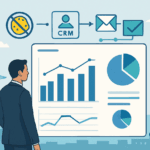
Operationally, this can be translated into rules within a marketing automation stack or BI alerting workflow. For instance, a dashboard can trigger a Slack or email notification when a segment crosses a predictive fatigue score. A media buyer can then review the flagged assets, check audience saturation, and decide whether to rotate in new creative or narrow the targeting. That workflow is faster and more disciplined than waiting for the next weekly performance review.
Technical Implementation Practices That Make AI Fatigue Detection Reliable
AI is only as trustworthy as the measurement system behind it. The biggest implementation mistake is feeding models with fragmented, unstandardized data and expecting precise recommendations. To get reliable fatigue detection, organizations need a stable taxonomy, a consistent conversion framework, and a defined governance layer for campaign changes. This matters in B2B because sales cycles are longer, conversions are fewer, and attribution noise is higher than in low-consideration consumer campaigns.
One strong approach is to centralize paid media and conversion data in a warehouse such as BigQuery or Snowflake, then layer modeling and visualization on top. This enables cross-channel comparison and makes it easier to link ad exposure with downstream outcomes. It also gives analysts the ability to build rolling baselines instead of static monthly benchmarks. Static thresholds often miss fatigue because they ignore natural changes in market conditions, auction pressure, and seasonality.
Implementation checklist for analytics and media teams
- Standardize naming conventions for campaigns, creatives, audiences, and placements.
- Track frequency, CTR, CVR, CPC, CPA, and post-click engagement at the segment level.
- Separate prospecting, retargeting, and retention logic so fatigue is measured in context.
- Build rolling 7-day, 14-day, and 30-day baselines for each objective.
- Use anomaly detection to flag sudden drops and forecasting to predict decay.
- Connect CRM or offline conversion data so AI can optimize for lead quality, not just clicks.
- Review audience overlap and exclusion logic regularly to prevent self-competition.
- Set escalation rules for creative rotation, budget reallocation, and segmentation changes.
For teams operating across Singapore and the Philippines, it is also worth accounting for language variation, device behavior, and working-hour patterns. B2B buyers may engage differently depending on commute time, lunch breaks, or after-hours browsing. AI can reflect those patterns if the data is time-stamped and segmented properly. When time-of-day performance changes, fatigue may be a symptom of poor flighting rather than weak creative.
Industry best practice also points to a hybrid operating model. Let automation handle monitoring and prioritization, while humans handle message strategy and creative interpretation. That division of labor keeps the system efficient without turning media buying into a black box. It also helps teams maintain accountability because every alert should map to a clear action, a test, or a budget decision.
How a B2B Team Can Operationalize AI Without Overcomplicating the Stack
A lean implementation can start with three layers. First, set up platform-level rules for immediate threshold alerts, such as frequency and CTR deterioration. Second, export campaign data into a warehouse or spreadsheet-based model that calculates moving averages and fatigue scores. Third, use a simple machine learning model or even statistical anomaly detection to rank the most at-risk campaigns. This gives teams a useful operating system without requiring a large data science function on day one.
From there, the team can build an iterative process. Every time a fatigue alert triggers, record what action was taken, whether the issue resolved, and how quickly performance recovered. That feedback loop improves future recommendations. Over time, the system learns which creative patterns last longer, which audiences saturate faster, and which placements are most vulnerable. That is where AI becomes more than a monitoring layer. It becomes a compounding performance asset.
Next Steps for an AI-Driven Ad Fatigue Control Workflow
- Audit current media accounts for signs of hidden fatigue, especially rising frequency paired with falling engagement.
- Define fatigue thresholds by funnel stage, channel, and audience size.
- Centralize performance data so AI can compare creative decay patterns across markets.
- Build anomaly alerts for CTR, CVR, CPA, and frequency movement.
- Map each alert to a clear response, such as refresh, pause, narrow, or reallocate.
- Review creative performance weekly and feed winning patterns back into the model.
- Align media, analytics, and creative teams on a single fatigue response protocol.

I am Tricia Huang Mei, an Advertising Partner in Sotavento Medios with over two decades of experience in the Singapore advertising and business sectors. My career is defined by a commitment to driving high-impact marketing campaigns and fostering sustainable growth for the diverse business portfolios I manage.