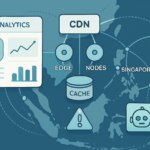
Running hyper-local advertising across 1,000 or more locations sounds operationally heavy because it is. Every branch, store, clinic, depot, or service area has its own demand pattern, local language preference, competitor mix, inventory reality, and conversion behavior. In Singapore and the Philippines, that complexity multiplies quickly because dense urban catchments, regional language variation, and mobile-first browsing behavior all affect how ads perform at the micro-market level. AI changes the scale equation by turning location-level data into decisioning, creative adaptation, budget allocation, and performance feedback loops that can run continuously instead of manually. For B2B teams and multi-location brands, the goal is not just to publish more ads. The goal is to build a system that can localize offers, match intent, and optimize spend across hundreds or thousands of ZIP codes, neighborhoods, and store radii without collapsing under operational overhead.
Why Hyper-Local Scale Breaks Traditional Campaign Management
Traditional campaign structures work when a marketer manages a small number of markets with broad audience segments. They fail when every location has different business hours, service availability, foot traffic patterns, regional search demand, and local conversion rates. Manual campaign builds also create fragile account structures because every new location requires keyword mapping, ad copy changes, landing page links, budget checks, and reporting updates. At 1,000 locations, human-only management becomes a bottleneck that slows testing and increases inconsistency.
AI solves this by reducing the amount of manual work required to maintain large campaign architectures. It can cluster locations by performance similarity, detect local demand shifts, generate variant copy at scale, and allocate spend based on expected return instead of fixed assumptions. In practical terms, AI lets a central team manage a distributed location network while preserving local relevance. That is especially valuable in the Philippines, where island geography, regional commerce patterns, and language diversity can create very different conversion profiles between neighboring markets. It is equally useful in Singapore, where location density is high, consumer intent is tightly tied to proximity, and competition can shift by postal sector or transport corridor.
Common failure points in large location networks
Three issues usually appear first. The first is campaign duplication, where every new location is treated like a new manual build even though 80 percent of the structure is reusable. The second is audience overlap, where location radii or keyword sets compete against each other and inflate costs. The third is reporting fragmentation, where leadership sees channel results but cannot tie them cleanly to store-level revenue, call volume, or appointment bookings. AI-driven systems address these failures by standardizing the underlying logic while preserving local variations where they matter most.
Build the Data Foundation Before You Automate Anything
AI is only as effective as the data architecture underneath it. Before scaling campaigns, businesses need a location intelligence layer that connects physical locations, service areas, inventory, CRM events, search demand, and conversion outcomes. This foundation should include structured location metadata such as store name, address, geo-coordinates, opening hours, service categories, local language preferences, and local promotions. It should also include clean performance data from paid media platforms, analytics tools, call tracking, and offline conversions.
The most useful model is a single source of truth for location attributes. If one branch is tagged as a retail showroom in one system and a sales office in another, the automation layer will create inconsistent ad rules and reporting. The same applies to landing pages, which should map cleanly to the location hierarchy. Every page needs canonical identifiers so AI can associate traffic, engagement, and conversion signals with the correct location cluster. For enterprises operating in Singapore and the Philippines, this often means integrating POS or lead management data with Google Ads, Meta Ads, CRM systems, and local inventory or appointment systems.
Use clustering to reduce campaign sprawl
Instead of creating 1,000 completely unique campaign structures, use AI-assisted clustering to group locations by shared characteristics. Clusters can be built using proximity, performance history, income profile, search volume, service mix, or conversion lag. A premium urban cluster in central Singapore will likely behave differently from suburban service-area locations in Metro Manila, and both should be modeled differently. The point is to manage meaningful segment groups rather than isolated branches that all require separate manual optimization. This allows the media team to scale governance without flattening local relevance.
Define the minimum viable data schema
A scalable location schema usually includes these fields:
- Location ID and parent brand ID
- Geo-coordinates and service radius
- Primary and secondary categories
- Operating hours and holiday overrides
- Language and audience segment tags
- Store-specific promotions or inventory flags
- Offline conversion type and value
- Landing page URL and tracking parameters
Once this schema is standardized, AI can be used to populate, validate, and route campaign logic more reliably. Without it, automation tends to amplify messy inputs instead of improving performance.
Use AI for Audience Segmentation, Intent Modeling, and Local Creative
Hyper-local scaling is not only about geography. It is about context, intent, and message fit. AI can identify which user signals correlate with high-value local actions, then map those signals to the right ad treatment. For example, search behavior around “open now,” “near me,” “same day,” or service-specific queries often indicates immediate intent, while broader informational terms may require nurture-oriented creative and landing pages. Machine learning can score these signals and help determine whether a user should see a direct-response ad, a store-visit prompt, or a branded local offer.
In practice, advanced advertisers use AI to generate and test localized message variants across headlines, descriptions, extensions, and landing page modules. The best systems do not simply insert city names into templates. They vary the value proposition based on local demand drivers. A campaign in Singapore may emphasize convenience, same-day service, and proximity to MRT access points. A campaign in the Philippines may perform better when it reflects service availability, trust markers, or region-specific language patterns. AI makes it possible to produce this variation at scale, but the marketing team still needs strict brand controls and approval workflows.
Dynamic creative optimization at location level
Dynamic creative optimization, when applied correctly, lets the system assemble the most relevant creative combination for each location cluster. The engine can swap headlines, sitelinks, imagery, and calls to action depending on local performance. For example, a chain with 1,200 service locations can use AI to test whether “Book Today,” “Visit Your Nearest Branch,” or “Check Availability Near You” performs best by cluster. The output is not just higher click-through rates. It also produces clearer evidence of what customers respond to in each micro-market.
Language and cultural adaptation
Localization should include language nuance, not only translation. In the Philippines, campaign performance can vary based on English, Taglish, and regionally familiar terms. In Singapore, multilingual audience behavior may require different treatments for English, Mandarin, Malay, or Tamil-adjacent contexts depending on product category and audience profile. AI-assisted copy generation can support this work, but every variant should pass human review for brand tone, compliance, and contextual accuracy. This is where enterprise governance matters, because poor localization damages trust quickly.
Automate Budget Allocation, Bidding, and Geo-Performance Optimization
Once the data layer and creative system are in place, AI can manage budget flow more intelligently than fixed manual allocations. The core advantage is reactivity. Local demand changes daily, sometimes hourly, based on weather, events, competitive auctions, operating hours, or supply constraints. AI systems can interpret these signals and redistribute spend toward locations or clusters with stronger marginal return. This is especially useful when a brand has many locations but uneven demand density.
Budget allocation should follow expected value, not equal distribution. A branch with high conversion rate, strong inventory, and stable demand should receive more investment than a low-demand location with limited capacity. AI can use historical performance, conversion lag, and geo-intent signals to forecast where incremental spend is most likely to produce revenue. In paid search, this can feed into automated bidding strategies. In social and display, it can guide geo-targeting, frequency management, and audience expansion.
Use local conversion signals, not just clicks
Clicks are weak optimization signals when you are scaling across 1,000 locations. AI models perform better when they can optimize toward calls, forms, bookings, store visits, qualified chats, and offline sales. That requires a conversion feedback loop from CRM or point-of-sale systems back into the ad platforms. Once the system sees downstream events, it can identify which local markets are producing real value and which are generating superficial traffic. This is the difference between scaling impressions and scaling business outcomes.
Forecast demand by cluster
Forecasting helps avoid waste before it happens. If AI detects that a location cluster in Quezon City or central Singapore typically spikes on certain days, it can pre-position budget and adjust bids proactively. If a branch has limited operational capacity or low stock, the model can suppress spend temporarily instead of pushing users into a poor experience. This kind of operationally aware optimization is one of the strongest use cases for AI in large location portfolios because it ties media spend to business readiness.
Measurement, Governance, and Compliance at Enterprise Scale
Scaling hyper-local ads without governance creates risk. The more automation you introduce, the more important it becomes to control naming conventions, approval pathways, data privacy, and reporting definitions. A strong measurement model should distinguish between local KPIs and enterprise KPIs. Local teams may care about appointments, inbound calls, or walk-ins. Leadership may care about cost per qualified lead, revenue per location, or contribution margin. AI should support both views through a layered measurement framework.
For Singapore and the Philippines, privacy and consent management also need to be part of the operating model. Tracking architectures should align with local data protection requirements and platform policies. That means minimizing unnecessary personal data collection, maintaining consent logs where required, and using secure integrations for offline conversion uploads. Trust is not only a legal issue. It also affects media quality because poor data hygiene weakens attribution and model performance.
Practical governance controls
- Standardize naming conventions for campaigns, ad groups, locations, and landing pages
- Set approval rules for local creative and promotions
- Use role-based access for regional marketers and agency teams
- Audit geotargeting overlap and negative location exclusions
- Validate conversion events before feeding them into automated bidding
- Review AI-generated copy for claims, legal language, and brand consistency
Governance is not a barrier to speed. It is what makes speed sustainable when the account structure becomes too large for manual oversight.
Technical Implementation Checklist for 1,000+ Location Campaigns
Use this checklist to operationalize AI-driven hyper-local scaling in a controlled way:
- Consolidate all location data into one standardized master table with IDs, geo-tags, operating hours, and conversion mappings
- Connect analytics, CRM, POS, and ad platforms so offline outcomes flow back into paid media optimization
- Group locations into performance-based clusters rather than building 1,000 isolated campaign silos
- Create templated landing page frameworks that support location-specific content, schema markup, and local calls to action
- Deploy AI-assisted creative generation with strict brand and compliance review checkpoints
- Use automated bidding and budget pacing tied to qualified conversions, not only clicks or impressions
- Build geo-overlap audits to prevent self-competition across nearby branches
- Monitor local demand, store capacity, and inventory so automation does not push traffic to constrained locations
- Set dashboards that show both cluster performance and individual location outliers
- Run continuous testing on headlines, offers, language variants, and service-area definitions
When this architecture is in place, AI becomes a scaling layer rather than a shortcut. It helps a marketing team maintain precision across large location networks, preserve local relevance, and react to market changes with a level of speed that manual workflows cannot match. For brands operating across Singapore and the Philippines, that combination of scale, control, and localization is what turns hyper-local advertising into a repeatable growth system.

I am Tricia Huang Mei, an Advertising Partner in Sotavento Medios with over two decades of experience in the Singapore advertising and business sectors. My career is defined by a commitment to driving high-impact marketing campaigns and fostering sustainable growth for the diverse business portfolios I manage.