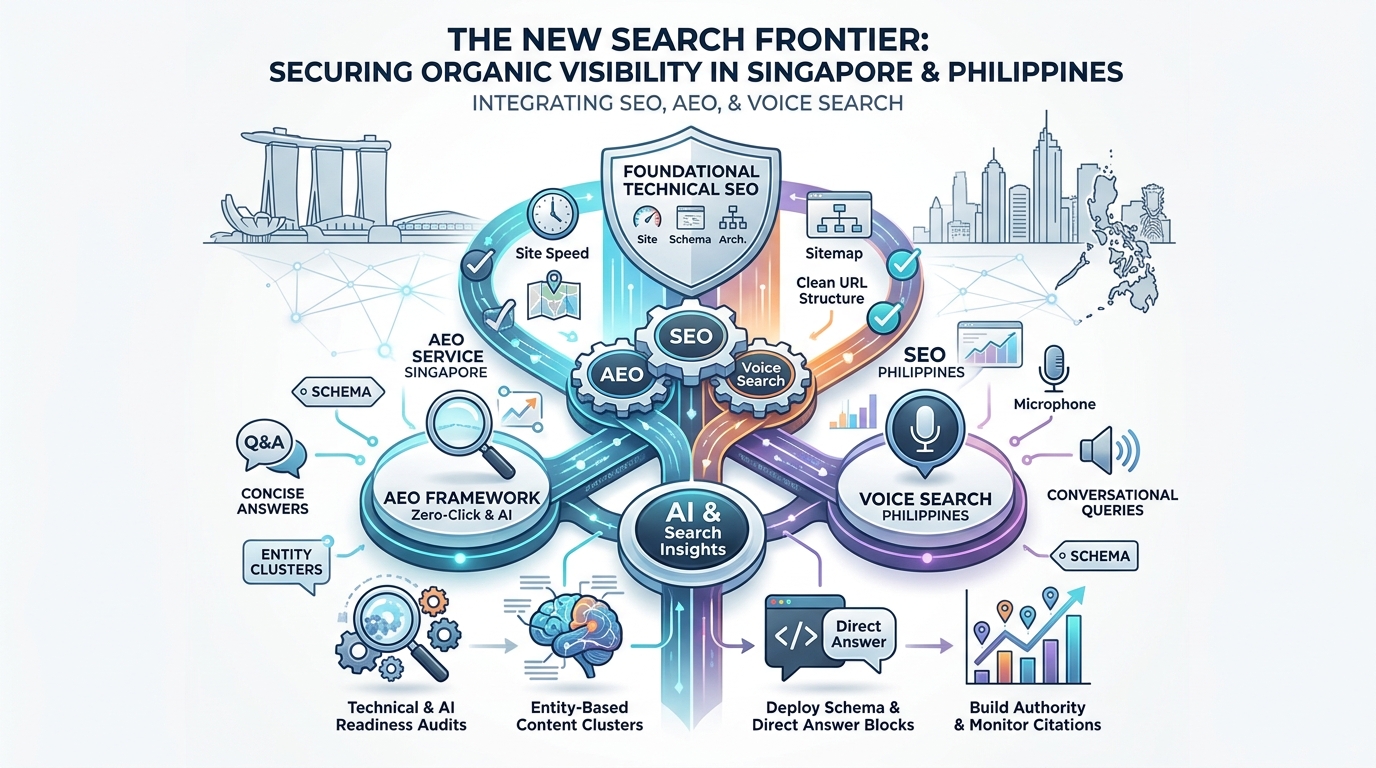
For marketing teams in Singapore and the Philippines, content performance cannot be treated as a monthly reporting exercise. Competitive search categories move quickly, audience behavior changes across devices and channels, and regional teams often manage multiple markets, languages, and stakeholder expectations at the same time. Real-time content performance monitoring gives B2B organizations the ability to identify page-level changes, ranking shifts, crawl issues, engagement drops, and conversion friction before those issues affect pipeline quality. SEOlyze is useful in this environment because it turns SEO monitoring from a retrospective task into an operational workflow that can support editorial, technical, and revenue teams with faster decision-making.
When used properly, SEOlyze helps you connect content visibility with search intent, keyword movement, on-page optimization signals, and change detection. That matters for B2B teams that publish thought leadership, product education, and high-intent landing pages for audiences in Singapore and the Philippines. These markets often have strong mobile usage, multilingual search behavior, and a commercial environment where technical buyers compare vendors carefully. A monitoring system that only reports end-of-month outcomes is too slow. SEOlyze allows teams to track how content performs as soon as it is published, updated, indexed, or impacted by algorithmic or site-level changes.
Why real-time monitoring matters for B2B content teams
Real-time monitoring is not about chasing vanity metrics. It is about controlling risk and improving decision velocity. A B2B content asset can lose visibility for several reasons: title tag changes, broken internal links, indexing delays, changes in SERP features, cannibalization from a newer page, or reduced engagement because the page no longer satisfies search intent. In a region like Singapore, where search competition is dense and commercial keywords can be expensive to win, even a short visibility dip can reduce qualified traffic. In the Philippines, where buyers often move across desktop and mobile devices and may encounter lower bandwidth conditions, page speed or layout issues can also distort engagement patterns quickly.
SEOlyze supports this operational need by making content performance observable at a more granular level. Instead of reviewing a static dashboard once a week, teams can use the platform to inspect keyword movements, monitor top-performing URLs, and detect deviations from normal performance patterns. That is especially useful for companies running content around high-consideration topics such as cybersecurity, SaaS, fintech, logistics, or enterprise services. These industries rely on accurate technical content, and a small decline in impressions or click-through rate can indicate the need for immediate content tuning.
What to monitor first
Start by defining the metrics that reflect business impact, not just search activity. For most B2B organizations, the first layer should include organic impressions, clicks, average position, click-through rate, indexed page status, and landing page engagement indicators. If SEOlyze is integrated into a broader workflow, you can also track content update timestamps, ranking volatility, and keyword group performance. This gives your team a view of both search visibility and content health. The goal is to detect whether a page is still satisfying the search query that brought users to it.
A practical starting point is to segment pages by intent. For example, educational articles, comparison pages, service pages, and conversion-focused landing pages should not be evaluated using the same thresholds. An educational article may be optimized for impressions and assisted conversions, while a service page should be judged more by qualified clicks and lead outcomes. SEOlyze becomes more valuable when the monitoring structure reflects these differences.
Setting up SEOlyze for actionable monitoring
The quality of your monitoring depends on how well you configure the system. Before you analyze performance, align SEOlyze with a clean site architecture, accurate tracking, and a keyword map that reflects actual content ownership. If your team manages multiple business units or regional pages, define naming conventions for folders, URL patterns, and content types. This prevents reporting overlap and makes it easier to isolate performance by market, topic cluster, or funnel stage.
For Singapore and Philippines teams, localization is especially important. Search intent may vary by country, even when the language appears similar. A keyword that performs well in Singapore may not produce the same traffic quality in the Philippines due to different commercial maturity, device usage, or phrasing. SEOlyze monitoring should therefore be configured around market-specific page groups and search properties rather than one generic content set. This also helps teams avoid misleading aggregate data.
Connect the right data sources
To make SEOlyze useful for real-time monitoring, connect it with the data sources that shape your decision-making process. At minimum, this usually includes your search console data, analytics platform, and rank tracking inputs. If your organization uses a CRM or marketing automation tool, link organic landing page performance to lead quality, opportunity creation, or sales acceptance where possible. This gives SEOlyze a strategic layer beyond traffic.
The strongest implementation patterns combine technical SEO, content analytics, and conversion reporting. For example, if a page loses clicks but maintains impressions, the issue may be related to snippet quality or SERP competition. If a page retains rankings but the bounce rate increases sharply, the content may no longer match the searcher’s intent or the page may have a usability issue. If both rankings and engagement fall after an update, that suggests the revision changed the semantic focus of the page in an unhelpful way. SEOlyze helps you detect these patterns early, but only if the inputs are connected correctly.
Define alert thresholds and anomaly rules
Real-time monitoring becomes operational when alerts are meaningful. Avoid generating noise by setting threshold rules around material change. For example, flag a sudden ranking drop across multiple priority keywords, a sharp decline in clicks for a high-value page, or a meaningful increase in indexed pages with weak engagement. The point is not to create constant notifications. The point is to surface exceptions that require action.
A good monitoring framework distinguishes between normal fluctuation and a true issue. Search positions often move slightly from day to day, especially in competitive verticals. SEOlyze should be used to watch for sustained movement, clustering effects across related pages, or performance shifts after content edits and technical releases. If a page moves from page one to page two for a priority query and simultaneously loses click-through rate, that is a signal to inspect the page structure, internal links, and on-page search alignment.
Using SEOlyze to diagnose content performance issues
Once monitoring is active, the most valuable use of SEOlyze is diagnosis. Performance issues are rarely caused by one factor alone. More often, the decline comes from a mix of content depth, search intent mismatch, page experience, and internal linking structure. SEOlyze can help you narrow the problem by comparing the page’s recent behavior with its historical baseline and its nearest competing pages. That gives technical and content teams a faster route to root cause analysis.
For B2B teams, this is particularly important when a content update is expected to improve performance but instead causes a drop. Rewriting a page for clarity may inadvertently reduce keyword relevance, especially if the original page had strong semantic coverage. Expanding a page may dilute focus if internal headings become too broad. SEOlyze should be used to observe how the page reacts after publishing changes, not just to record the final result weeks later.
Detect content decay
Content decay happens when an article or landing page gradually loses relevance, visibility, or engagement over time. This is common in fast-moving sectors like technology, where product comparisons, platform features, compliance requirements, or buyer priorities change frequently. SEOlyze can help identify decay by tracking pages whose impressions remain steady while clicks decline, or pages whose rankings slowly erode across a keyword cluster. These early signs usually indicate that the content needs a refresh, stronger internal linking, or a better match to current search demand.
A practical approach is to group content by publishing date and revisit the oldest pages with the strongest historic traffic. Pages that used to perform well often have structural equity, but they may need revised examples, updated terminology, or a more precise answer to the target query. In B2B markets, outdated content can also damage trust. Technical buyers expect accuracy, especially when evaluating software, cloud services, cybersecurity, digital infrastructure, or regulatory topics.
Monitor cannibalization and topic overlap
Topic cannibalization is one of the most common problems in growing content programs. It happens when multiple pages target similar search intent and end up competing against each other. SEOlyze can reveal this by showing conflicting rankings or shifting visibility across near-duplicate URLs. Once identified, you can consolidate content, reassign keyword targets, or adjust internal linking to reinforce a primary page.
This issue often appears in organizations that publish quickly without a formal content architecture. A company may create several articles on the same theme, such as SEO, digital transformation, or lead generation, but each piece competes for the same set of keywords. Monitoring with SEOlyze lets you see whether the problem is isolated or systemic. If multiple pages oscillate for the same query, it usually means the site needs a clearer topical hierarchy.
Turning monitoring data into optimization actions
Monitoring is only valuable when it changes what your team does next. SEOlyze should support a repeatable workflow that turns observation into optimization. That workflow typically includes keyword revalidation, content revision, internal linking updates, metadata testing, and technical cleanup. For B2B teams, the value lies in making these actions data-driven rather than opinion-based.
One useful operating model is to classify issues by type. If rankings decline but impressions remain stable, review the page’s search snippet, heading structure, and competitor coverage. If impressions drop, revisit keyword targeting and topical relevance. If clicks drop while rankings hold, improve metadata, structured data, and snippet clarity. If engagement falls after the click, inspect page speed, readability, and content depth. SEOlyze makes this faster because it centralizes the signals needed to choose the correct fix.
Optimize for intent alignment
Search intent alignment is one of the highest-leverage improvements in content SEO. A page can rank and still underperform if it answers the wrong version of the query. For example, a buyer researching enterprise software may want comparison criteria, implementation considerations, or proof of business value, not a generic definition. SEOlyze helps you notice when a page is attracting impressions but not converting them into strong engagement. That is often the first sign that the content structure does not match intent.
For Singapore and Philippines audiences, intent alignment also has a regional layer. Buyers may expect different pricing signals, service scope details, compliance references, or support expectations. Local search behavior can be more commercial than informational at later funnel stages. SEOlyze should therefore be used to verify not only whether a page ranks, but whether it ranks for the right query set and performs in line with the page’s commercial objective.
Use content experiments with measurement discipline
When you run content experiments, change one variable at a time where possible. Test title tags, intro structure, CTA placement, FAQ blocks, or internal link placement separately. SEOlyze can help you monitor the effect of each change on visibility and engagement. This is the same logic used in technical testing: isolate variables, observe the effect, and document the outcome.
Keep a change log for every significant update. Include the publish date, the nature of the edit, the target keyword group, and the expected outcome. When SEOlyze shows a shift in performance, your team can tie it back to a specific action instead of guessing. This discipline is especially valuable for agencies and in-house teams working across multiple stakeholders, where content changes often happen fast and accountability needs to stay clear.
Implementation checklist for a scalable SEOlyze workflow
Use the following checklist to operationalize SEOlyze as a real-time content monitoring system:
- Segment content by market, intent, and URL type before building reports.
- Connect search visibility data with analytics and conversion data where available.
- Set anomaly thresholds for ranking movement, click changes, and engagement drops.
- Create page groups for priority topics, product pages, and thought leadership assets.
- Track content updates in a change log so performance shifts can be traced accurately.
- Review pages with stable impressions but declining clicks for snippet and intent issues.
- Review pages with ranking drops for internal linking, cannibalization, and semantic drift.
- Compare page performance across Singapore and Philippines audiences if both markets are active.
- Use weekly reviews for tactical fixes and monthly reviews for structural improvements.
- Assign page ownership so each monitored asset has a clear accountable team or person.
When SEOlyze is configured with disciplined segmentation, reliable data sources, and clear thresholds, it becomes more than a dashboard. It becomes a content control system that helps B2B teams protect visibility, improve relevance, and respond faster to search behavior changes across Singapore and the Philippines.

I am Tricia Huang Mei, an Advertising Partner in Sotavento Medios with over two decades of experience in the Singapore advertising and business sectors. My career is defined by a commitment to driving high-impact marketing campaigns and fostering sustainable growth for the diverse business portfolios I manage.