The business-to-business (B2B) landscape in Singapore and the Philippines is experiencing a profound transformation. As digital adoption accelerates across Southeast Asia, B2B organizations are under increasing pressure to innovate their marketing strategies, moving beyond traditional approaches to embrace cutting-edge technologies and methodologies. At the forefront of this evolution are three pivotal forces: artificial intelligence (AI), hyper-personalization, and data-driven decision-making. These are not merely buzzwords; they represent fundamental shifts in how businesses connect with, understand, and serve their clients in these dynamic markets.
For business decision-makers and technical professionals in Singapore and the Philippines, understanding and strategically integrating these elements is no longer optional. It is essential for establishing thought leadership, driving sustainable growth, and maintaining a competitive edge. This article delves into the practical applications and strategic implications of AI, personalization, and data for B2B digital marketing, offering actionable insights tailored to the unique opportunities and challenges present in these vibrant economies.
The AI Revolution in B2B Marketing: Beyond Automation
Artificial intelligence is rapidly redefining the capabilities of B2B marketing teams. While automation has long been a staple, AI extends far beyond simple task execution, offering sophisticated tools for analysis, prediction, and optimization. In Singapore and the Philippines, where businesses are increasingly seeking efficiency and precision, AI provides a powerful lever for enhancing marketing performance.
Predictive Analytics for Lead Generation and Qualification
One of AI’s most impactful applications in B2B marketing is its ability to predict future outcomes based on historical data. AI-powered predictive analytics can identify high-value leads with greater accuracy than traditional methods. By analyzing vast datasets—including firmographics, technographics, engagement history, and behavioral patterns—AI algorithms can score leads, predict their likelihood to convert, and even forecast customer lifetime value. For businesses operating in Singapore and the Philippines, this means focusing resources on prospects most likely to yield a return, optimizing sales cycles, and reducing wasted effort. For example, a B2B SaaS provider in Manila could use AI to analyze trial user behavior, identifying patterns that indicate a high probability of converting to a paid subscription, allowing their sales team to intervene with targeted offers at the optimal moment.
Content Optimization and Personalization at Scale
AI also plays a crucial role in content strategy. From generating initial content drafts to optimizing existing assets for search engines and user engagement, AI tools can significantly enhance content effectiveness. Natural Language Processing (NLP) allows AI to analyze content performance, identify gaps, and suggest improvements. Furthermore, AI can dynamically personalize content delivery. Imagine a prospect in Singapore visiting a technology vendor’s website; AI could instantly tailor the displayed case studies, product recommendations, and even calls-to-action based on their industry, company size, and previous interactions, ensuring maximum relevance. This level of personalization, driven by AI, fosters deeper engagement and accelerates the buyer’s journey.
Enhanced Customer Experience and Support
AI-driven chatbots and virtual assistants are transforming B2B customer service and support. These tools can handle routine inquiries, provide instant access to information, and guide prospects through initial stages of the sales funnel, freeing up human agents for more complex interactions. In a region where responsiveness is highly valued, AI-powered support systems ensure 24/7 availability and consistent service quality, contributing to a superior customer experience. A logistics company in Cebu, for instance, could deploy an AI chatbot on its website to answer common questions about shipping rates, delivery times, and tracking, providing immediate value to potential clients.
Hyper-Personalization at Scale: Tailoring the B2B Journey
While personalization has been a marketing goal for years, hyper-personalization takes it to an unprecedented level, leveraging granular data and advanced analytics to deliver truly individualized experiences. In the B2B context, this means understanding the specific needs, pain points, and preferences of each account and even individual stakeholders within that account, then tailoring every interaction accordingly.
Understanding the Individual Buyer and Account
B2B buying cycles are complex, often involving multiple decision-makers with diverse roles and priorities. Hyper-personalization requires a deep understanding of each stakeholder’s journey. This involves collecting and analyzing data from various touchpoints: website visits, email interactions, content downloads, social media engagement, and CRM records. By segmenting audiences not just by industry or company size, but by specific roles (e.g., IT Manager, Procurement Head, CEO) and their unique information needs, marketers can craft messages that resonate directly with each individual. For example, an enterprise software vendor targeting a manufacturing firm in Malaysia might send a whitepaper on supply chain optimization to the Operations Director, while simultaneously providing the CFO with a case study on ROI and cost savings.
Personalized Content and Channel Delivery
Beyond simply addressing a prospect by name, hyper-personalization dictates what content is delivered, when it is delivered, and through which channel. This requires sophisticated marketing automation platforms integrated with CRM systems. A prospect who has repeatedly viewed content about cloud security, for instance, should receive follow-up emails or ads related to cloud security solutions, rather than general product information. The delivery channel might also be personalized: a busy executive might prefer a concise summary via LinkedIn InMail, while a technical professional might appreciate a detailed webinar invitation via email. This precision ensures that every marketing effort adds value and moves the prospect closer to conversion.
Account-Based Marketing (ABM) as a Personalization Framework
Account-Based Marketing (ABM) is a prime example of hyper-personalization in action. Instead of casting a wide net, ABM focuses marketing and sales efforts on a select group of high-value target accounts. Each account is treated as a market of one, with highly customized campaigns designed to engage key stakeholders. In the competitive Singaporean market, where many B2B sectors are mature, ABM allows agencies like Sotavento Medios to help clients penetrate specific enterprises with tailored messaging and solutions, demonstrating a deep understanding of their unique challenges and strategic objectives. This approach not only improves conversion rates but also fosters stronger, long-term client relationships.
Data-Driven Decision Making: The Foundation of Modern B2B Marketing
The proliferation of digital channels and marketing technologies has led to an explosion of data. For B2B marketers in Singapore and the Philippines, the challenge is no longer about collecting data, but about effectively analyzing it to derive actionable insights and make informed strategic decisions. Data-driven marketing is the bedrock upon which successful AI and personalization strategies are built.
Comprehensive Analytics and Reporting
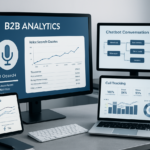
Effective data-driven marketing begins with robust analytics infrastructure. This includes integrating data from various sources: website analytics (Google Analytics 4), CRM (Salesforce, HubSpot), marketing automation platforms (Marketo, Pardot), advertising platforms (Google Ads, LinkedIn Ads), and social media insights. A unified view of the customer journey allows marketers to track engagement across touchpoints, identify bottlenecks, and understand which channels and content pieces are most effective. Regular, comprehensive reporting dashboards provide real-time visibility into campaign performance, enabling agile adjustments and optimizations.
Attribution Modeling and ROI Measurement
One of the perennial challenges in B2B marketing is accurately attributing revenue to specific marketing efforts. Modern data analytics tools offer various attribution models (first-touch, last-touch, multi-touch, time decay) that help marketers understand the true impact of each interaction. For businesses in the Philippines looking to justify marketing spend, demonstrating clear ROI is paramount. By meticulously tracking conversions and linking them back to initial marketing efforts, organizations can optimize their budget allocation, investing more in channels and campaigns that consistently deliver measurable returns. This level of financial accountability builds trust and secures executive buy-in for future marketing initiatives.
Leveraging Customer Data Platforms (CDPs)
Customer Data Platforms (CDPs) are becoming indispensable for B2B organizations seeking to unify and activate their customer data. A CDP creates a persistent, unified customer profile from all available sources, making this data accessible to other marketing, sales, and service systems. This unified view is critical for enabling hyper-personalization and AI-driven insights. For a multinational B2B enterprise with operations spanning Singapore and the Philippines, a CDP can consolidate customer data from different regional CRMs and marketing platforms, providing a holistic view of each client and facilitating consistent, personalized engagement across borders.
Integrating Emerging Technologies for a Holistic Approach
While AI, personalization, and data form the core, their effectiveness is amplified when integrated with other emerging technologies and strategic frameworks. A holistic approach ensures that B2B marketing efforts are cohesive, efficient, and future-proof.
Marketing Automation and CRM Integration
The synergy between marketing automation platforms (MAPs) and Customer Relationship Management (CRM) systems is fundamental. MAPs automate repetitive tasks like email nurturing, lead scoring, and content distribution, while CRMs manage customer interactions and sales processes. When tightly integrated, these systems provide a seamless flow of information between marketing and sales, ensuring that leads are nurtured effectively and handed off to sales at the optimal time. This integration is particularly vital in markets like Singapore, where businesses demand streamlined operations and efficient customer journeys.
Voice Search Optimization and Conversational Marketing
As voice assistants become more prevalent, optimizing B2B content for voice search is an emerging consideration. B2B buyers are increasingly using natural language queries to find information. Furthermore, conversational marketing, facilitated by chatbots and live chat, offers immediate engagement and problem-solving, aligning with the demand for instant gratification in today’s digital world. Businesses in the Philippines can leverage these tools to provide quick answers to common queries, improving user experience and lead capture.
Blockchain for Data Security and Transparency
While still nascent in B2B marketing, blockchain technology holds promise for enhancing data security, transparency, and trust, particularly in areas like ad fraud prevention and data privacy. As data privacy regulations evolve globally, blockchain could offer immutable records of data consent and usage, providing an additional layer of trustworthiness for B2B interactions.
Navigating the Local Landscape: Singapore and the Philippines
Implementing these advanced strategies requires an understanding of the specific nuances of the Singaporean and Philippine markets. While both are rapidly digitizing, they present distinct opportunities and challenges.
Singapore: A Hub for Innovation and Advanced Adoption
Singapore stands as a global leader in digital transformation and technological adoption. B2B buyers here are often highly sophisticated, expecting advanced digital experiences and data-driven insights from their vendors. The market is characterized by a strong focus on efficiency, innovation, and global best practices. B2B marketers in Singapore must demonstrate cutting-edge capabilities in AI, personalization, and analytics to resonate with this discerning audience. Emphasis on compliance with data privacy regulations like the Personal Data Protection Act (PDPA) is also crucial.
Philippines: Rapid Growth and Digital Leapfrogging
The Philippines, with its large and digitally engaged population, offers immense growth potential. While digital maturity may vary, many businesses are eager to embrace new technologies to leapfrog competitors. B2B marketing strategies here should focus on demonstrating clear value, providing educational content, and building trust. The prevalence of mobile internet usage means mobile-first strategies are paramount. Localized content that addresses specific regional business challenges and cultural contexts will be particularly effective. The B2B buyer in the Philippines often values strong relationships and personalized engagement, making hyper-personalization a powerful tool for market penetration and loyalty.
Conclusion: Future-Proofing B2B Marketing in Southeast Asia
The future of B2B digital marketing in Singapore and the Philippines is undeniably shaped by the intelligent application of AI, the precision of hyper-personalization, and the strategic power of data-driven decision-making. For businesses aiming to thrive in these competitive and evolving markets, merely acknowledging these trends is insufficient. The imperative is to actively integrate them into a cohesive, measurable, and customer-centric marketing strategy.
By leveraging AI for predictive insights and content optimization, crafting hyper-personalized experiences across every touchpoint, and grounding all decisions in robust data analytics, B2B organizations can unlock unprecedented growth. This approach not only enhances marketing effectiveness but also builds stronger, more valuable relationships with clients, positioning businesses as trusted advisors and innovative partners in the digital age. Embrace these transformative forces to secure your leadership position and drive unparalleled success in the dynamic Southeast Asian B2B landscape.

I am Tricia Huang Mei, an Advertising Partner in Sotavento Medios with over two decades of experience in the Singapore advertising and business sectors. My career is defined by a commitment to driving high-impact marketing campaigns and fostering sustainable growth for the diverse business portfolios I manage.