
Your competitor gets recommended by ChatGPT. You don’t.
You’ve invested in SEO, built a good website, published quality content, and worked hard to establish your reputation. Yet somehow, your competitor keeps showing up in AI recommendations.
Why?
Perhaps the answer isn’t on your website. It’s somewhere else entirely.
ChatGPT, Gemini, and Perplexity don’t rely solely on what businesses say about themselves. They can reference information published by other people, on websites you may not even know exist.
Which raises a question worth investigating: What sources do LLMs cite, and why are some websites getting picked over others?
Because you could be doing everything right on your own website and still be missing out on the conversations influencing your customers’ decisions.
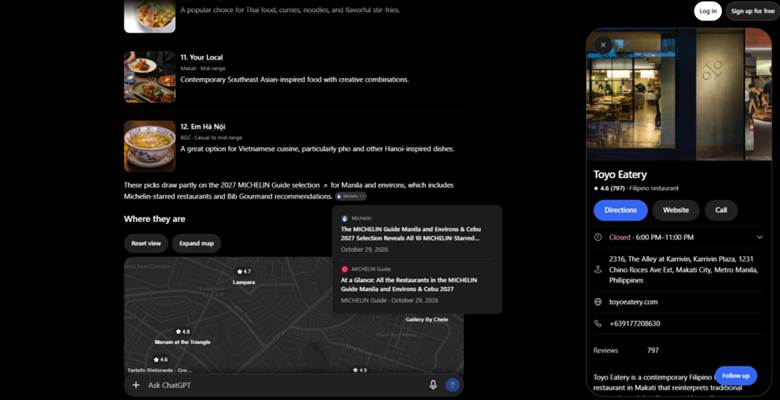
Why LLM Citations Matter for Your Website
Getting mentioned by AI is one thing. Getting cited is another. And I think businesses need to understand the difference.
In traditional SEO, I focus on getting websites to rank on Google through keyword research, content optimization, and link building. But AI search works differently. Instead of showing a list of websites, platforms like ChatGPT and Perplexity can recommend businesses using information from multiple sources.
Let’s say someone asks ChatGPT for the best SEO agencies in the Singapore. Your company might get recommended, but the information supporting that recommendation could come from a review site, an industry publication, or your competitor’s website.
That’s why I track two things:
- Brand mentions: Is AI recommending or talking about my business?
- Source citations: Is AI actually linking to my website or using third-party sources?
Here’s the thing. Being mentioned doesn’t guarantee a citation, and being cited doesn’t guarantee a recommendation.
Understanding how LLMs choose which brands to recommend helps me identify which sources influence those decisions and where I should focus my SEO and AEO efforts.
What Types of Sources Do LLMs Cite Most Often?
Not all websites have the same chances of getting cited by AI. And what works for ChatGPT might not necessarily work for Gemini or Perplexity.
But from what I’ve seen, there are five types of sources worth paying attention to.
1. Industry Publications and News Websites
Industry publications are valuable because they provide third-party information about businesses, products, and market developments.
For example, if someone asks ChatGPT about the latest SEO trends, it might reference established marketing publications instead of an agency’s website.
This is why I believe digital PR is becoming even more important. I don’t just want backlinks from industry websites. I want my business to be associated with the topics those publications cover.
That means contributing expert opinions, original research, interviews, and useful content to publications that my potential customers actually read.
2. Discussion Forums and Online Communities
Here’s something interesting. Reddit is becoming an important source of information for AI-generated answers.
A September 2026 study by Prefer analyzed 960 AI responses across ChatGPT, Perplexity, Gemini, and Claude. Reddit appeared in 207 of those answers, making it the most frequently cited individual website in that study.
But that doesn’t mean every business should suddenly start posting on Reddit. What matters is whether your customers are actually having conversations there.
I would focus on understanding their questions, addressing their concerns, and contributing useful answers. Genuine recommendations from real people will carry more credibility than promotional comments from fake accounts.
3. Review and Comparison Websites
When someone asks AI which product or service to buy, review and comparison websites become particularly relevant.
Think about someone asking ChatGPT, “Which SEO agency should I hire in the Singapore?“
They’re not looking for a definition of SEO. They’re already comparing options and getting closer to making a decision. And if your competitors keep appearing in review sites and comparison articles while your business doesn’t, that’s something worth investigating.
I would check their customer reviews, third-party mentions, and how they’re being positioned against other companies.
The goal isn’t just to appear in more websites. It’s to appear in the places that influence purchasing decisions.
4. Official Brand Websites and Product Documentation
Of course, I wouldn’t ignore your own website. Your service pages, product descriptions, pricing information, case studies, and technical documentation are still important sources of information.
If someone asks ChatGPT what your company specializes in, your website should clearly communicate that. And here’s where SEO, AEO, and GEO work together.
I want my website to rank on Google, but I also want its content to provide clear, accurate answers that AI platforms can reference.
That means explaining what the business offers, who it’s for, and why someone should choose it, supported by actual evidence.
5. Research Papers, Government Websites, and Educational Resources
For questions involving statistics, regulations, or technical information, AI platforms may reference academic studies, government publications, and educational resources. And that makes sense. If I’m writing about data privacy regulations, for example, I’d rather support my claims with official government guidelines than rely entirely on another marketing blog.
The same principle applies to content I want AI platforms to reference. If I want my content to be considered a credible source, I need to give readers something worth citing.
That means using reliable data, original insights, and evidence instead of simply repeating what everyone else has already published.
Do ChatGPT, Gemini, and Perplexity Cite the Same Websites?
The short answer is no. Getting cited by ChatGPT doesn’t automatically mean Gemini or Perplexity will cite you, too.
A 2026 study by Vercite analyzed 5.31 million citations across ChatGPT, Perplexity, Gemini, Google AI Overviews, and Google AI Mode.
Of the 253 domains appearing in the combined top 100 lists, only 23 were shared across all five platforms.
That’s a pretty big difference.
And when you look at each platform individually, the findings become even more interesting.
ChatGPT
Reddit was the most-cited individual website in Vercite’s ChatGPT dataset. This tells me that community discussions are worth monitoring, especially when potential customers use them to compare businesses and share experiences.
But I wouldn’t prioritize Reddit just because it’s popular with ChatGPT. I would first check whether it’s relevant to my industry.
Perplexity
YouTube was the most-cited individual website in Vercite’s Perplexity dataset. For me, this reinforces the value of publishing useful content in different formats.
If my audience watches product demonstrations, tutorials, or expert interviews, video content could create additional opportunities for AI visibility.
Gemini
Shopify was the most-cited individual website in Vercite’s Gemini dataset, which also showed a stronger presence of review and comparison-oriented sources. For ecommerce businesses, I’d pay closer attention to product listings, customer reviews, and comparison content.
The clearer and more accurate that information is, the more useful it becomes to potential customers and AI systems alike.
Google AI Overviews and AI Mode
Interestingly, even Google’s two AI search experiences showed different citation patterns. Google.com was the most-cited domain for AI Overviews, while YouTube led for AI Mode in Vercite’s study. So I wouldn’t assume that appearing in one means I’ll automatically appear in the other.
My takeaway? There’s no single website or platform that guarantees AI visibility.
I would track where my competitors are getting cited, identify which sources matter for my target customers, and build my SEO and AEO strategy around those opportunities.
Because at the end of the day, I don’t need my business mentioned everywhere. I need it to be visible where potential customers are making decisions.
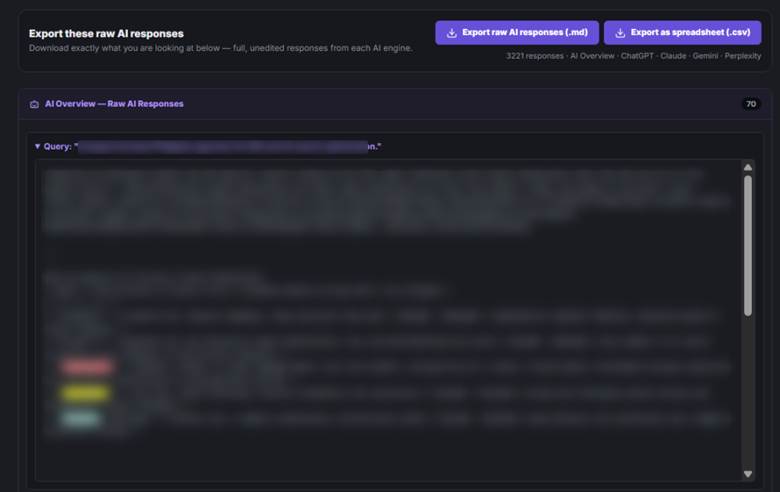
How I Track LLM Citations Using RankAnchor
Knowing which websites AI platforms cite is useful. But what I really want to know is which sources are helping my competitors get recommended, and how I can get my business there, too.
That’s where I use RankAnchor.
Instead of manually checking every ChatGPT, Gemini, or Perplexity response, I can use RankAnchor to monitor AI visibility, track citations, and compare my brand against competitors.
Here’s what I focus on:
- Track relevant AI prompts. I start with questions potential customers actually ask, especially when they’re comparing products, services, or providers.
- Identify cited sources. I check which websites and pages AI platforms reference when answering those questions.
- Compare competitor visibility. I look at AI Share of Voice, brand mentions, and citations to understand where competitors are getting more exposure.
- Find opportunities to improve. If competitors are being cited through industry publications, comparison websites, or other relevant sources, I investigate how my business can earn visibility there, too.
But here’s the thing. Not every citation is worth chasing. I prioritize sources that are relevant to my industry and can actually influence purchasing decisions. I also monitor these results over time because AI-generated answers aren’t always consistent.
For me, the goal isn’t simply to collect more citations. It’s to understand which sources influence AI recommendations and use that information to strengthen my AEO and GEO strategy.

Sandamalee is a dedicated digital marketing professional and a core member of the Sotavento Medios team. I work closely with my colleagues to manage daily digital operations, ensuring that every project meets the high standards our clients expect. My focus is on maintaining the technical and editorial integrity of our diverse business portfolios, helping brands stay consistent and impactful in their online presence.