In the highly competitive Singaporean current internet generation, volume does not matter. The focus has shifted from generating a large number of Marketing Qualified Leads (MQLs) to nurturing a targeted group of Sales Qualified Leads (SQLs) that provide predictable pipeline speed and higher Average Contract Value (ACV). For technical SEO experts and digital marketing strategists in the APAC region, grasping the new lead qualification criteria is crucial for showing B2B ROI.
This article outlines the detailed qualification criteria used by top Singaporean B2B agencies, combining technical SEO signals, behavioral analytics, and key firmographic data to achieve High-Intent Leads over High-Volume results.
The Foundation: Beyond BANT and Into Fit-Intent Scoring
Traditional frameworks like BANT (Budget, Authority, Need, Timeline) are still useful for Sales Development Representatives (SDRs) when they engage in direct conversations. However, the modern qualification process relies on a predictive lead-scoring model that combines two key elements: Fit (Firmographic Alignment) and Intent (Behavioral Signals).
1. The ‘Fit’ Score: Ideal Customer Profile (ICP) Alignment
In Singapore, where B2B sales cycles can be complex and involve many stakeholders, the Fit score is essential. Agencies use proprietary models based on local market data to ensure the prospect fits into a high-value category.
Firmographic & Demographic Essentials
- Industry Vertical: This is the main criterion. The focus is on high-growth sectors in Singapore, such as Fintech, SaaS, Manufacturing Automation, and Enterprise IT/Cloud Solutions. A lead from a target industry receives a score multiplier of 1.5x.
- Company Size (Employee Count/Revenue): Leads must align with the service provider’s Sweet Spot, which is often Mid-Market to Large Enterprise with revenues between $10M and $500M. This ensures the prospect can afford the offered B2B services.
- Geographic Focus: The lead should be located in Singapore, and their market reach must be confirmed (for example, APAC-focused versus only local). A regional reach often suggests a higher potential deal size.
- Role and Authority: Leads need a C-suite, VP, or Director-level title in relevant functions like Marketing, IT, Operations, or Finance. The Authority check is often verified through LinkedIn and organizational charts.
2. The ‘Intent’ Score: Behavioral Signals & Technical SEO Metrics
The Intent score shifts qualification from a simple checklist to a real-time evaluation of buying urgency. Technical SEO and marketing automation are crucial, as they track both explicit and implicit signals.
High-Value Behavioral Triggers
| Signal Category | High-Intent Actions (Point-Weighted) | Technical SEO/Platform Integration |
| Direct Intent | Requesting a Demo/Trial, Pricing Page Visits (Multiple), Live Chat Inquiry for “Solution” or “Cost.” | Form submissions, Goal Conversion Tracking (e.g., Google Analytics 4). |
| Research Intensity | 3+ Website Sessions in 14 Days, Consumption of Bottom-of-Funnel Content (ROI Calculator, Comparison Guide, Case Studies). | Gated Content Downloads via CRM integration, Time on Page/Engagement Depth tracking. |
| Technical Engagement | Returning Visitor Status (High Recency), Direct Navigation to Key Landing Pages (Non-Search), Opening 5+ Nurture Emails. | First-Party Data Collection (Cookies), Lead Scoring Automation using platforms like HubSpot or Salesforce Pardot. |
| Outbound Signal | Positive response to a personalized, account-based outreach message (LinkedIn/Email). | SDR-logged activity in CRM, MQL-to-SQL Handoff Workflow. |
Current Trend Integration: A major differentiator in 2025 is the reliance on First-Party Data due to growing privacy regulations and the decline of third-party cookies. Singaporean agencies are investing heavily in AI tools that analyze engagement across channels (Web, LinkedIn, Email) to create a unified Intent profile, reducing dependence on less transparent data providers.
Current Market Dynamics: How Singapore’s Ecosystem Refines Qualification
Singapore’s advanced digital infrastructure and knowledgeable buyers require a flexible approach to qualification that aligns with current market trends.
The Influence of AI and Predictive Scoring
Leading B2B agencies in Singapore are moving beyond basic lead scoring (for example, 10 points for a page view) to predictive scoring models. These models use Machine Learning to assess historical Closed-Won versus Closed-Lost data, identifying which combinations of Fit and Intent lead to revenue.
- Result: A lead may show a high Intent score (for example, several page views) but a low Fit score (wrong industry). The predictive model will de-prioritize this MQL, allowing SDRs to concentrate on leads most likely to convert (High-Fit, High-Intent).
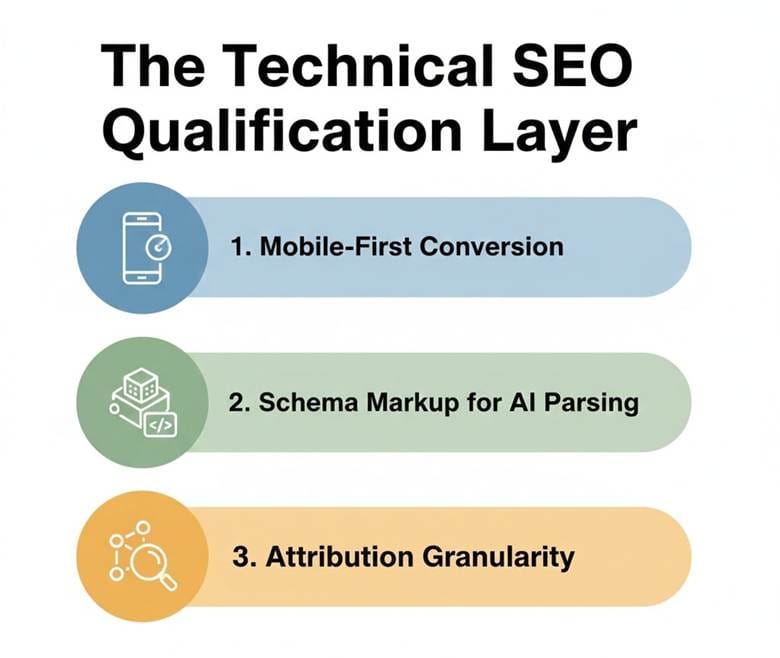
The Technical SEO Qualification Layer
While often viewed solely as a traffic driver, Technical SEO plays a key role in preparing leads for qualification by minimizing obstacles that prevent high-intent users from converting.
1. Mobile-First Conversion: Given Singapore’s widespread mobile usage, qualification criteria penalize leads that come from a poor mobile user experience. Fast Page Load Speed and good Mobile Responsiveness are essential for high-intent B2B form submissions.
2. Schema Markup for AI Parsing: Content that uses structured data is more easily consumed by generative AI models, like Google SGE. High-Value MQLs are increasingly found by users seeking precise, structured answers via AI-driven search features, leading them directly to decision-making.
3. Attribution Granularity: Agencies demand thorough integration of CRM with Google Analytics. Qualification is linked back to the source channel and content asset (for example, “Lead qualified after downloading the ‘Fintech Cybersecurity Whitepaper’ from Organic Search”). This level of attribution allows marketing to stop creating “fluff” MQLs and focus on driving revenue.
Converting MQLs to SQLs: The Critical Hand-off Criteria
The final step in qualification is the MQL-to-SQL handoff, defined by a clear Service Level Agreement (SLA) between Marketing and Sales.
MQL-to-SQL Conversion Threshold
An MQL becomes an SQL when it meets the defined Lead Score Threshold (typically between 80 and 100+ points) and shows specific Sales-Ready Intent.
- Lead Score Threshold: This is the total score from combining Fit and Intent points.
- Sales-Ready Intent: The lead must take clear actions that require human follow-up, such as “Request a Callback,” “Book a Meeting,” or responding positively to a sales email with a clear project scope and timeframe.
- SLA Requirement: Once a lead reaches SQL status, the Sales Development Representative in Singapore must attempt contact within 2-4 hours. Quick response time is crucial in the competitive APAC market.
This structured, data-driven approach ensures the Sales pipeline remains filled with high-potential prospects, greatly enhancing conversion rates and sales team efficiency.
Next Steps for Your Lead Qualification Strategy
In Singapore’s B2B environment, settling for “average” is not an option. Top agencies drive revenue by continuously adjusting their qualification criteria using real-time performance data. If your MQL-to-SQL conversion rate is stagnant (the industry average is around 18%–22%), your scoring model may be outdated or misaligned with your current ICP.

Jeremy Lee is a seasoned digital marketing director and strategist with over two decades of experience in the industry. As the founder of Sotavento Medios, I manage a diverse portfolio of over 50 businesses, helping brands grow through advanced search strategies and digital innovation. My work focuses on bridging the gap between traditional search engine optimisation and the evolving world of AI-driven answer engines.