The Singapore B2B landscape is competitive and digitally mature. It requires a shift from high-volume outreach to focused, high-intent lead acquisition. The days of generic cold calls and mass email blasts are over. Decision-makers across Singapore’s various sectors—from tech startups to established financial institutions—demand communication that is personalized, backed by data, and immediately useful.
This detailed examination, shaped by current market data and notable agency case studies, breaks down the strategies that are currently generating measurable returns for Singaporean businesses. We look beyond theory to show the local plans that technical SEO and marketing teams need to put in place for building a strong, high-quality sales pipeline in 2024 and beyond.
The New B2B Reality: Prioritizing Quality Over Speed
A staggering 61% of B2B marketers worldwide see generating high-quality leads as their top challenge. In Singapore, this issue is worsened by high digital advertising costs and a business culture that values trust and established relationships. The trend is shifting towards High-Intent Lead Qualification well ahead of involving the sales team.
The Shift from MQL to High-Intent SQL
Marketing Qualified Leads (MQL), often gained through simple newsletter sign-ups, are losing their relevance. Leading companies in Singapore are instead focusing on metrics that show a buyer’s intent and suitability. This method helps move prospects closer to becoming Sales Qualified Leads (SQL) by using behavioral scoring.
- Actionable Insight: Track micro-conversions closely. A prospect who downloads an ROI Calculator or attends a technical webinar is far more valuable than one who just reads a top-of-funnel blog post.
- The Content Requirement: Content strategies should shift from general awareness to materials that drive deals. This means creating more comparison sheets, localized case studies, and bottom-of-funnel explanations that address purchase criteria directly.
- Case Study Archetype: The AI Healthcare Tech Provider
- Challenge: The company struggled to generate qualified leads despite having strong organic traffic. They faced low lead quality and long sales cycles.
- Solution: They adopted an Account-Based Marketing (ABM) strategy alongside gated, high-value technical whitepapers targeting decision-makers (CTOs, Heads of Innovation) in Singapore’s healthcare sector.
- Result: This strategy led to a significant rise in qualified appointments (SQLs) and an increase in revenue. It showed that targeted, high-value gated content aligned with the ideal customer profile outperformed generic funnels.
Localized Technical SEO: The Essential Lead Engine
In a mobile-first country like Singapore, having a solid technical foundation is the basic requirement. SEO is not just about rankings. It’s the most cost-effective and sustainable lead generation method when done accurately.
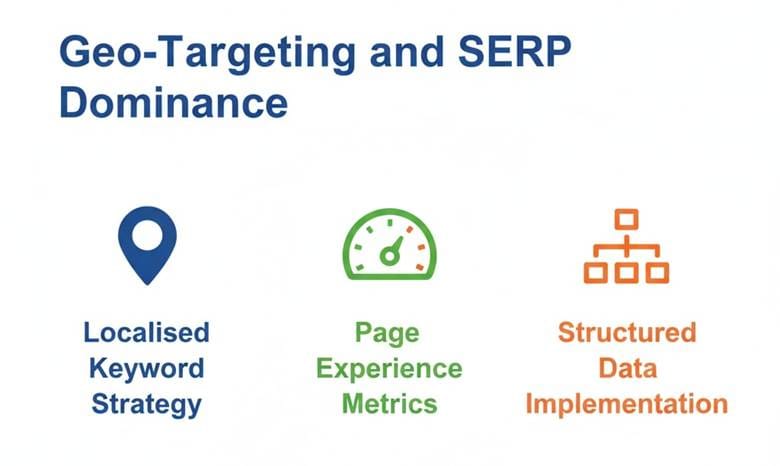
Geo-Targeting and SERP Dominance
Effective SEO in Singapore requires more than basic keyword placement. It requires optimization for the specific ways local businesses search for solutions, often using industry-specific terms and geographic modifiers.
• Localized Keyword Strategy: Beyond straightforward “Singapore + Service,” focus on long-tail, niche keywords that reflect specific local regulatory challenges (e.g., “PDPA compliant cloud solutions SG,” “Singapore ESG reporting software”).
• Page Experience Metrics: Technical SEO factors like Core Web Vitals and mobile usability are increasingly prioritized by Google. Aim for sub-2.5 second Largest Contentful Paint (LCP) across all mobile devices to create a smooth user experience crucial for B2B buyers assessing vendor professionalism.
• Structured Data Implementation: Utilize Schema Markup for Organization, Service, and Event (for local webinars/industry events) to improve SERP visibility and capture rich snippets that signal authority.
Channel Synergy: LinkedIn and Conversational Dynamics
LinkedIn is the primary channel for B2B engagement in Singapore, but its role has changed from a contact list to a space for conversation.
• Personalized Outreach: Generic InMail messages are no longer effective. Successful campaigns leverage LinkedIn Sales Navigator to target prospects based on specific firmographic data (company size, recent funding, job changes) and use highly customized messages that refer to a recent company activity or a shared industry challenge.
• Content Breakup: A single, authoritative whitepaper should be divided into five to eight pieces of native LinkedIn content (short articles, polls, video clips) to ensure engagement across multiple channels and increase touchpoint frequency.
• The Follow-Up Necessity: Case studies from Singapore highlight that speed is critical. Integrating lead forms (from your site, LinkedIn Lead Gen Forms, or webinars) directly into your CRM through automation tools ensures that qualified prospects receive personalized follow-ups (email, SMS, or WhatsApp) within minutes, preventing leads from going cold.
The Future-Proofing Toolkit: Automation and First-Party Data
Singapore’s goal as a “Smart Nation” has sped up the use of technologies that allow precise lead generation. The two key trends behind this are the strategic employment of automation and the essential focus on proprietary data.
Automation for Scalable Personalization
Automation is no longer just for mass email blasts; it allows B2B companies to create personalized experiences on a large scale.
• Dynamic Landing Pages: Use visitor data (e.g., firmographic information, referral source) to change headlines and CTAs on landing pages dynamically. A visitor from a financial services firm searching for “Regulatory Compliance” should see a landing page titled “SG Financial Services: De-Risking with our Compliance Platform.”
• Nurturing Workflows: Set up automated email drip campaigns that respond to lead-scoring triggers. A lead scoring 40+ points (e.g., downloading a case study and visiting the pricing page) should automatically be assigned to a sales development representative (SDR), while a 10-point lead should receive further educational content.
The Value of First-Party Data
With privacy laws and the eventual loss of third-party cookies, B2B marketers need to invest in gathering, enriching, and using their own first-party data.
• Lead Forms as Data Collectors: Redesign lead forms to gather more than just names and emails. Include one or two strategic, valuable questions (e.g., “What is your primary Q3 objective?” or “What is your biggest annual marketing budget allocation?”). This data instantly qualifies and separates leads, enabling targeted follow-up.
• CRM-to-Ad Platform Integration: Use first-party data from your CRM to build highly targeted custom audiences for LinkedIn and Google Ads. This allows for precision retargeting and lookalike modeling that avoids the limitations of general platform-level targeting.
The Sotavento Medios B2B CTA
For B2B companies in Singapore, long-term profitable growth relies on one key factor: precision. This requires a cohesive strategy in which technical SEO, high-intent content, and localized channel expertise work together seamlessly. If your current lead generation engine brings in high volume but low conversions, the issue lies in the quality of your qualification and the technical foundation of your funnel.
We invite experienced Marketing Managers and B2B Founders to team up with Sotavento Medios. Our technical audit service explores your digital footprint—from Core Web Vitals to lead scoring—to implement proven strategies that deliver high conversion rates and low friction in Singapore’s discerning market.

Jeremy Lee is a seasoned digital marketing director and strategist with over two decades of experience in the industry. As the founder of Sotavento Medios, I manage a diverse portfolio of over 50 businesses, helping brands grow through advanced search strategies and digital innovation. My work focuses on bridging the gap between traditional search engine optimisation and the evolving world of AI-driven answer engines.