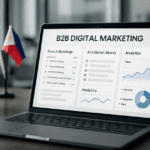
The business-to-business (B2B) landscape across Southeast Asia, particularly in dynamic hubs like Singapore and the Philippines, is undergoing a profound transformation. Digitalization is no longer a nascent trend but a fundamental expectation, driving companies to rethink how they connect with clients, generate leads, and foster growth. In this rapidly evolving environment, traditional marketing approaches often fall short, struggling to keep pace with the demand for personalized experiences, data-driven insights, and measurable return on investment.
Enter Artificial Intelligence (AI). Far from being a futuristic concept, AI has emerged as a powerful, practical tool for B2B digital marketing, offering unprecedented capabilities for precision, efficiency, and deeper market understanding. For businesses operating in Singapore and the Philippines, embracing AI-powered strategies is not merely an option; it is a strategic imperative to maintain competitiveness and unlock new avenues for expansion. This article explores how AI is revolutionizing B2B digital marketing, providing actionable insights for decision-makers and technical professionals aiming to harness its potential for sustainable growth.
The Evolving B2B Landscape in Singapore and the Philippines
Digital Adoption Trends and Market Dynamics
Both Singapore and the Philippines exhibit robust digital adoption rates, albeit with distinct characteristics. Singapore, a global financial and technology hub, boasts near-universal internet penetration and a highly sophisticated digital infrastructure. Its B2B sector is characterized by a strong emphasis on innovation, efficiency, and leveraging advanced technologies. Businesses here are often early adopters, seeking solutions that provide a competitive edge in a mature market.
The Philippines, on the other hand, presents a rapidly expanding digital economy driven by a young, tech-savvy population and increasing internet accessibility. While still developing in certain areas, its B2B market is experiencing significant growth, with a strong appetite for digital solutions that can streamline operations and reach a broader audience. Mobile-first strategies are particularly crucial in the Philippines, reflecting consumer and business behavior.
Across both nations, the expectation for seamless, personalized digital interactions has permeated the B2B sphere. Decision-makers and technical professionals now expect the same level of convenience and tailored experiences in their professional interactions as they do in their personal lives. This shift necessitates a more sophisticated approach to digital marketing, one that can process vast amounts of data to deliver relevant messages at the right time.
Challenges for Traditional B2B Marketing
Traditional B2B marketing methods, often reliant on broad outreach, manual data analysis, and generic content, face significant hurdles in today’s digital-first landscape. Key challenges include:
- Data Silos and Inefficient Processes: Information often resides in disparate systems, making it difficult to gain a holistic view of customer journeys or campaign performance. Manual processes for lead qualification, content distribution, and campaign optimization are time-consuming and prone to human error.
- Limited Scalability and Personalization: Crafting truly personalized experiences for a large volume of B2B prospects is resource-intensive without advanced tools. Generic messaging struggles to resonate with diverse buyer personas, leading to lower engagement and conversion rates.
- Difficulty in Identifying High-Intent Leads: Sifting through numerous inquiries to identify genuinely promising leads requires significant effort. Traditional methods often miss subtle signals of buyer intent, leading to missed opportunities.
- Measuring ROI Effectively: Attributing sales and revenue directly to specific marketing activities can be complex, making it challenging to justify budgets and optimize strategies for maximum impact.
These challenges highlight the urgent need for B2B marketers to evolve, moving beyond conventional tactics to embrace more intelligent, data-driven solutions.
AI as the Catalyst for B2B Digital Marketing Transformation
Understanding AI’s Core Capabilities in Marketing
AI encompasses a range of technologies designed to simulate human intelligence, including machine learning (ML), natural language processing (NLP), and predictive analytics. In the context of digital marketing, these capabilities translate into tangible benefits:
- Enhanced Data Interpretation: AI algorithms can process and analyze massive datasets far more efficiently than humans, identifying patterns, correlations, and insights that would otherwise remain hidden. This allows for a deeper understanding of customer behavior, market trends, and campaign effectiveness.
- Automation of Repetitive Tasks: AI can automate mundane, time-consuming tasks such as data entry, email segmentation, ad bidding, and even initial content drafting. This frees up marketing teams to focus on strategic planning, creative development, and high-value interactions.
- Predictive Power: Through machine learning, AI can forecast future outcomes based on historical data. This predictive capability is invaluable for lead scoring, identifying potential churn risks, and anticipating market shifts.
The Strategic Imperative for Adoption
For B2B organizations in Singapore and the Philippines, adopting AI in digital marketing is no longer a luxury but a strategic imperative. It offers a clear path to:
- Gaining a Competitive Advantage: Early adopters of AI can outpace competitors by delivering more personalized experiences, optimizing marketing spend, and identifying growth opportunities faster.
- Achieving Operational Efficiency: Automating processes reduces operational costs and allows marketing teams to achieve more with existing resources, enhancing productivity.
- Improving Customer Experience: AI enables marketers to understand and respond to customer needs with greater precision, leading to more relevant interactions and stronger client relationships.
By leveraging AI, businesses can transform their marketing functions from reactive to proactive, ensuring they remain relevant and impactful in a rapidly evolving digital ecosystem.
Key AI-Powered Strategies for B2B Growth
Predictive Analytics for Lead Scoring and Prioritization
One of AI’s most impactful applications in B2B marketing is its ability to revolutionize lead scoring. Instead of relying on static rules, AI-powered predictive analytics analyzes a prospect’s demographic data, behavioral patterns (website visits, content downloads, email engagement), and firmographic information to assign a dynamic lead score. This score indicates the likelihood of a prospect converting into a customer.
For a B2B SaaS company in Singapore, for instance, AI can analyze thousands of data points from past customer conversions. It might identify that companies in a specific industry, with a certain employee count, who have downloaded a particular whitepaper and visited the pricing page multiple times, have a 70% higher conversion rate. This allows the sales team to prioritize their efforts on the most promising leads, significantly improving conversion efficiency and reducing wasted resources.
Hyper-Personalization at Scale
Personalization has long been a goal for B2B marketers, but achieving it at scale has been challenging. AI makes hyper-personalization a reality. It enables dynamic content delivery, where website content, email campaigns, and ad creatives adapt in real-time based on an individual prospect’s profile, past interactions, and current intent signals.
Consider a manufacturing supplier in the Philippines. With AI, their website can dynamically display product recommendations relevant to a visitor’s industry or previous browsing history. Email campaigns can be automatically segmented and tailored with specific case studies or product features that resonate with the recipient’s role and challenges. This level of tailored engagement fosters stronger connections and moves prospects through the sales funnel more effectively.
AI-Enhanced Content Creation and Optimization
Content is the cornerstone of B2B marketing, but generating high-quality, relevant content consistently is demanding. AI tools can assist in various stages of the content lifecycle, from ideation to optimization.
- Topic Generation and Research: AI can analyze trending topics, competitor content, and search queries to suggest highly relevant content ideas that resonate with the target audience.
- Drafting and Summarization: AI-powered writing assistants can generate outlines, draft initial versions of articles, emails, or social media posts, and even summarize long-form content for different platforms.
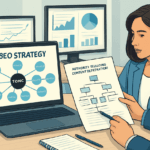
- SEO Optimization: Natural Language Processing (NLP) helps marketers identify optimal keywords, analyze content readability, and suggest structural improvements to enhance search engine visibility. This ensures content not only informs but also ranks well, attracting organic traffic from decision-makers searching for solutions.
By leveraging AI, B2B marketers can produce more engaging, SEO-friendly content faster, maintaining a consistent flow of valuable information for their audience.
Intelligent Ad Campaign Management
Managing complex B2B ad campaigns across multiple platforms (LinkedIn, Google Ads, industry-specific networks) requires continuous monitoring and optimization. AI excels in this area by automating bidding strategies, refining audience segmentation, and optimizing ad creatives in real-time.
For example, a logistics firm in Singapore running a campaign for cold chain solutions can use AI to analyze ad performance across different demographics and firmographics. The AI can automatically adjust bids for audiences showing higher engagement or conversion rates, reallocate budget to top-performing ad sets, and even suggest modifications to ad copy or visuals based on performance data. This leads to significantly improved return on ad spend (ROAS) and more efficient budget utilization.
Conversational AI for Enhanced Customer Engagement
The demand for instant information and support is paramount in the B2B sector. Conversational AI, primarily through intelligent chatbots, provides 24/7 engagement capabilities that enhance the customer experience and streamline lead qualification.
A B2B IT service provider in the Philippines can deploy an AI-powered chatbot on its website to answer frequently asked questions, provide instant information about services, and even qualify leads by asking a series of structured questions. The chatbot can then seamlessly hand over high-potential leads to human sales representatives, ensuring that valuable human resources are focused on complex inquiries and relationship building. This improves response times, reduces operational overhead, and ensures prospects receive immediate attention, regardless of time zones.
Implementing AI in Your B2B Marketing Stack: Best Practices
Data Foundation and Integration
The effectiveness of any AI initiative hinges on the quality and accessibility of your data. Before deploying AI tools, ensure your data is clean, structured, and integrated across your core systems, such as CRM, marketing automation platforms, and analytics tools. Data silos will severely limit AI’s ability to generate accurate insights and predictions. Invest in data governance and ensure data privacy compliance, especially with regulations like Singapore’s Personal Data Protection Act (PDPA).
Starting Small and Scaling Up
Embarking on an AI journey does not require an immediate, large-scale overhaul. Begin with pilot projects that address specific pain points or offer clear opportunities for improvement. For instance, start by implementing AI for lead scoring, or for optimizing a single ad campaign. Document the results, measure the ROI, and use these successes to build internal confidence and secure further investment. A phased approach allows for learning, adaptation, and gradual expansion of AI capabilities across your marketing functions.
Ethical Considerations and Data Privacy
As B2B organizations leverage AI, ethical considerations and data privacy must remain paramount. Ensure transparency in how AI is used, particularly when interacting with prospects and customers. Adhere strictly to data protection regulations relevant to Singapore and the Philippines, ensuring consent is obtained where necessary and data is handled securely. Building trust is crucial in B2B relationships, and responsible AI implementation reinforces that trust.
Upskilling Your Team
AI tools are designed to augment human capabilities, not replace them. Invest in training your marketing team to understand AI’s potential, how to interact with AI-powered platforms, and how to interpret the insights they generate. The focus should shift from manual execution to strategic oversight, creative problem-solving, and leveraging AI to enhance decision-making. Empowering your team with AI literacy ensures a smooth transition and maximizes the value derived from these advanced technologies.
Conclusion
The future of B2B digital marketing in Singapore and the Philippines is undeniably intertwined with Artificial Intelligence. As these markets continue their rapid digital evolution, businesses that proactively embrace AI-powered strategies will be best positioned to navigate complexity, achieve unprecedented levels of personalization, and drive significant growth. AI is not merely a technological enhancement; it is a fundamental shift in how B2B organizations can understand, engage, and convert their target audiences.
By leveraging predictive analytics, hyper-personalization, AI-enhanced content, intelligent ad management, and conversational AI, businesses can unlock new efficiencies, optimize their marketing spend, and build stronger, more profitable relationships. The time to act is now. Embrace AI to transform your B2B digital marketing, secure a competitive edge, and unlock new levels of growth and innovation in the dynamic markets of Singapore and the Philippines.

I am Tricia Huang Mei, an Advertising Partner in Sotavento Medios with over two decades of experience in the Singapore advertising and business sectors. My career is defined by a commitment to driving high-impact marketing campaigns and fostering sustainable growth for the diverse business portfolios I manage.