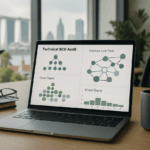
For B2B brands competing in Singapore and the Philippines, topical authority is no longer a loose content marketing goal. It is a structural requirement for earning visibility across search engines, AI-assisted discovery surfaces, and high-intent buyer research journeys. Surfer SEO’s new Topic Cluster Generator gives content teams a practical way to map a subject area, identify supporting content gaps, and build an internal linking architecture that signals depth to search engines. For agencies, SaaS companies, fintech firms, and enterprise service providers in both markets, this matters because audiences often research complex solutions across multiple sessions, devices, and stakeholders before they submit an inquiry or request a demo.
The value of the Topic Cluster Generator is not just speed. It helps teams move from isolated keyword targets to a coordinated information architecture, which is the foundation of authority-building content. That means aligning pillar pages, supporting articles, and internal links around search intent rather than publishing disconnected blog posts that compete with each other. Used correctly, the tool can help a business reduce content fragmentation, improve crawl efficiency, and create a clearer semantic footprint around its most profitable themes.
What Surfer SEO’s Topic Cluster Generator Actually Builds
The Topic Cluster Generator is designed to transform a seed topic into a structured set of related subtopics. Instead of manually brainstorming dozens of supporting pages, you start with a core subject, then use the tool to surface adjacent topics that are semantically related and commercially relevant. The result is a cluster map that can guide content production, internal linking, and page hierarchy.
For SEO teams, the practical benefit is that the generator reduces guesswork when defining topical breadth. It helps identify not only what to write, but how the content pieces should connect. That distinction is important because modern search systems do not reward volume alone. They reward completeness, coherence, and a consistent relationship between a core page and its supporting assets.
How the cluster model supports semantic SEO
Semantic SEO depends on the relationship between entities, subtopics, and intent. A topic cluster framework supports this by organizing content around a central entity or business theme, such as cloud accounting software, logistics optimization, B2B lead generation, or cybersecurity compliance. The pillar page targets the broad commercial term, while cluster pages answer specific questions, compare sub-solutions, or address use-case variations.
For example, a Singapore-based payroll provider could build a pillar around payroll outsourcing and attach cluster pages on statutory compliance, cross-border payroll management, employee self-service portals, and payroll integration with HR systems. A Philippine IT services firm could build a pillar around managed security services and support clusters on endpoint protection, SOC monitoring, incident response, and compliance with data privacy requirements. The generator helps make this architecture visible before production begins.
How to Use the Generator to Build Authority for 2026 Search Behavior
Search behavior in 2026 rewards content ecosystems that show topical completeness and navigational clarity. That means you should not use the generator as a simple keyword list. You should use it as a planning layer that informs editorial strategy, SERP alignment, and site architecture. Start with a topic tied to revenue, not just traffic. In B2B environments, authority should be built around solution categories, recurring buyer pain points, compliance obligations, and recurring comparison queries.
Once you enter a seed topic into the generator, review the suggested cluster terms through three lenses: intent, commercial relevance, and content format. Some terms will be ideal for educational articles, while others may belong in comparison pages, product pages, or technical guides. A topic cluster is strongest when each page has a distinct purpose and does not cannibalize another page’s intent.
Step 1: Select a pillar topic with business value
The best pillar topic is usually a category-level term that your sales team already discusses regularly. For a B2B digital agency, this might be SEO services for SaaS, lead generation for enterprise software, or content marketing for fintech. For a technical services company, it might be cloud migration strategy, endpoint security, or application modernization. The topic should be broad enough to support multiple clusters but focused enough to map to a defined buyer journey.
In Singapore and the Philippines, buyers often compare vendors on compliance, scalability, and delivery capability. That makes it smart to choose topics that can support subpages on implementation, integration, governance, and cost. The generator can then reveal related content opportunities that reflect these decision criteria rather than generic informational searches.
Step 2: Separate informational, commercial, and transactional intent
Not every cluster page should chase the same intent. If the generator suggests a topic like “what is programmatic SEO,” that belongs in an educational article. If it suggests “Surfer SEO vs competitor tools,” that may fit a comparison page. If it suggests “best SEO agency for B2B SaaS in Singapore,” that is closer to transactional intent and should support a service or landing page.
This is where many content teams lose authority. They publish pages with overlapping intent, then wonder why rankings stagnate. A disciplined cluster strategy treats intent as a content engineering problem. Each article needs a role in the conversion pathway, whether that is awareness, evaluation, or decision support.
Step 3: Map content depth against SERP requirements
Use the generator output as a guide, then validate each topic against the current search results. Look at the page types ranking on page one. Are they guides, listicles, product pages, tool pages, or long-form explainers? That tells you what format search engines currently consider useful for that query. If the search results are dominated by in-depth guides, a short article is unlikely to compete. If results include templates or calculators, consider building support assets that match that format.
For teams in regulated or technical industries, this step is especially important. A keyword list may look attractive, but if the ranking pages demonstrate deep expertise, light editorial coverage will not be enough. The cluster generator should help you prioritize topics that your team can answer with precision, not just volume.
Operationalizing Topic Clusters Across Content, SEO, and Internal Links
Once the cluster is defined, operational execution becomes the decisive factor. Many teams generate a cluster map and then fail to turn it into a publication system. To avoid that, align your editorial calendar, on-page SEO rules, and internal linking policy around the cluster structure. Every new article should answer one specific query and link back to the pillar page using descriptive anchor text. Supporting articles should also link laterally where it improves user navigation and clarifies context.
Internal linking is not just a technical SEO task. It is a signal that the site has an organized knowledge architecture. Search crawlers use link structure to understand importance, proximity, and thematic association. A cluster with strong internal links can improve crawl discovery and make it easier for important pages to accumulate authority signals over time.
Content briefs should reflect the cluster, not just the keyword
When building a brief from the generator, include the target intent, the relationship to the pillar page, the primary entities to cover, and the internal links that should be inserted. This creates consistency across writers, editors, and SEO strategists. For technical B2B content, briefs should also identify compliance references, product categories, implementation constraints, and industry terminology that subject matter experts expect to see.
In the Singapore market, this could mean referencing PDPA considerations, cross-border data handling, or regional procurement requirements. In the Philippines, it may require clarity around outsourcing models, service delivery structures, and data governance expectations. These details help content feel locally relevant and commercially credible without relying on generic localization.
Use cluster pages to build supporting expertise signals
Authority grows when your site covers a topic from multiple angles with consistent terminology and depth. A pillar page alone cannot do this. Cluster pages should add examples, process details, implementation steps, and common failure modes. They should answer the secondary questions that decision-makers ask before they contact sales or shortlist vendors.
This is especially useful for complex buyer journeys where multiple stakeholders are involved. A marketing director may care about lead quality and reporting. A technical lead may care about integrations, security, and data flow. A finance leader may care about pricing structures and operational efficiency. A well-structured cluster can serve all of these concerns without forcing them into one overloaded page.
Measuring Whether the Cluster Is Actually Building Authority
Authority should be measured by more than rankings alone. In a technical content program, you should monitor whether the cluster increases qualified impressions, improves crawl coverage, strengthens internal link equity, and drives engagement from the right audience segments. A page can rank well and still fail to support commercial goals if it attracts the wrong intent.
Look at search console data for query expansion across the cluster. If supporting pages begin surfacing for closely related terms, that indicates semantic reach is improving. Review user paths as well. If visitors move from cluster pages to the pillar page and then to a service or contact page, the cluster is doing its job. If they bounce quickly, the content may be too shallow, too generic, or too disconnected from the buyer journey.
Track performance at the cluster level, not only page level
Page-level reporting can hide the real effect of topical architecture. A weaker article may still support the cluster by sending relevance signals and distributing internal link equity. That is why SEO dashboards should group pages by topic family. Track total impressions, clicks, average position, assisted conversions, and internal link flow for the full cluster.
This approach also helps teams decide when to expand the cluster, merge overlapping pages, or retire content that no longer supports the structure. If a supporting article is competing with the pillar page, revise the intent or consolidate the content. If a subtopic is missing but the search demand is clear, add it before competitors occupy the space.
When to refresh a cluster for 2026 relevance
Search demand changes as products, regulations, and buyer expectations evolve. A cluster should be reviewed when the core topic begins to fragment, when new intent types appear in the SERP, or when internal stakeholders launch new offers that fit the same subject area. Refresh the pillar page first, then update the supporting content and links. This keeps the architecture aligned and prevents topic drift.
For firms operating across Singapore and the Philippines, this is especially relevant because regional search behavior may diverge as buyers adopt different language patterns, vendor expectations, and compliance concerns. A strong cluster strategy accounts for those differences without creating duplicate, low-value variants.
Implementation Checklist for a High-Authority Topic Cluster
Use the following checklist to turn Surfer SEO’s Topic Cluster Generator into an execution system rather than a brainstorming aid:
- Choose a pillar topic that maps directly to revenue, pipeline, or strategic market positioning.
- Validate each suggested cluster topic by intent, SERP format, and business value.
- Assign one page type per query type to prevent cannibalization.
- Build a pillar page that covers the broad subject and links to all relevant supporting pages.
- Write cluster pages that answer specific sub-questions with technical precision and local relevance.
- Use descriptive internal anchor text that clarifies topical relationships.
- Group reporting by topic family so performance is evaluated at the cluster level.
- Refresh the cluster when search intent shifts, new offers launch, or competitive SERPs change.
- Align briefs, editorial review, and SEO QA so the architecture stays consistent after publication.
- Prioritize content that supports decision-making, not just traffic acquisition.
When the Topic Cluster Generator is used this way, it becomes a framework for scalable authority building rather than a shortcut for keyword discovery. That approach suits B2B organizations that need credibility, depth, and technical consistency across their content ecosystems.

I am Tricia Huang Mei, an Advertising Partner in Sotavento Medios with over two decades of experience in the Singapore advertising and business sectors. My career is defined by a commitment to driving high-impact marketing campaigns and fostering sustainable growth for the diverse business portfolios I manage.