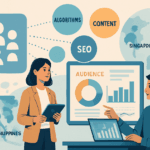
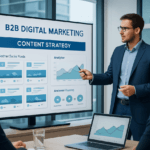
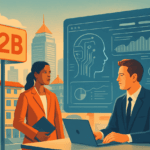
The business-to-business (B2B) landscape in Singapore and the Philippines is dynamic, characterized by rapid digital transformation and increasing competition. As companies strive to capture the attention of discerning decision-makers and technical professionals, traditional marketing approaches often fall short. The year 2024 marks a pivotal moment, ushering in an era where artificial intelligence (AI) is no longer a futuristic concept but a fundamental pillar of effective B2B digital marketing strategy. For businesses operating within these vibrant Southeast Asian economies, understanding and implementing AI-driven strategies is not merely an advantage; it is a necessity for sustained growth and market leadership.
This article explores how AI is reshaping B2B digital marketing in Singapore and the Philippines, offering advanced technical analysis and actionable insights. We will delve into specific AI applications that empower businesses to personalize customer journeys, optimize content strategies, and make data-driven decisions with unprecedented precision. Our focus remains on practical examples and real-world applications, ensuring that the insights provided are immediately relevant and implementable for business decision-makers and technical professionals alike.
The AI Imperative in Singapore and Philippines B2B Markets
The digital ecosystems of Singapore and the Philippines present unique opportunities and challenges for B2B marketers. Singapore, a global financial and technology hub, boasts high digital adoption rates and a sophisticated business environment. The Philippines, with its rapidly expanding digital economy and a large, digitally native workforce, offers immense potential for B2B growth. In both markets, the volume of digital data generated daily is staggering, creating a fertile ground for AI applications. However, this data also presents a challenge: how to extract meaningful insights and translate them into effective marketing actions.
AI addresses this challenge by automating complex data analysis, identifying subtle patterns, and predicting future behaviors. It moves B2B marketing beyond broad-stroke campaigns to hyper-targeted, contextually relevant interactions. For example, in Singapore’s competitive fintech sector, AI can help identify specific institutional clients most likely to adopt new treasury management software based on their digital footprint and industry reports. In the Philippines’ burgeoning e-commerce logistics sector, AI can predict peak demand periods for warehousing solutions, allowing B2B providers to proactively engage potential clients with tailored offers.
Shifting from Reactive to Proactive Engagement
Historically, B2B marketing has often been reactive, responding to inbound inquiries or relying on broad outbound efforts. AI fundamentally shifts this paradigm, enabling proactive engagement. By analyzing vast datasets, including website interactions, CRM data, social media sentiment, and public economic indicators, AI algorithms can identify potential leads exhibiting buying signals long before they explicitly express interest. This allows sales and marketing teams to intervene with highly relevant information at the optimal moment, significantly shortening sales cycles and improving conversion rates. Consider a manufacturing firm in Batangas, Philippines, looking for new enterprise resource planning (ERP) software. AI could identify their search patterns, competitor interactions, and even internal job postings related to IT infrastructure, flagging them as a high-potential lead for an ERP solutions provider in Manila.
AI-Powered Personalization and Customer Journey Optimization
Personalization is no longer a luxury but an expectation in B2B interactions. Generic messaging alienates sophisticated buyers who expect vendors to understand their specific pain points and industry nuances. AI excels at delivering this level of personalization at scale, transforming the customer journey from a linear path into a dynamic, adaptive experience.
Dynamic Content Delivery and Website Personalization
AI algorithms can analyze a visitor’s real-time behavior on a B2B website, including pages viewed, time spent, and previous interactions, to dynamically adjust the content presented. For a procurement manager in Singapore researching cloud infrastructure, the website might automatically highlight case studies from similar industries or present whitepapers on data security compliance relevant to Singaporean regulations. This goes beyond simple A/B testing; it is about creating a unique, optimized experience for each individual visitor, guiding them towards conversion by addressing their specific information needs and concerns. This level of dynamic content delivery ensures that every touchpoint is relevant, increasing engagement and building trust.
Intelligent Lead Nurturing and Email Campaigns
Traditional email nurturing sequences often follow a rigid path. AI introduces intelligence into this process by analyzing lead behavior and adjusting the nurturing flow in real-time. If a lead clicks on a specific product demo link, AI can trigger an immediate follow-up email with more detailed technical specifications or a direct invitation for a consultation. Conversely, if a lead becomes inactive, AI can recommend re-engagement strategies, perhaps by sending a curated industry report or an invitation to a relevant webinar. This adaptive approach ensures that leads receive the right information at the right time, preventing disengagement and accelerating their progression through the sales funnel. For instance, a B2B SaaS company targeting SMEs in Cebu, Philippines, could use AI to identify which features are most relevant to a specific company based on their industry and size, then tailor email content accordingly.
Predictive Analytics and Data-Driven Decision Making
The true power of AI in B2B marketing lies in its ability to move beyond descriptive analytics (what happened) to predictive analytics (what will happen). This foresight empowers businesses to make strategic decisions based on probabilities rather than assumptions, leading to more efficient resource allocation and higher ROI.
Forecasting Demand and Identifying Churn Risks
AI models can analyze historical sales data, market trends, economic indicators, and even competitor activities to forecast future demand for B2B products and services. This is invaluable for inventory management, resource planning, and proactive sales outreach. Furthermore, AI can identify customers at risk of churn by analyzing usage patterns, support ticket history, and engagement metrics. For a cybersecurity provider in Kuala Lumpur serving clients across Southeast Asia, AI could flag a Singaporean client whose license usage has declined, or whose support interactions have become more frequent and negative, prompting a proactive account management intervention to retain the client. This predictive capability transforms customer retention from a reactive firefighting exercise into a strategic, data-driven initiative.
Optimizing Ad Spend and Campaign Performance
B2B advertising budgets are often substantial, making efficient allocation critical. AI algorithms can continuously monitor campaign performance across various channels, including LinkedIn, Google Ads, and industry-specific platforms. They can identify which keywords, ad creatives, and targeting parameters yield the highest return on investment, automatically adjusting bids and reallocating budget in real-time. This level of optimization ensures that every dollar spent contributes maximally to lead generation and conversion. A digital marketing agency in Singapore managing campaigns for a B2B logistics client could leverage AI to dynamically shift budget towards geographies in the Philippines showing higher engagement for specific freight services, maximizing lead quality and minimizing wasted spend.
Hyper-Efficient Content Creation and Distribution with AI
Content is the lifeblood of B2B marketing, but creating high-quality, relevant content at scale is resource-intensive. AI tools are emerging as powerful allies, streamlining content creation, optimization, and distribution, allowing marketers to focus on strategy and creativity.
AI-Assisted Content Generation and SEO Optimization
While AI cannot fully replace human creativity and strategic thinking in content creation, it can significantly augment the process. AI-powered tools can assist in generating outlines, drafting initial content, summarizing research, and even optimizing existing content for SEO. For example, an AI tool can analyze top-ranking articles for a specific B2B keyword, identify common themes, relevant subtopics, and optimal keyword density, then provide recommendations for improving an article’s search engine visibility. This allows B2B marketers in Manila to produce more technical whitepapers, blog posts, and case studies in less time, maintaining a consistent flow of valuable information to their target audience. The focus remains on human oversight to ensure accuracy, brand voice, and the deep technical insights that only human experts can provide.
Intelligent Content Distribution and Audience Matching
Creating great content is only half the battle; ensuring it reaches the right audience is equally crucial. AI can analyze audience demographics, online behavior, and consumption patterns to recommend the most effective distribution channels and timing. This could mean identifying specific industry forums, LinkedIn groups, or even niche online publications where a particular piece of content will resonate most strongly. For a cybersecurity firm targeting IT directors in Singapore, AI might suggest distributing a technical brief on zero-trust architecture through a specific cybersecurity professional network at a time when engagement is historically highest. This intelligent distribution maximizes content reach and impact, ensuring that valuable insights are consumed by those who need them most.
The Human Element: Augmenting, Not Replacing, Marketers
It is crucial to understand that AI in B2B marketing is not about replacing human marketers but about augmenting their capabilities. AI handles the repetitive, data-intensive tasks, freeing up human professionals to focus on strategic thinking, creative problem-solving, relationship building, and the nuanced understanding of client needs that only humans can provide.
Strategic Oversight and Ethical AI Implementation
Human marketers remain essential for providing strategic oversight, setting objectives, interpreting AI-generated insights, and ensuring that AI applications align with brand values and ethical guidelines. The responsible use of AI, particularly concerning data privacy and algorithmic bias, is paramount. In Singapore and the Philippines, adherence to data protection regulations like the Personal Data Protection Act (PDPA) and the Data Privacy Act of 2012, respectively, is non-negotiable. Human expertise is required to design AI systems that are compliant, fair, and transparent, building trust with B2B clients who are increasingly concerned about data governance.
Cultivating Creativity and Empathy
While AI can generate content, it cannot replicate genuine human creativity, empathy, or the ability to build deep, lasting relationships. These are the unique strengths of human marketers. By offloading analytical and repetitive tasks to AI, marketing teams can dedicate more time to crafting compelling narratives, developing innovative campaign concepts, and fostering strong client relationships. This symbiotic relationship between human intelligence and artificial intelligence will define the most successful B2B marketing strategies in Singapore and the Philippines for 2024 and beyond.
Conclusion
The integration of AI into B2B digital marketing is no longer a future trend; it is a present reality that is rapidly transforming how businesses in Singapore and the Philippines connect with their target audiences. From hyper-personalization and predictive analytics to intelligent content strategies, AI offers unprecedented opportunities for efficiency, precision, and growth. For business decision-makers and technical professionals, the imperative is clear: embrace AI not as a threat, but as a powerful partner that augments human capabilities and unlocks new levels of strategic advantage.
To thrive in the competitive B2B landscape of Singapore and the Philippines, organizations must invest in AI literacy, adopt robust AI tools, and foster a culture that encourages experimentation and continuous learning. By doing so, they can move beyond traditional marketing limitations, build stronger client relationships, and secure a leading position in the digital economy of tomorrow. The future of B2B digital marketing is intelligent, personalized, and profoundly human-augmented.

I am Tricia Huang Mei, an Advertising Partner in Sotavento Medios with over two decades of experience in the Singapore advertising and business sectors. My career is defined by a commitment to driving high-impact marketing campaigns and fostering sustainable growth for the diverse business portfolios I manage.