AI is changing search quickly. People aren’t just “Googling” anymore. They’re using AI tools to summarize, recommend, and decide. This shift leads to fewer clicks, fewer “ten blue links,” and more filtered answers that feel final.
For brands, this is significant. Discovery is changing. Product consideration is changing. The path to your website is changing too. If your SEO strategy still focuses solely on traditional search behavior, you will notice the impact slowly at first, then all at once.
So the real question now isn’t “Is AI SEO a cool new thing we should try?” Instead, it is: Is AI SEO worth it? Will AI SEO actually deliver measurable ROI? Will it help us maintain visibility, generate demand, and drive conversions in a search landscape that becomes more AI-driven each month? Or will it simply burn through budget and leave you with nothing but screenshots?
Let’s cut through the hype. In this article, we’ll explain what AI SEO really is, where it succeeds, where it becomes risky, and when it’s genuinely worth the investment, so you can make your decision with clarity, not fear of missing out.
AI SEO in the Context of Modern Search
AI SEO changes how optimization works. Traditional SEO focuses on ranking web pages for specific keywords in search engine results. AI SEO aims to make your content understandable, credible, and useful enough to be referenced or cited in AI-generated answers. Instead of just vying for rankings in search results, businesses now compete for visibility in AI summaries and conversations.
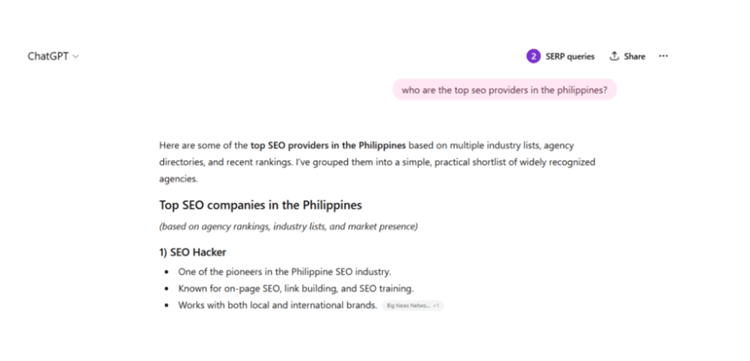
We are already seeing this shift through platforms like ChatGPT, Google AI Overviews, and Perplexity, where users ask complex questions and receive instant, synthesized responses. As these AI-powered experiences become more common, SEO strategies must evolve to ensure that brands remain visible in both traditional and AI-driven search environments.
Why Businesses Invest in AI SEO
Some businesses are starting to see AI SEO as more than just a trend. It’s a practical response to how users search, discover, and interact with information online. With AI tools influencing both search engines and user expectations, businesses are rethinking how they maintain visibility and stay competitive.
- Changing user behavior. More users are turning to AI-powered tools for quick, summarized answers instead of scrolling through traditional search results. This reduces reliance on classic click-through journeys and alters how traffic is distributed.
- A more competitive digital landscape. More businesses are integrating AI into their SEO processes. Those who ignore AI SEO now risk falling behind competitors who are using it to scale content, uncover insights, and optimize faster.
- Stronger data-driven capabilities. With the growth of various AI tools today, large datasets can now be processed easily, improving keyword research, detecting search patterns, predicting trends, and even personalizing content strategy. This allows businesses to make quicker, more informed SEO decisions.
As artificial intelligence continues to grow and reshape search, AI SEO is increasingly viewed as a strategic investment. This approach not only helps businesses adjust to new search behaviors but also improves efficiency and performance.
How AI SEO Helps You Stay Ahead
Staying visible online is no longer just about keeping up. It is now about staying ahead. With AI reshaping how information is shown and consumed, businesses are beginning to view AI SEO as an opportunity rather than a risk. It opens new ways to maintain relevance, adjust to market changes, and position a brand for long-term growth in a competitive digital landscape.
Improved Efficiency and Scalability
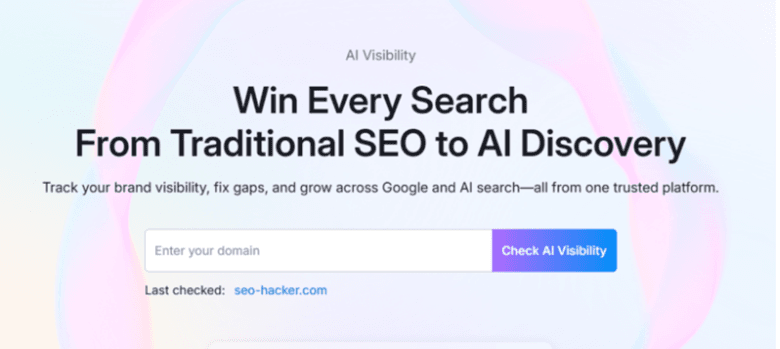
Traditional, time-consuming SEO tasks like keyword research, content structuring, and on-page optimizations can now be streamlined and automated with various AI tools. This reduces the time spent on repetitive tasks and allows teams to focus more on strategy, analysis, and performance improvements.
With AI SEO in place, businesses can work faster and more accurately without overextending their resources or stretching their teams too thin. These efficiencies help businesses scale their SEO efforts, respond to market demands quicker, and maintain a consistent level of optimization as they grow.
Better Targeting and Personalization
AI SEO helps businesses understand what users are actually searching for by analyzing large amounts of data related to queries, user behavior, and emerging patterns. Instead of relying only on static keywords, AI can identify search intent and uncover new topics before they become competitive. This strategic investment in AI SEO allows businesses to create more relevant, personalized content that meets users’ needs at each stage of their journey.
With a targeted and data-driven approach, businesses can reach the right audience at the right time, helping them stay ahead in a competitive search environment.
Potential for Expanded Visibility
Visibility in search is no longer limited to traditional rankings. AI-powered platforms increasingly provide summaries and direct answers by sourcing information from multiple trusted sources.
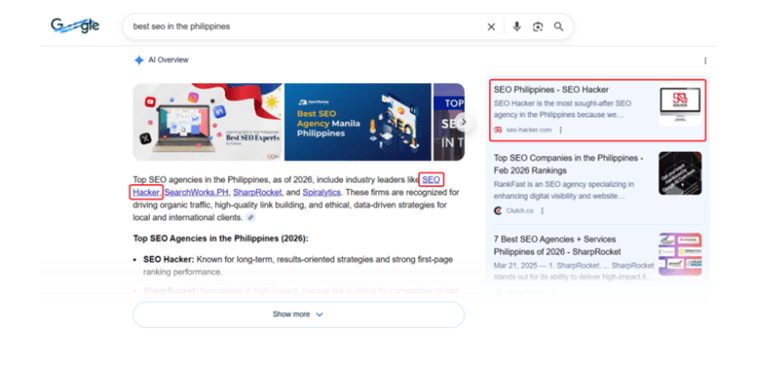
To increase visibility in search, businesses should optimize website content to be clear, authoritative, and structured for AI understanding. This boosts their chances of appearing in generative responses. Such an approach allows brands to connect with audiences not just through search rankings but also through AI-driven answers, thereby expanding their presence as search experiences evolve.
Future-Proofing Your SEO Strategy
Since businesses have laid a foundation for their SEO, the next step is to adjust to how AI is reshaping search discovery. Incorporating AI SEO into existing strategies helps ensure content remains discoverable across traditional search results and new AI-powered platforms. This keeps businesses relevant and ready for the next wave of search innovation.
The Strategic Risks and Challenges of AI SEO
It is crucial to consider the risks and challenges of AI SEO alongside its benefits. While AI offers efficiency, insights, and scalability, relying too much on automated tools without careful oversight can lead to issues.
By understanding these challenges, businesses can make informed and balanced investments in AI SEO.
Quality vs. Quantity
One of the main challenges of AI SEO is finding a balance between quality and quantity. While AI can speed up content creation and produce large volumes of material quickly, this does not guarantee effective results. Content still needs to meet user expectations and satisfy search engine standards, providing value and relevance.
Focusing solely on quantity can dilute a brand’s authority and engagement, so businesses must carefully review and refine AI-generated content to ensure it aligns with their overall SEO strategy.
Zero-Click Phenomenon
With AI-powered platforms giving direct answers and summaries, users can get the information they need without visiting a website. While this may increase brand visibility through responses, it does not always lead to website traffic, leads, or conversions. This is where “zero-click searches” come into play.
In this context, businesses must optimize content for visibility as well as engagement and actionable outcomes to ensure AI-driven exposure contributes to their overall marketing goals.
Dependence on Tools
While AI can speed up processes and provide useful insights, over-reliance can lead to standard or templated content that lacks depth and originality. Without human judgment to guide direction, refine messaging, and align with brand goals, AI outputs may fall short of delivering real value.
To avoid this, businesses should treat AI as a support tool, not a replacement for strategic thinking and editorial control.
Learning Curve & Cost
Adopting AI SEO comes with a learning curve and additional costs. The tools necessary for AI-driven optimization often involve subscription fees, training, and ongoing adjustments to processes. Teams need time to learn how to use these tools effectively and integrate them into existing SEO tasks.
Without proper planning, the financial and operational investment may outweigh short-term benefits. This is why businesses should assess their goals, resources, and readiness before committing to AI SEO solutions.
When is AI SEO Worth It?
While AI offers clear advantages, its value and effectiveness depend on specific conditions, goals, and operational needs. Not every situation requires AI-driven optimization, making it essential to evaluate timing and context.
When You Already Have a Solid SEO Foundation
AI SEO provides the most value when it builds on an established SEO foundation. Websites with strong technical SEO, clear site structures, and high-quality content are better positioned to benefit from AI optimization. In these cases, AI can focus on scaling content efforts, refining keyword strategies, and enhancing performance rather than fixing basic issues.
Without a solid SEO foundation, AI tools may just amplify existing problems, making it harder to achieve meaningful results.
When Your SEO Goals Require Scale
For websites with large product catalogs, multiple service pages, or campaigns in different markets, AI can streamline processes like keyword clustering, topic generation, and content outlining. This makes it easier to maintain consistency across a wide range of pages.
AI reduces the time spent on research, drafting, and other optimizations, allowing businesses to scale their SEO efforts efficiently as demands grow.
When You Want to Future-Proof Your SEO Strategy
To stay in tune with how search is evolving, businesses should consider AI SEO. Search engines are increasingly using AI-driven algorithms, generative results, and conversational interfaces, so traditional optimization by itself may no longer suffice.
Integrating AI into your SEO strategy helps businesses adapt to changes like AI Overviews and answer engines. Investing in AI tools early allows teams to respond to shifts in user behavior and search technology, ensuring their SEO strategy remains relevant and effective over time.
When You Need to Maximize Limited Resources
AI SEO is also beneficial for businesses with small teams or limited budgets. Since repetitive tasks like keyword research, meta tag generation, and content brief creation can be automated with different AI tools, it reduces the manual work involved in daily optimization. This enables lean marketing teams to accomplish more without increasing headcount, thus improving productivity across key SEO processes.
For startups, SMEs, or organizations with limited resources, AI provides a practical means to maintain consistent SEO efforts while focusing on higher-impact strategies.
When AI Helps Increase Conversions or Leads
Adapting to AI SEO can boost website traffic, conversions, and leads. Modern AI tools can analyze user behavior, search intent, and performance data to pinpoint which keywords, pages, and content elements are most likely to drive action. They can also suggest improvements that align content with high-intent, conversion-focused queries.
When AI contributes to measurable outcomes like increased inquiries, sign-ups, or sales, the investment becomes worthwhile.
When You’re Competing in a Data-Driven Market
In industries where competitors use automation, analytics, and rapid optimization, manual strategies can quickly fall behind. AI tools can analyze large data sets, detect patterns, and identify opportunities much faster than traditional methods. They also reveal competitor strategies, spot content gaps, and surface emerging keywords before they saturate the market.
As a result, businesses that adopt AI early in fast-moving environments are more likely to maintain a competitive advantage.
Key Takeaway
AI can be a powerful tool in modern SEO, but it is not a magic bullet that operates independently. Its value lies in how well it aligns with your strategy, goals, and the strength of your existing SEO foundation. When used with clear objectives and human expertise, AI can drive growth, improve efficiency, and help businesses adapt to the ever-changing search landscape.
Ultimately, AI SEO is worth investing in when it supports a solid strategy rather than trying to replace it.

Sandamalee is a dedicated digital marketing professional and a core member of the Sotavento Medios team. I work closely with my colleagues to manage daily digital operations, ensuring that every project meets the high standards our clients expect. My focus is on maintaining the technical and editorial integrity of our diverse business portfolios, helping brands stay consistent and impactful in their online presence.