The digital marketing landscape for B2B enterprises in Singapore and the Philippines is undergoing a profound transformation. As businesses increasingly navigate complex buyer journeys and demand higher returns on investment, the traditional approaches to marketing are proving insufficient. Forward-thinking organizations are now leveraging advanced technologies and strategic methodologies to gain a competitive edge. This article explores the pivotal roles of Artificial Intelligence (AI), hyper-personalization, and data-driven strategies in shaping the future of B2B digital marketing across these dynamic Southeast Asian markets.
The AI Revolution in B2B Marketing for Southeast Asia
Artificial Intelligence is no longer a futuristic concept; it is a present-day imperative for B2B marketers in Singapore and the Philippines. AI’s ability to process vast datasets, identify intricate patterns, and automate repetitive tasks empowers marketing teams to operate with unprecedented efficiency and precision. From lead generation to customer retention, AI applications are redefining what is possible.
Predictive Analytics for Enhanced Lead Qualification
One of the most impactful applications of AI in B2B marketing is predictive analytics. In markets like Singapore, where data maturity is relatively high, AI algorithms can analyze historical customer data, behavioral patterns, and firmographic information to predict which leads are most likely to convert. This moves beyond simple lead scoring, offering a nuanced understanding of potential customer intent. For businesses in the Philippines, where market dynamics can vary significantly, predictive analytics helps identify emerging segments and tailor outreach more effectively, reducing wasted resources on unqualified prospects. For example, an AI-powered system might flag a company that has recently downloaded specific whitepapers, visited pricing pages multiple times, and shown increased engagement with competitor content as a high-intent lead, prompting immediate, targeted sales follow-up.
AI-Powered Content Generation and Optimization
Content remains king in B2B marketing, but the sheer volume required to engage diverse audiences can be daunting. AI tools are now assisting in content creation, from generating initial drafts of blog posts and social media updates to optimizing existing content for SEO and readability. While human oversight remains crucial for maintaining brand voice and technical accuracy, AI can significantly accelerate content production cycles. Furthermore, AI can analyze content performance, recommending topics that resonate most with specific buyer personas or suggesting optimal publishing times based on audience engagement data. This is particularly valuable in the Philippines, where diverse linguistic and cultural nuances can be addressed more efficiently with AI-driven insights.
Marketing Automation and Chatbots for Scaled Engagement
AI-driven marketing automation platforms streamline workflows, manage email campaigns, and personalize customer journeys at scale. Chatbots, powered by natural language processing (NLP), provide instant support and qualification for website visitors, acting as a crucial first point of contact. In Singapore, where businesses often operate globally, chatbots can provide 24/7 assistance, capturing leads and answering common queries outside of standard business hours. For the Philippines, where customer service expectations are high, AI-driven chatbots ensure consistent and prompt responses, enhancing the overall customer experience and freeing human agents to focus on more complex interactions.
Hyper-Personalization at Scale: Engaging the Modern B2B Buyer
The modern B2B buyer expects a personalized experience that mirrors the consumer-grade interactions they encounter daily. Generic messaging no longer cuts through the noise. Hyper-personalization, driven by data and AI, allows B2B marketers to deliver highly relevant content, offers, and communications tailored to individual buyer needs and preferences.
Account-Based Marketing (ABM) Reinvented with Personalization
Account-Based Marketing (ABM) has long been a cornerstone of B2B strategy, but hyper-personalization elevates it to new heights. Instead of broad segmentations, ABM, enhanced by AI, enables marketers to create bespoke campaigns for individual target accounts. This involves understanding the specific challenges, goals, and decision-making units within each organization. For instance, a Singaporean tech firm targeting a multinational corporation might develop a custom landing page showcasing solutions directly addressing that corporation’s unique operational bottlenecks, supported by case studies relevant to their industry and region. This level of tailored engagement fosters stronger relationships and significantly increases conversion rates.
Dynamic Content Delivery and Personalized User Journeys
Hyper-personalization extends to dynamic content delivery, where website elements, email content, and ad creatives adapt in real-time based on a visitor’s past interactions, industry, company size, and even their stage in the buyer journey. Imagine a technical professional from a manufacturing company in Cebu visiting a software vendor’s website. Through personalization, they might immediately see case studies from other manufacturing clients, product features relevant to their operational challenges, and calls-to-action for a specialized industry webinar. This creates a seamless, highly relevant user journey that guides the prospect towards conversion more effectively than a one-size-fits-all approach.
Leveraging CRM and Marketing Automation for Unified Personalization
The backbone of effective hyper-personalization is the seamless integration of Customer Relationship Management (CRM) systems with marketing automation platforms. This integration provides a unified view of each prospect and customer, consolidating all interactions, preferences, and demographic data. By leveraging this rich dataset, marketers can orchestrate personalized email sequences, deliver targeted ad campaigns, and ensure sales teams are equipped with the most relevant information for their outreach. This holistic approach ensures consistency in messaging and experience across all touchpoints, building trust and demonstrating a deep understanding of the client’s needs.
Data-Driven Strategies: Unlocking Growth and ROI
In the complex B2B landscape of Singapore and the Philippines, data is the ultimate currency. Moving beyond vanity metrics, data-driven strategies focus on actionable insights that directly impact business growth and demonstrate clear return on investment (ROI). This requires robust analytics, sophisticated attribution models, and a culture of continuous optimization.
Advanced Analytics for Strategic Decision-Making
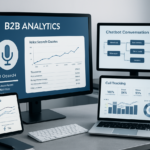
B2B marketers must move beyond basic website traffic and engagement metrics. Advanced analytics involves delving into customer lifetime value (CLV), customer acquisition cost (CAC), and the full funnel conversion rates. Tools that integrate data from various sources—website, CRM, advertising platforms, social media—provide a comprehensive view of marketing performance. For a B2B agency in Singapore, understanding which content pieces contribute most to pipeline generation, or which ad channels yield the highest quality leads, allows for strategic reallocation of budgets and resources, maximizing impact. This level of analysis helps identify bottlenecks in the customer journey and pinpoint areas for improvement.
Multi-Touch Attribution Modeling for Accurate ROI Measurement
The B2B buyer journey is rarely linear, often involving multiple touchpoints across various channels before a conversion occurs. Traditional last-click attribution models fail to give credit to all the interactions that influence a sale. Multi-touch attribution models, such as linear, time decay, or W-shaped models, provide a more accurate picture of how different marketing efforts contribute to revenue. For businesses operating in the Philippines, where digital adoption is rapidly increasing, understanding the true impact of each touchpoint—from an initial social media ad to a webinar, then a sales call—is crucial for optimizing marketing spend and proving ROI to stakeholders.
Establishing a Culture of Continuous Optimization
Data-driven marketing is not a one-time project; it is an ongoing process of testing, measuring, and refining. Establishing a culture of continuous optimization means regularly reviewing performance data, conducting A/B tests on landing pages, email subject lines, and ad creatives, and iterating based on the insights gained. This agile approach allows B2B marketers to adapt quickly to market changes, competitor actions, and evolving customer preferences. For example, a B2B SaaS company might discover through data analysis that webinars on technical integrations perform significantly better than general product demos for their target audience in Singapore, leading them to reallocate resources to produce more specialized content.
Navigating the Evolving Digital Landscape: Challenges and Opportunities
While the opportunities presented by AI, personalization, and data are immense, businesses in Singapore and the Philippines also face unique challenges in adopting these advanced strategies.
Addressing Data Privacy and Compliance
Data privacy regulations, such as Singapore’s Personal Data Protection Act (PDPA) and similar frameworks in the Philippines, are paramount. B2B marketers must ensure their data collection, storage, and usage practices are fully compliant. This involves transparent consent mechanisms, robust data security protocols, and a clear understanding of data governance. Building trust with clients and prospects hinges on demonstrating a commitment to protecting their data, which in turn enhances brand reputation and long-term relationships.
Bridging the Talent and Skill Gap
Implementing sophisticated AI and data-driven strategies requires specialized skills in data science, AI engineering, advanced analytics, and marketing automation. A significant challenge for many businesses in the region is the talent gap. Investing in upskilling existing teams, attracting new talent, or partnering with specialized agencies like Sotavento Medios can help bridge this divide. The ability to interpret complex data and translate it into actionable marketing strategies is a critical competency for future success.
Leveraging Digital Adoption and Market Growth
Despite challenges, the rapid digital adoption rates and robust economic growth in both Singapore and the Philippines present significant opportunities. Businesses that embrace these advanced marketing strategies early can capture market share, build stronger brand loyalty, and establish themselves as industry leaders. The increasing digital literacy of B2B buyers in these markets means they are more receptive to sophisticated, personalized digital engagement.
Implementing Future-Proof B2B Marketing: A Roadmap for Success
For businesses in Singapore and the Philippines looking to future-proof their B2B marketing efforts, a strategic roadmap is essential.
- Assess Current Capabilities: Conduct an audit of existing marketing technologies, data infrastructure, and team skills. Identify gaps and areas for improvement.
- Develop a Data Strategy: Define what data needs to be collected, how it will be stored, and how it will be used to generate insights. Ensure compliance with local data privacy regulations.
- Invest in the Right Technology Stack: Select AI-powered marketing automation platforms, CRM systems, and analytics tools that integrate seamlessly and scale with business growth.
- Prioritize Personalization: Start with key accounts or segments and gradually expand personalization efforts across the customer journey.
- Foster a Culture of Experimentation: Encourage continuous testing and optimization based on data insights. Embrace an agile approach to marketing.
- Invest in Talent and Training: Upskill existing marketing teams in AI, data analytics, and advanced digital marketing techniques. Consider external partnerships for specialized expertise.
Conclusion
The future of B2B digital marketing in Singapore and the Philippines is dynamic, driven by the transformative power of AI, hyper-personalization, and data-driven strategies. For businesses aiming to establish thought leadership and achieve sustainable growth, embracing these advancements is no longer optional. By strategically integrating AI for predictive insights and automation, delivering highly personalized experiences, and making decisions based on robust data analytics, B2B organizations can unlock unprecedented levels of engagement, efficiency, and ROI. The journey requires investment in technology, talent, and a commitment to continuous innovation, but the rewards—stronger client relationships, optimized marketing spend, and a dominant market position—are well within reach for those who lead the charge.

I am Tricia Huang Mei, an Advertising Partner in Sotavento Medios with over two decades of experience in the Singapore advertising and business sectors. My career is defined by a commitment to driving high-impact marketing campaigns and fostering sustainable growth for the diverse business portfolios I manage.