Executive Summary
Expanding a digital footprint across multiple borders requires more than just translating content; it requires a sophisticated understanding of regional search behaviors, local regulations, and technical “Hreflang” precision. This case study details the global expansion strategy for a Singapore-based technology provider looking to penetrate markets in Southeast Asia (Vietnam, Indonesia, Thailand) and Oceania (Australia, New Zealand). The client was struggling with “Keyword Overlap,” where their Singapore pages were incorrectly ranking in Australia, leading to poor user experience and high bounce rates. Sotavento Medios engineered a “Localized Hub” framework, ensuring that the right content reached the right user in the right territory. Within 12 months, the project resulted in a 350% increase in international organic sessions and a cohesive, globally authoritative brand presence.
The Problem: The “Global-Local” Conflict
The client’s international expansion was being hindered by their own website architecture. They were treating the world as a single market, which led to several critical failures:
- Hreflang Confusion: The site lacked proper cross-border tagging. Search engines couldn’t distinguish between the “English-Singapore” and “English-Australia” versions of the site, causing them to compete against each other in the search results.
- Cultural and Linguistic Mismatch: Content that resonated in Singapore was falling flat in Indonesia and Vietnam. The brand was failing to account for local nuances, regional pricing differences, and unique search terminology used in neighboring markets.
- Latency and Performance Issues: Users in Australia and Vietnam were experiencing slow load times because all data was being served from a single server in Singapore, leading to lower rankings in those specific regions.
- Inconsistent Regional Trust Signals: The site lacked local trust markers (e.g., local currency, regional certifications, and local office addresses), making it look like an “outsider” to potential B2B clients in new markets.
The Sotavento Solution: The “Localized Hub” Framework
We moved away from a “Universal Site” model toward a “Geo-Targeted” ecosystem. Our goal was to maintain global brand consistency while allowing for hyper-local relevance.
Phase 1: Technical Global Infrastructure
We rebuilt the technical foundation to support multi-regional scaling without “Authority Dilution.”
- Hreflang Implementation and Mapping: We implemented a rigorous Hreflang strategy across all 5,000+ pages. This “Signaling” told search engines exactly which language and region each page was intended for, instantly resolving the internal competition issues.
- Subfolder vs. Subdomain Strategy: We moved the site to a “Subfolder” structure (e.g., .com/au/, .com/vn/). This allowed all regional versions to benefit from the main domain’s high authority while still maintaining clear geographic boundaries.
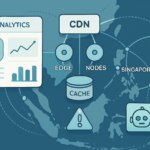
- Global Edge SEO: We utilized a global Content Delivery Network (CDN) with “Edge Workers” to serve content from the server closest to the user. This reduced latency in Australia and Vietnam by over 60%.
Phase 2: Cultural Content Localization
We moved beyond “Translation” and into “Transcreation.”
- Regional Keyword Research: We identified that users in Vietnam and Australia used completely different terms for the same technology solutions. We rebuilt the keyword maps for each country from scratch, capturing the local “Search Vernacular.”
- Localized Authority Content: For the Vietnam and Indonesia markets, we developed content that addressed local regulatory challenges and economic trends. This localized expertise proved to search engines that the client was a “Subject Matter Expert” within that specific jurisdiction.
Phase 3: AEO for Global Questions
In 2026, AI search engines prioritize “Contextual Relevance.”
- Multi-Market FAQ Clusters: We created FAQ hubs for each region, addressing local logistical and compliance questions. By using structured data in local languages, we secured “Featured Snippets” in multiple languages across the region.
- Cross-Border AI Consensus: We secured mentions in regional business journals across Jakarta, Ho Chi Minh City, and Sydney. This ensured that when a user in any of those cities asked an AI for a “Top Tech Provider,” the client’s brand was consistently recommended.
Phase 4: Regional Trust Signal Integration
We made the brand feel “Local” in every market it entered.
- Geo-Specific Schema: We implemented LocalBusiness schema for every regional office. We ensured that local contact numbers, addresses, and currency symbols were correctly marked up, increasing “Local Trust” signals for the algorithm.
- Regional Review Management: We implemented a localized review strategy, encouraging clients in Australia to leave reviews on the Australian-specific pages. This regional social proof significantly boosted local conversion rates.
Detailed Technical Breakdown: The “Sotavento” Methodology
Managing 20+ regional folders requires extreme technical hygiene. We developed an automated “Hreflang Audit” tool that checked for “Return Tag” errors every 24 hours. In international SEO, a single broken link can break the authority chain for an entire country.
For the Singapore hub, we used the high “Domain Authority” of the original site to “Push” authority to the newer regional folders. We utilized a “Strategic Internal Linking” map where high-authority Singapore pages linked to their regional counterparts, speeding up the ranking process in new markets by months.
We also addressed “Dynamic Currency Conversion.” We implemented a search-friendly currency switcher that didn’t hide prices from bots. By using JSON-LD to reflect different prices for different regions, we appeared in “Rich Results” with the correct local pricing in Australia and Indonesia, significantly boosting Click-Through Rates.
Strategic Implementation: Data-Driven Global Expansion
Our strategy informed the client’s actual expansion roadmap. By analyzing organic search demand in “Untapped” markets, we identified a surge in interest for their services in Thailand. The client used this data to prioritize Thailand as their next physical office location, aligning their business growth with real-time search demand.
We also implemented “International Digital PR.” We targeted regional “Tech Hub” influencers in each country, earning backlinks from high-authority .vn, .id, and .au domains. In 2026, search engines look at the “Geographic Diversity” of a backlink profile to determine a brand’s global authority.
The Result: Quantitative and Qualitative Transformation
The 12-month global rollout transformed the Singapore firm into a regional powerhouse.
- 350% Increase in International Organic Sessions: Traffic from outside Singapore became the primary driver of new business growth.
- Top 3 Rankings in 5 Different Countries: The client achieved dominant positions for their core keywords in Australia, Vietnam, Indonesia, Thailand, and New Zealand.
- 45% Increase in Regional Lead Quality: Because the content was localized, leads from new markets were more “Pre-Qualified” and ready to engage.
- Cohesive Global Identity: The brand successfully maintained its “Premium” Singapore identity while being embraced as a “Local Expert” in every market it entered.
By applying a technical and culturally nuanced SEO strategy to international expansion, Sotavento Medios proved that a Singapore-based firm can successfully dominate the global search stage.

Alyssa Camille Azanza is a dedicated digital specialist and a key professional within the Sotavento Medios team. I focus on the strategic management and growth of diverse business portfolios, ensuring that each brand achieves a high level of digital authority. My work is centered on navigating the complexities of modern search and content strategy, helping businesses stay relevant in the rapidly changing digital world.