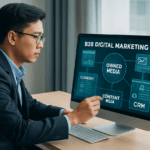
The B2B digital marketing landscape in Singapore and the Philippines is undergoing a profound transformation. As businesses in these dynamic economies strive for competitive advantage, traditional marketing approaches are proving insufficient. The imperative for growth, coupled with the rapid evolution of digital technologies, demands a more sophisticated, data-centric approach. This shift is not merely about adopting new tools; it is about fundamentally rethinking how B2B organizations connect with their target audiences, nurture relationships, and drive measurable results. The future of B2B digital marketing in Southeast Asia, particularly in Singapore and the Philippines, hinges on the intelligent integration of artificial intelligence, hyper-personalization, and robust data-driven strategies. These elements are no longer aspirational concepts; they are essential pillars for establishing thought leadership, optimizing resource allocation, and achieving sustainable market penetration.
For business decision-makers and technical professionals across both nations, understanding and implementing these advanced strategies is paramount. Singapore, a global hub for innovation and technology, and the Philippines, with its rapidly expanding digital economy and tech-savvy workforce, present unique opportunities and challenges. This article explores the practical applications and strategic implications of AI, personalization, and data in crafting high-impact B2B digital marketing campaigns tailored for these specific markets. We will explore how these technologies empower businesses to move beyond generic outreach, fostering deeper engagement and converting prospects into loyal clients.
The AI Revolution in B2B Marketing: Transforming Engagement and Efficiency
Artificial intelligence is no longer a futuristic concept; it is an active, transformative force in B2B digital marketing. For businesses operating in Singapore and the Philippines, AI offers unprecedented capabilities to enhance efficiency, predict market trends, and personalize customer interactions at scale. Its application extends across the entire marketing funnel, from initial lead identification to post-sales engagement, fundamentally altering how B2B organizations approach their digital strategies.
Predictive Analytics for Lead Generation
One of AI’s most impactful applications in B2B marketing is predictive analytics for lead generation. Traditional lead scoring often relies on static criteria, which can be inefficient and miss high-potential prospects. AI-driven predictive models analyze vast datasets, including firmographics, technographics, behavioral patterns, and historical conversion data, to identify potential leads with a much higher propensity to convert. In the competitive Singaporean and Philippine markets, where every lead counts, this capability allows B2B companies to prioritize sales efforts more effectively, focusing resources on prospects most likely to become customers. For instance, an AI system might identify companies in the Philippines that have recently adopted a specific cloud technology, indicating a potential need for complementary B2B software or services, even before they initiate a search.
AI-Powered Content Personalization
Content is king, but personalized content is paramount. AI enables B2B marketers to move beyond basic segmentation and deliver highly relevant content experiences to individual prospects. By analyzing a user’s browsing history, engagement with previous content, industry, job role, and even their current stage in the buying journey, AI algorithms can dynamically recommend articles, whitepapers, case studies, or webinars that directly address their specific pain points and interests. This level of personalization is crucial in Singapore, where businesses expect sophisticated and tailored interactions, and in the Philippines, where engaging content can significantly differentiate a brand in a crowded market. Imagine an AI chatbot on a Singaporean B2B website providing instant, context-aware answers to a technical professional’s queries, guiding them to the exact resources they need without manual intervention.
Automating Customer Engagement with AI
AI also plays a pivotal role in automating and optimizing customer engagement. Chatbots and virtual assistants, powered by natural language processing (NLP), can handle routine inquiries, qualify leads, and provide instant support 24/7. This not only improves customer satisfaction but also frees up human sales and support teams to focus on more complex interactions. For B2B companies with international clients or those operating across different time zones in the Philippines, AI-driven automation ensures consistent and immediate responses. Furthermore, AI can analyze customer interactions to identify sentiment, predict churn risk, and suggest proactive interventions, fostering stronger, more enduring client relationships. This proactive engagement is invaluable in building trust and loyalty within the B2B ecosystem.
Hyper-Personalization Beyond Demographics: Crafting Unique B2B Journeys
While personalization has been a buzzword for years, hyper-personalization takes it to an entirely new level, moving beyond basic demographic or firmographic data. In the B2B context of Singapore and the Philippines, where purchasing decisions often involve multiple stakeholders and complex sales cycles, delivering a truly individualized experience is a significant differentiator. Hyper-personalization leverages advanced data analytics and AI to understand individual buyer intent and behavior, enabling marketers to tailor every touchpoint with precision.
Understanding Intent and Behavior
The foundation of hyper-personalization lies in deeply understanding a prospect’s intent and behavior. This involves tracking their digital footprint across various channels: website visits, content downloads, email opens, webinar attendance, and interactions on professional social media platforms. Tools that analyze natural language in search queries or forum discussions can reveal specific pain points or project requirements. By correlating these behavioral signals with firmographic data, B2B marketers can infer a prospect’s current stage in the buying journey, their specific challenges, and the solutions they are actively seeking. For a tech company in Singapore, this might mean identifying a prospect who has repeatedly visited pages about cybersecurity solutions and downloaded whitepapers on data breaches, indicating a strong intent for security upgrades.
Dynamic Content Delivery
With a granular understanding of intent, B2B marketers can implement dynamic content delivery. This means that website elements, email content, ad creatives, and even sales collateral are automatically adjusted in real-time to match the individual user’s profile and behavior. For example, a visitor from a manufacturing company in the Philippines researching supply chain optimization might see a website hero image featuring industrial machinery and case studies relevant to their sector, while a visitor from a financial institution in Singapore might see content focused on regulatory compliance and secure data management. This dynamic adaptation ensures that every piece of content resonates directly with the individual, increasing engagement and guiding them more effectively through the sales funnel.
Account-Based Marketing (ABM) with Personalization
Hyper-personalization is intrinsically linked with effective Account-Based Marketing (ABM). ABM strategies, particularly relevant for high-value B2B sales in Singapore and the Philippines, focus on targeting specific, high-potential accounts with highly customized campaigns. By combining deep account research with individual-level personalization, B2B companies can create bespoke experiences for key decision-makers within target organizations. This could involve personalized email sequences addressing specific company challenges, custom landing pages tailored to their industry, or even direct mail campaigns with highly relevant offers. The goal is to treat each target account as a market of one, fostering strong relationships and accelerating the sales process through highly relevant and valuable interactions.
Data-Driven Strategies for Measurable Growth: The Foundation of Modern B2B Marketing
In the complex B2B landscape of Singapore and the Philippines, marketing efforts must be quantifiable and demonstrably contribute to business objectives. Data-driven strategies provide the framework for achieving this, moving marketing from an art to a science. By meticulously collecting, analyzing, and acting upon data, B2B organizations can optimize campaigns, prove ROI, and make informed decisions that fuel sustainable growth.
Unified Data Platforms and CRM Integration
The cornerstone of any effective data-driven strategy is a unified data platform. B2B companies often collect data from disparate sources: CRM systems, marketing automation platforms, website analytics, social media, and third-party data providers. Integrating these sources into a single, comprehensive view provides a holistic understanding of customer journeys and campaign performance. For businesses in Singapore and the Philippines, where customer data privacy regulations are evolving, a robust data infrastructure ensures compliance and provides a single source of truth. A well-integrated CRM system, for example, allows sales and marketing teams to share insights seamlessly, ensuring a consistent and coordinated approach to prospect and customer engagement.
Advanced Attribution Modeling
Understanding which marketing touchpoints contribute to conversions is critical for optimizing spend. Traditional last-click attribution models often fail to capture the complexity of the B2B buying journey, which can involve numerous interactions over an extended period. Advanced attribution models, such as multi-touch or algorithmic models, provide a more accurate picture of how different channels and campaigns influence conversions. By analyzing the entire customer journey, B2B marketers in Singapore and the Philippines can allocate budgets more effectively, investing in the channels and content that genuinely drive results. This granular insight allows for continuous refinement of strategies, ensuring that every marketing dollar is working as hard as possible.
Continuous Optimization Through A/B Testing
Data-driven marketing thrives on continuous optimization. A/B testing, or split testing, is a fundamental practice that allows marketers to compare two versions of a webpage, email, ad, or other marketing asset to determine which performs better. By systematically testing different headlines, calls-to-action, images, or content layouts, B2B companies can incrementally improve conversion rates, engagement metrics, and overall campaign effectiveness. This iterative process, guided by empirical data, removes guesswork from marketing decisions. For example, a B2B software provider in the Philippines might A/B test different landing page designs to see which one generates more demo requests, continuously refining their approach based on real user behavior.
Navigating the Singapore and Philippines B2B Landscape: Local Nuances and Strategic Imperatives
While the principles of AI, personalization, and data-driven marketing are universal, their effective implementation in Singapore and the Philippines requires a nuanced understanding of local market dynamics, cultural considerations, and regulatory environments. Sotavento Medios recognizes that a one-size-fits-all approach is insufficient for these distinct yet interconnected markets.
Local Market Nuances and Digital Adoption
Singapore’s B2B market is characterized by its high digital maturity, strong emphasis on innovation, and a preference for sophisticated, data-backed solutions. Decision-makers often expect highly polished, technically sound presentations and clear ROI projections. The Philippines, while rapidly advancing digitally, still presents a more diverse landscape. While major urban centers like Manila and Cebu are highly connected, digital adoption and infrastructure can vary. Understanding these differences is crucial for tailoring content, channel selection, and messaging. For instance, LinkedIn is a dominant B2B platform in Singapore, while a blend of professional networking sites and more localized digital channels might be more effective in the Philippines. Content must resonate culturally; while professionalism is key in both, the tone and examples used might need slight adjustments to appeal to local sensibilities.
Regulatory Considerations and Data Privacy
Data privacy is a critical consideration for any data-driven strategy. Singapore operates under the Personal Data Protection Act (PDPA), which governs the collection, use, and disclosure of personal data. The Philippines has its own Data Privacy Act of 2012. B2B marketers must ensure their data collection, storage, and processing practices are fully compliant with these regulations. This includes obtaining proper consent, implementing robust data security measures, and being transparent about data usage. Non-compliance can lead to significant penalties and reputational damage. Building trust through transparent and ethical data practices is not just a legal requirement; it is a fundamental aspect of establishing authoritativeness and trustworthiness in these markets.
Case Study: Enhancing Lead Quality for a Regional SaaS Provider
Consider a hypothetical regional SaaS provider, “TechSolutions Asia,” aiming to expand its market share for enterprise resource planning (ERP) software in Singapore and the Philippines. Historically, TechSolutions Asia relied on broad email campaigns and generic content. Recognizing the need for a more targeted approach, they partnered with a digital marketing agency to implement an AI-driven, personalized strategy.
First, an AI-powered predictive analytics tool was deployed to analyze their existing CRM data, identifying high-potential accounts based on industry, company size, and technographic data in both countries. This allowed them to segment their target audience with greater precision. Next, they implemented dynamic content delivery on their website. Visitors from Singaporean manufacturing firms were shown case studies specifically detailing ERP implementations in similar industries within Singapore, while Philippine-based logistics companies saw content highlighting supply chain efficiencies relevant to their local market challenges.
Furthermore, AI-driven chatbots were integrated into their website to qualify leads instantly and direct them to relevant resources or sales representatives. For key accounts identified through ABM, personalized email sequences were crafted, referencing specific pain points discovered through intent data analysis. The results were significant: TechSolutions Asia saw a 35% increase in qualified leads from Singapore and a 28% increase from the Philippines within six months. Their sales cycle shortened by 15%, and their marketing ROI improved by 20%, demonstrating the tangible benefits of integrating AI, personalization, and data-driven strategies.
Conclusion: Charting a Data-Driven Course for B2B Success in Southeast Asia
The future of B2B digital marketing in Singapore and the Philippines is undeniably shaped by the convergence of artificial intelligence, hyper-personalization, and robust data-driven strategies. For business decision-makers and technical professionals, embracing these advancements is not an option but a strategic imperative. The ability to leverage AI for predictive insights, deliver truly personalized experiences at scale, and make informed decisions based on comprehensive data analysis will define market leaders in the coming years.
Sotavento Medios emphasizes that success in these dynamic markets requires more than just adopting new technologies; it demands a fundamental shift in mindset. It necessitates a commitment to continuous learning, ethical data practices, and a deep understanding of the unique cultural and regulatory landscapes of Singapore and the Philippines. By integrating these advanced methodologies, B2B organizations can move beyond generic outreach to cultivate meaningful relationships, optimize their marketing spend, and achieve sustainable, measurable growth. The time to invest in these transformative digital marketing capabilities is now, ensuring your brand remains at the forefront of innovation and competitive advantage in Southeast Asia’s thriving B2B sector.

I am Tricia Huang Mei, an Advertising Partner in Sotavento Medios with over two decades of experience in the Singapore advertising and business sectors. My career is defined by a commitment to driving high-impact marketing campaigns and fostering sustainable growth for the diverse business portfolios I manage.