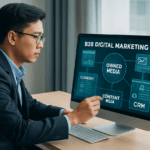
The business-to-business (B2B) landscape in Singapore and the Philippines is experiencing a profound transformation, driven by rapid technological advancements and evolving customer expectations. As decision-makers and technical professionals in these dynamic markets navigate increasing complexity, the imperative for sophisticated digital marketing strategies has never been clearer. The future of B2B digital marketing in Southeast Asia, particularly in these two key economies, hinges on the intelligent integration of Artificial Intelligence (AI), hyper-personalization, and robust data-driven approaches. This article explores how these pillars are reshaping engagement, driving efficiency, and delivering measurable results for businesses aiming to establish thought leadership and capture market share in Singapore and the Philippines.
The AI Revolution in B2B Marketing for Southeast Asia
Artificial Intelligence is no longer a futuristic concept; it is a present-day reality fundamentally altering how B2B organizations identify, engage, and convert prospects. For businesses in Singapore and the Philippines, AI offers unprecedented opportunities to optimize marketing efforts, predict market trends, and deliver highly relevant experiences at scale.
Predictive Analytics and Lead Scoring
One of AI’s most impactful applications in B2B marketing is predictive analytics. By analyzing vast datasets of historical customer behavior, firmographics, technographics, and engagement patterns, AI algorithms can identify high-potential leads with remarkable accuracy. In competitive markets like Singapore, where businesses often target niche industries, predictive lead scoring allows marketing and sales teams to prioritize their efforts, focusing on accounts most likely to convert. For instance, an AI model might identify a company in the Philippines that has recently downloaded specific whitepapers, visited product pages multiple times, and shown increased engagement with competitor content as a prime candidate for immediate outreach. This capability moves beyond traditional demographic segmentation, offering a data-backed foresight into buyer intent.
AI-Powered Content Personalization
The challenge of delivering relevant content to diverse B2B audiences across Singapore and the Philippines is significant. AI addresses this by enabling dynamic content personalization. AI algorithms can analyze a prospect’s digital footprint, including their browsing history, industry, job role, and previous interactions, to recommend or generate content tailored to their specific needs and stage in the buyer journey. Imagine a technical professional in Singapore receiving an email with case studies directly relevant to their industry’s challenges, or a decision-maker in the Philippines being presented with a website experience that highlights solutions pertinent to their company size and growth objectives. This level of personalization, powered by AI, significantly enhances engagement and strengthens the perception of a vendor’s expertise.
Automating Customer Journeys
AI also plays a crucial role in automating and optimizing complex B2B customer journeys. From initial awareness to post-purchase support, AI-driven marketing automation platforms can orchestrate multi-channel campaigns, trigger personalized communications, and adapt messaging based on real-time customer behavior. This ensures a consistent and coherent experience, reducing manual effort and improving response times. For example, if a prospect in the Philippines abandons a cart or pauses on a specific product page, an AI system can automatically initiate a follow-up email with relevant information or a personalized offer, guiding them back towards conversion. This automation is vital for maintaining engagement across long B2B sales cycles.
Hyper-Personalization at Scale: Beyond Basic Segmentation
While personalization has been a marketing buzzword for years, the advent of AI and advanced data capabilities is elevating it to hyper-personalization. This goes beyond addressing a prospect by their name; it involves understanding their unique pain points, preferences, and context to deliver truly bespoke experiences. For the B2B sector in Singapore and the Philippines, hyper-personalization is a key differentiator.
Account-Based Marketing (ABM) Reinvented with AI
Account-Based Marketing (ABM) has proven effective for B2B companies targeting high-value accounts. AI supercharges ABM by providing deeper insights into target accounts, identifying key stakeholders, and personalizing outreach at an unprecedented level. In Singapore’s competitive financial services sector, for instance, an ABM strategy powered by AI could identify specific challenges faced by a target bank, map out its organizational structure, and then craft highly tailored messages for each decision-maker, referencing their specific roles and departmental goals. This precision ensures that marketing efforts are not just personalized, but also highly relevant and impactful for each individual within a target account.
Dynamic Content Delivery
Hyper-personalization extends to dynamic content delivery, where website elements, email content, and ad creatives change in real-time based on the user’s profile and behavior. A procurement manager in the Philippines visiting a solution provider’s website might see different case studies, testimonials, or product features highlighted compared to a CTO from a different industry visiting the same site. This dynamic adaptation ensures that every interaction feels custom-made, increasing the likelihood of engagement and progression through the sales funnel. The ability to serve up the most relevant information instantly is a powerful tool for capturing and retaining attention.
Personalized Customer Experiences Across Touchpoints
The B2B buyer journey is rarely linear, involving multiple touchpoints across various channels. Hyper-personalization ensures a consistent and tailored experience whether a prospect is interacting with a chatbot, receiving an email, attending a webinar, or engaging with a sales representative. This seamless integration of personalized experiences builds trust and reinforces the brand’s understanding of the customer’s needs. For example, a prospect who has engaged with a specific product demo in Singapore might receive follow-up content that directly addresses questions raised during the demo, rather than generic product information. This continuity is crucial for complex B2B sales cycles.
Data-Driven Strategies: The Foundation of Modern B2B Success
At the core of both AI and hyper-personalization lies robust data. A truly data-driven strategy is essential for B2B marketers in Singapore and the Philippines to make informed decisions, optimize campaigns, and demonstrate clear ROI. Without accurate, comprehensive, and actionable data, even the most advanced technologies fall short.
Unified Data Platforms and CRM Integration
The first step towards a data-driven approach is consolidating disparate data sources into a unified platform. Integrating CRM systems, marketing automation platforms, website analytics, and third-party data providers creates a holistic view of the customer. For businesses operating across Singapore and the Philippines, this unified data enables a single customer view, allowing for more accurate segmentation, better lead nurturing, and improved sales alignment. This integration is critical for understanding the entire customer lifecycle and identifying opportunities for optimization.
Advanced Attribution Modeling
Understanding which marketing touchpoints contribute to conversions is vital for optimizing spend. Traditional last-click attribution models often fail to capture the complexity of the B2B buyer journey. Advanced, multi-touch attribution models, often enhanced by AI, provide a more accurate picture of marketing effectiveness. These models can assign credit to various interactions across the customer journey, from initial content download to final deal closure. For a company in the Philippines investing in both local SEO and international trade shows, advanced attribution can reveal the true impact of each channel, allowing for more strategic budget allocation and improved campaign performance.
Real-Time Performance Optimization
Data-driven marketing is inherently iterative. By continuously monitoring key performance indicators (KPIs) in real-time, B2B marketers can identify what is working and what is not, making immediate adjustments to campaigns. This agility is particularly important in fast-evolving markets like Singapore and the Philippines. For example, if an email campaign targeting IT decision-makers in Singapore shows a lower-than-expected open rate, real-time data analysis can prompt adjustments to subject lines or send times. This continuous optimization ensures that marketing resources are always deployed effectively, maximizing impact and minimizing waste.
Navigating the Unique Landscape of Singapore and the Philippines
While the principles of AI, personalization, and data-driven strategies are universal, their application in Singapore and the Philippines requires an understanding of the local context. These markets, though geographically close, possess distinct characteristics that influence B2B digital marketing effectiveness.
Digital Maturity and Infrastructure
Singapore boasts one of the most digitally advanced infrastructures globally, with high internet penetration and a tech-savvy business environment. This allows for the seamless implementation of sophisticated digital marketing tools and strategies. The Philippines, while rapidly advancing, presents a more varied landscape in terms of digital maturity and internet access, particularly outside major urban centers. B2B marketers must tailor their strategies accordingly, potentially leveraging a mix of high-tech and more accessible digital channels to ensure broad reach and engagement across the archipelago. Understanding these infrastructural differences is crucial for effective campaign planning.
Cultural Nuances in B2B Engagement
Cultural nuances significantly impact B2B communication and decision-making. Singapore, with its multicultural environment, often values directness, efficiency, and data-backed proposals. Business relationships are professional and often transactional, though long-term partnerships are highly valued. The Philippines, on the other hand, places a strong emphasis on personal relationships, trust, and a more consultative approach. Building rapport and demonstrating genuine care are often prerequisites for successful business engagements. Digital marketing content and communication strategies must reflect these cultural differences, ensuring messages resonate authentically with the target audience in each country.
Regulatory Considerations and Data Privacy
Data privacy regulations are becoming increasingly stringent globally, and Singapore and the Philippines are no exceptions. Singapore’s Personal Data Protection Act (PDPA) and the Philippines’ Data Privacy Act (DPA) mandate strict guidelines for data collection, storage, and processing. B2B marketers must ensure their data-driven strategies and personalization efforts are fully compliant with these regulations. This includes obtaining proper consent, ensuring data security, and being transparent about data usage. Adhering to these legal frameworks is not just a matter of compliance; it is fundamental for building trust and maintaining a reputable brand image in both markets.
Conclusion: Charting the Course for Future Success
The future of B2B digital marketing in Singapore and the Philippines is undeniably exciting and complex. The convergence of AI, hyper-personalization, and data-driven strategies offers an unparalleled opportunity for businesses to achieve competitive advantage. For Sotavento Medios, a B2B Digital Marketing Agency, establishing thought leadership means not just understanding these trends, but actively implementing them with precision and local insight.
Businesses looking to thrive in these dynamic markets must embrace these transformative forces. This involves investing in the right technologies, developing robust data governance frameworks, and cultivating a deep understanding of local market nuances. By leveraging AI for predictive insights and automation, delivering hyper-personalized experiences across every touchpoint, and grounding all efforts in actionable data, B2B organizations can forge stronger relationships, drive significant growth, and solidify their position as leaders in the vibrant Southeast Asian digital economy. The path forward is clear: innovate with intelligence, personalize with purpose, and optimize with data.

I am Tricia Huang Mei, an Advertising Partner in Sotavento Medios with over two decades of experience in the Singapore advertising and business sectors. My career is defined by a commitment to driving high-impact marketing campaigns and fostering sustainable growth for the diverse business portfolios I manage.