The Fundamental Shift: How Google SGE Changes the Search Game
For years, businesses in Singapore and the Philippines have mastered the art of keyword-based SEO. You identified high-volume terms, optimized your pages, and worked to climb the ten blue links. That era is ending. Google’s Search Generative Experience (SGE) represents the most significant shift in search behavior since the introduction of mobile-first indexing. It is not just another algorithm update; it is a complete re-imagining of the search engine results page (SERP).
SGE moves Google from a search engine that provides links to an answer engine that delivers synthesized responses. When a user asks a question, SGE generates a comprehensive AI Snapshot at the very top of the page. This snapshot directly answers the query, pulling information from multiple sources and presenting it in a conversational format. The traditional organic listings are pushed further down the page, often below the fold. For businesses in the highly competitive digital markets of Singapore and the Philippines, this means the fight is no longer just to be on page one; it’s to be a trusted source for the AI itself.
This new reality demands a strategic pivot. Relying solely on ranking for specific keywords is a defensive, and ultimately losing, strategy. The future of organic visibility lies in becoming a recognized authority on entire topics. It requires a deeper, more technical approach to SEO that proves your expertise not just to users, but to Google’s AI. This article outlines the technical framework and actionable strategies your business needs to implement to win in this new AI-powered search environment.
Building Topical Authority: The New SEO Cornerstone
In the SGE era, Google’s priority is to provide users with trustworthy, comprehensive answers. To do this, its AI needs to identify and rely on sources that demonstrate deep expertise on a given subject. It achieves this by understanding connections between concepts, not just keywords. This is the essence of topical authority. To build it, you must move beyond targeting isolated terms and instead focus on owning entire conversational territories relevant to your business.
From Keywords to Entities: A Technical Distinction
The first step is to shift your mindset from keywords to entities. An entity is any well-defined concept or object that Google can understand: a person, a company, a location, a product, or a technical standard. While a keyword is a string of text, an entity is a node in Google’s Knowledge Graph. For example, the keyword “MAS regulations” is a search query. The entity is the Monetary Authority of Singapore, a specific organization with attributes, relationships, and a history that Google understands.
Your goal is to establish your brand as a primary entity associated with your core business topics. If you are a B2B logistics provider in the Philippines, you should not just target “freight forwarding Manila.” You must build content that establishes your authority on related entities like the Bureau of Customs (BOC), ASEAN trade agreements, and cold chain logistics standards. This signals to Google that you do not just know the keywords; you understand the entire ecosystem.
Architecting a Pillar-and-Cluster Content Model
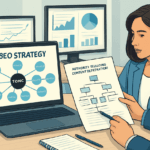
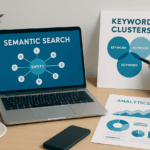
The most effective technical structure for building topical authority is the pillar-and-cluster model. This is not simply a content marketing tactic; it is a strategic way to structure your website’s information architecture to mirror how Google’s AI learns.
- Pillar Page: This is a comprehensive, long-form piece of content that provides a broad overview of a core topic. For a Singapore-based SaaS company selling accounting software, a pillar page might be “A Complete Guide to Corporate Accounting for Singapore SMEs.” This page should be the definitive resource on the subject.
- Cluster Content: These are more specific, in-depth articles that explore subtopics related to the pillar. Each cluster article links back to the pillar page. For our SaaS example, cluster content could include: “Understanding IRAS Filing Requirements,” “How to Claim PIC Scheme Benefits,” and “A Technical Comparison of Xero vs. QuickBooks for SG Businesses.”
This structure creates a dense web of internal links, signaling to Google that you have a deep and well-organized body of knowledge on the subject. SGE is more likely to cite a source that covers a topic from every conceivable angle.
Leveraging Structured Data (Schema Markup)
Structured data is the language you use to explicitly explain your content to search engines. In the SGE context, it is non-negotiable. Schema markup turns your unstructured text into structured information that Google’s AI can easily parse and trust. Implementing the right schema is a direct way to feed the Knowledge Graph and build your entity.
Key schema types for B2B businesses in Singapore and the Philippines include:
- Organization Schema: Clearly defines your business name, logo, address (e.g., your office in Bonifacio Global City or Raffles Place), and official social media profiles.
- Article Schema: Identifies the author, publication date, and headline, reinforcing the content’s credibility.
- Person Schema: Used on author pages or team bios, it establishes the credentials of your experts, linking them to their publications and social profiles (like LinkedIn).
- FAQPage Schema: If you answer common questions in your content, this schema makes those Q&As machine-readable, making your content a prime candidate for being featured in AI Snapshots.
E-E-A-T as a Technical Imperative for SGE
E-E-A-T (Experience, Expertise, Authoritativeness, and Trustworthiness) has evolved from a quality guideline to a collection of technically verifiable signals. SGE will not cite sources it cannot trust. Your job is to provide concrete, verifiable proof of your credibility across the web.
Demonstrating First-Hand Experience and Expertise
Generic, rewritten content will fail in the SGE era. The AI is designed to look for unique insights that come from genuine experience. You must infuse your content with proprietary data, unique perspectives, and real-world case studies.
- Instead of saying: “A good digital marketing strategy is important for Filipino businesses.”
- Demonstrate experience by saying: “In our 2023 campaign for a Manila-based e-commerce client, we found that localizing ad creative for Cebuano-speaking audiences increased conversion rates by 35% compared to generic English ads. This highlights the necessity of a hyperlocal approach.”
Include original data, survey results from your local market, and detailed process explanations. If you are explaining a technical process, show your work. Provide code snippets, workflow diagrams, or proprietary checklists. This is tangible proof of expertise that AI can identify and reference.
Building Verifiable Authoritativeness and Trust
Authoritativeness and trust are not built in a vacuum. Google verifies these signals by looking at your brand’s digital footprint beyond your own website. A technically sound SEO strategy must include off-page elements.
- Authoritative Mentions: Citations and links from well-respected industry publications in Singapore and the Philippines (e.g., Business Times, Rappler, industry-specific journals) are powerful trust signals.
- Digital PR: Proactively earning mentions and features for your company’s experts builds a portfolio of evidence. When your CEO is quoted in an article about fintech trends in Singapore, it reinforces their (and your company’s) authority on the topic.
- Consistent Information: Ensure your company’s name, address, and phone number (NAP) are consistent across all online directories and platforms. Inconsistencies erode trust from both a user and a machine perspective.
An Actionable Framework for SGE Optimization
Adapting your SEO strategy requires a methodical approach. The following framework provides a clear path for businesses in Singapore and the Philippines to begin optimizing for Google’s AI-powered search.
Step 1: Conduct a Comprehensive Topic-Intent Audit
Begin by mapping your existing content not to keywords, but to user intent and topics. Analyze your most important service or product lines and identify the core problems your customers face. For each core problem, map out the entire user journey. What questions do they ask at the awareness stage versus the consideration stage? Your content should cover this full spectrum. Use tools to find “People Also Ask” and “Related Searches” to understand the conversational context around your core topics. Your goal is to create a content plan that answers not just the initial query, but every logical follow-up question.
Step 2: Prioritize Long-Form, In-Depth Content Creation
SGE synthesizes information from multiple sources to create its snapshots. It naturally favors content that is comprehensive and leaves no stone unturned. A 500-word blog post that scratches the surface of a topic is unlikely to be a primary source for the AI. Invest in creating definitive guides, in-depth tutorials, and original research that are at least 1200 to 2000 words long. This type of content provides the depth and breadth of information that SGE needs to formulate a complete answer. It positions your site as a one-stop resource, increasing the probability of being cited.
Step 3: Integrate Multimedia and Unique Data
Differentiate your content with unique assets that cannot be easily replicated. This includes:
- Original Data: Conduct surveys of your target market in Singapore or the Philippines. Publish the results as an industry report. This makes you a primary source of information.
- Infographics and Diagrams: Visualize complex processes or data. Well-designed visuals are often referenced in AI Snapshots and can be indexed in image search.
- Video Content: Create tutorials, expert interviews, or case study videos. Video transcripts provide additional text content for search engines to crawl and understand.
These unique assets serve as “citation magnets,” encouraging other websites to link to you and further cementing your authority on the topic.
Conclusion: The Opportunity in the New Search Landscape
The rise of Google’s Search Generative Experience is not a threat to businesses that are true experts in their field; it is an opportunity. For too long, SEO has been dominated by tactics designed to game an algorithm. SGE shifts the focus back to what has always mattered: demonstrating genuine expertise and providing real value to your audience.
For businesses in Singapore and the Philippines, the path forward is clear. You must move beyond a narrow focus on keywords and embrace a holistic strategy centered on building topical authority. This involves a technical approach that includes a structured content architecture, precise schema markup, and a concerted effort to build verifiable E-E-A-T signals. By becoming the most comprehensive and trustworthy resource in your niche, you are not just optimizing for an algorithm. You are positioning your business as a thought leader and ensuring that when Google’s AI looks for answers, it finds you.
I am Tricia Huang Mei, an Advertising Partner in Sotavento Medios with over two decades of experience in the Singapore advertising and business sectors. My career is defined by a commitment to driving high-impact marketing campaigns and fostering sustainable growth for the diverse business portfolios I manage.