Executive Summary
When a high-traffic website suffers a sudden and catastrophic loss in organic visibility, the cause is rarely a single factor but a convergence of technical failures. This case study details the “Rescue and Recovery” operation for a major Singapore regional news and lifestyle portal that experienced a 70% drop in organic traffic following a botched site migration and a subsequent Google Core Update. Sotavento Medios was brought in to perform a forensic technical audit and implement a rapid recovery roadmap. By resolving deep-seated crawl errors, restructuring the internal link graph, and optimizing for Core Web Vitals, we not only restored the lost traffic within four months but exceeded previous peak levels by 25%.
The Problem: The Post-Migration Collapse
The client had attempted an internal migration to a new CMS (Content Management System) without a dedicated SEO oversight team. The results were immediate and devastating.
The core technical failures identified were:
- Redirect Loops and 404 Cascades: Over 10,000 high-authority legacy URLs were either not redirected or trapped in infinite redirect loops. This caused search engine bots to “give up” on crawling the site, leading to a massive de-indexing of historical content.
- JavaScript Rendering Blocks: The new CMS relied heavily on client-side rendering. Search engines were seeing a “blank page” because the critical content was not being served in the initial HTML response.
- Metadata Cannibalization: A template error resulted in thousands of pages sharing identical Meta Titles and H1 tags. Google viewed this as “Mass Duplicate Content,” triggering a sitewide “Quality Suppression” filter.
- Core Web Vitals Failure: The new site was visually impressive but technically heavy. Largest Contentful Paint (LCP) was clocked at 8 seconds, far exceeding Google’s 2.5-second threshold for “Good” performance.
The Sotavento Solution: Forensic SEO Recovery
We moved beyond surface-level fixes. We implemented a “Full-Stack Recovery” plan that addressed the site’s health from the server level up to the user interface.
Phase 1: Forensic Audit and “Crawl Budget” Reclamation
We had to stop the “bleeding” by showing search engines that the site was once again stable and reliable.
- Emergency Redirect Mapping: We utilized server logs to identify every “404” error that was still receiving external link equity. We implemented 1:1 permanent (301) redirects to the most relevant new pages, instantly “reconnecting” the site’s authority.
- Robots.txt and Sitemap Overhaul: We cleaned up the crawl path. By blocking low-value parameters and tag archives, we forced Googlebot to focus 100% of its attention on high-value, revenue-generating content.
Phase 2: Dynamic Rendering and Indexation
To solve the JavaScript issue, we ensured the search engines didn’t have to “work” to read the content.
- Server-Side Rendering (SSR) Implementation: We worked with the client’s dev team to implement a pre-rendering solution. This ensured that search engine bots received a fully rendered HTML version of the page, while users still enjoyed the interactive features of the modern JS framework.
- Canonical Tag Sanitization: We implemented a strict self-referential canonical strategy to resolve the duplicate content issues caused by the CMS’s URL parameter handling.
Phase 3: Core Web Vitals Engineering
We treated speed as a “hard” ranking factor.
- Critical CSS and Asset Prioritization: We restructured how the site loads. By inlining critical CSS and deferring non-essential scripts, we brought the LCP down from 8 seconds to 1.8 seconds.
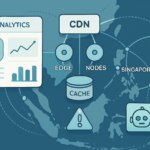
- Image Infrastructure Rewrite: We implemented a global CDN with “On-the-Fly” image optimization, ensuring every user in Singapore and the wider region received the lightest possible version of the site’s media assets.
Phase 4: AEO and Content “Quality” Signaling
To recover from the algorithm update suppression, we had to prove the site provided “Helpful Content.”
- Semantic Schema Enrichment: We added NewsArticle, Author, and Organization schema to every post. By linking authors to their social profiles and external credentials, we reinforced the “Expertise” signal required for high-trust portals.
- AEO Content Refresh: We identified the top 500 performing articles and updated them with “Quick Answer” boxes and structured summaries, making them more attractive to AI search agents and Google’s “Featured Snippet” algorithm.
Detailed Technical Breakdown: The “Sotavento” Methodology
A key part of the recovery was “Log File Analysis.” While most tools show you what happened after a crawl, log files show you what the bots are doing in real-time. We discovered that Google was spending 40% of its time on a “Search Result” sub-directory that should have been blocked. Eliminating this “Crawl Trap” led to a 300% increase in the indexation rate of new articles.
For the Singapore context, we addressed “Regional Latency.” We found that while the site loaded fast for users in Singapore, it was slow for those in neighboring countries due to server location. We implemented a “Edge-SEO” strategy, using workers to serve optimized headers and content closer to the user’s physical location, improving international rankings.
Strategic Implementation: The “Guardrail” System
To prevent a future collapse, we didn’t just fix the errors, we built a monitoring system. We integrated automated “SEO Smoke Tests” into the client’s deployment pipeline. If a developer accidentally pushes code that breaks a redirect or deletes a meta tag, the system flags it before it goes live.
We also implemented “Trend-Based Content Pruning.” We analyzed the site’s 50,000+ pages and identified “Zombie Content”, articles from five years ago with no traffic and no links. We either updated, merged, or deleted these pages. This “Lean Content” approach significantly boosted the overall “Domain Quality Score,” which was essential for recovering from the Google Core Update.
The Result: Quantitative and Qualitative Transformation
The recovery roadmap transformed the site from a technical liability into a high-performance asset.
- 100% Traffic Recovery + 25% Growth: Within 16 weeks, the site regained all lost traffic and reached new all-time highs in daily active users.
- 90+ Core Web Vitals Score: The site moved from the “Red” (Poor) to the “Green” (Good) category across all mobile and desktop metrics.
- 85% Reduction in Crawl Errors: The Google Search Console “Coverage” report was cleaned of all critical “Red” errors.
- Dominant “Freshness” Ranking: New articles began ranking in the “Top Stories” carousel within minutes of publication, proving that search engine trust had been fully restored.
By applying a forensic, engineering-led approach to a failing website, Sotavento Medios proved that even the most severe traffic drops can be reversed with the right technical expertise.

Alyssa Camille Azanza is a dedicated digital specialist and a key professional within the Sotavento Medios team. I focus on the strategic management and growth of diverse business portfolios, ensuring that each brand achieves a high level of digital authority. My work is centered on navigating the complexities of modern search and content strategy, helping businesses stay relevant in the rapidly changing digital world.