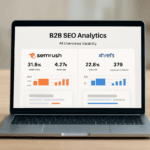
The New Search Reality: Understanding Google’s AI-Powered Engine
The conversation around search engine optimization changed fundamentally with the broad rollout of Google’s AI Overviews, formerly known as the Search Generative Experience (SGE). For years, the goal was to secure a top position among the ten blue links. Today, the objective is to become a trusted source for Google’s AI as it synthesizes information to provide a single, direct answer at the very top of the search results page. This represents the most significant shift in user search behavior in over a decade.
From Blue Links to AI Overviews: What Changed?
Unlike traditional search results, which provide a list of sources for the user to evaluate, AI Overviews deliver a consolidated summary. The AI model processes information from a range of top-ranking pages and presents it as a definitive answer. This means your content is no longer just competing for a click; it’s competing to be a foundational piece of the AI’s generated response. For complex B2B queries, where decision-makers seek comprehensive and reliable information, being featured in this overview is the new “position zero.” Failure to be included means you are effectively invisible for that query.
The Impact on Click-Through Rates and User Behavior
The immediate consequence is the potential for a sharp decline in organic click-through rates (CTR). When a user gets a satisfactory answer directly on the results page, the need to click through to a website diminishes. This paradigm is often called the “zero-click search.” B2B marketers must now adjust their success metrics. Website traffic from organic search, while still important, may become a less reliable indicator of visibility. Instead, metrics will need to evolve to track brand impression, citation within AI Overviews, and the performance of long-tail keywords that prompt deeper investigation.
Why Singapore and the Philippines are Unique Battlegrounds
The impact of this shift is amplified in the dynamic digital economies of Singapore and the Philippines. These markets are characterized by extremely high mobile penetration and a multilingual user base. Users often search using colloquialisms, or “Singlish” and “Taglish,” which Google’s AI is becoming increasingly adept at understanding. For B2B companies, this means a generic, one-size-fits-all content strategy is obsolete. Your content must address the specific pain points, regulatory environments, and business culture of these markets. Furthermore, local search signals and a strong Google Business Profile are critical, as AI Overviews often prioritize sources that demonstrate strong local authority and relevance.
Re-engineering Your Content Strategy for AI Dominance
Thriving in this new environment requires a deliberate re-engineering of your content strategy. The old playbook of keyword stuffing and thin content is not just ineffective; it is a liability. Google’s AI prioritizes depth, expertise, and trustworthiness. Your goal is to create the most comprehensive and reliable resource on a given topic, making your website an indispensable source for the AI.
Beyond Keywords: The Primacy of Semantic Search and Entities
Modern search engines do not just match keywords; they understand concepts, or “entities.” An entity is a well-defined thing or concept, like a company, a person, a product, or a technical standard. Your content strategy must shift from targeting isolated keywords to building a rich network of interconnected entities. For a B2B SaaS company in Singapore specializing in supply chain logistics, this means creating content not just around “logistics software,” but also building authority on related entities like “Port of Singapore,” “ASEAN trade agreements,” and “last-mile delivery challenges in Manila.” By creating comprehensive content that connects these concepts, you signal to Google that you are a subject matter expert.
E-E-A-T as Your Core Algorithm: Building Verifiable Trust
E-E-A-T (Experience, Expertise, Authoritativeness, and Trustworthiness) is no longer a vague guideline; it is a primary framework for content evaluation. AI models are trained to identify and reward signals of trust. Here is how to embed E-E-A-T into your B2B marketing:
- Showcase First-Hand Experience: Move beyond generic articles. Develop detailed case studies featuring clients in the Philippines or Singapore. Document the specific challenges, the implemented solution, and the measurable business outcomes. This demonstrates real-world experience that AI cannot fabricate.
- Attribute Content to Credible Experts: Articles should be authored by individuals with verifiable credentials. Include detailed author biographies with links to their LinkedIn profiles, industry certifications, or publications. This directly addresses Expertise and Authoritativeness.
- Build External Validation: Trustworthiness is heavily influenced by external signals. Secure mentions, interviews, or backlinks from reputable local industry bodies, such as the Singapore Business Federation or the Philippine Chamber of Commerce and Industry. These act as powerful third-party endorsements.
Creating “AI-Ready” Content: Structure, Depth, and Clarity
AI models need well-structured information to parse and synthesize content effectively. Your content must be organized logically, with a clear hierarchy of information. Use descriptive headings (H2s and H3s) to break down complex topics. Employ bulleted lists, numbered lists, and tables to present data and key points in a scannable format. Furthermore, anticipate and answer subsequent questions a user might have. Creating a comprehensive FAQ section at the end of your articles, marked up with FAQ schema, is a powerful technique for getting your content directly into AI-generated answers.
Technical SEO and Off-Page Signals in the AI Era
While content strategy is central, technical and off-page SEO remain critical. However, their focus has shifted from simple ranking signals to providing clear, unambiguous information for AI models to interpret. Think of it as preparing your data for a new, highly intelligent audience: the machine.
Structured Data and Schema Markup: Your AI Translation Layer
Schema markup is a vocabulary of code that you add to your website to help search engines understand your content more effectively. In the age of AI, it is non-negotiable. It acts as a translation layer, explicitly defining the entities on your page. For a B2B organization, essential schema types include:
- Organization Schema: Clearly defines your business name, logo, address, and official contact information.
- Service Schema: Describes the specific services you offer, including scope and service area.
- Person Schema: Highlights the expertise of your team members, linking them to their credentials and authored content.
- Article Schema: Provides context for your blog posts and articles, including author and publication dates.
Implementing comprehensive structured data removes ambiguity and makes your website a more reliable source for AI-driven search engines.
The New Role of Backlinks: Quality over Quantity
The value of backlinks has evolved. A high volume of low-quality links is now a negative signal. In an AI-driven ecosystem, backlinks function as peer-reviewed citations. A single, contextually relevant link from a highly authoritative domain is exponentially more valuable than hundreds of links from irrelevant directories. For businesses in Southeast Asia, this means focusing on earning links from respected local news outlets, industry-specific portals, and educational institutions. These links serve as a powerful endorsement of your trustworthiness and authority on a subject.
Optimizing for Topic Clusters and the “Hidden SERP”
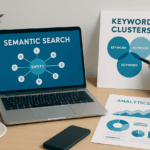
AI Overviews frequently pull information from sources that answer related questions, often found in the “People Also Ask” (PAA) section of the search results. A sophisticated strategy involves creating “topic clusters.” This model consists of a central “pillar” page, which provides a broad overview of a core topic, supported by multiple “cluster” pages that dive deep into specific sub-topics and answer granular questions. This structure demonstrates comprehensive knowledge on a subject, making your domain the go-to authority for AI models seeking to understand a topic in its entirety.
Your 2024 SEO Survival Checklist for SG & PH Businesses
The shift to AI-powered search is not a distant future; it is the current reality. SEO is not dead, but the tactics of the past are insufficient. Success now requires a holistic approach that integrates content, technical precision, and brand authority. Here are the actionable steps B2B leaders in Singapore and the Philippines must take:
- Conduct a Semantic and Entity-Based Topic Analysis: Move beyond simple keyword research. Identify the core topics and entities relevant to your industry and map out a content plan that builds authority around them. Analyze competitor content that is being cited in AI Overviews.
- Perform a Rigorous E-E-A-T Audit: Scrutinize your website. Are your authors credible? Is your “About Us” page detailed and trustworthy? Are you showcasing real-world case studies with verifiable results? Fortify these signals immediately.
- Implement a Comprehensive Schema Markup Strategy: Go beyond the basics. Use a full suite of schema to define your organization, services, people, and content. Ensure it is implemented correctly and validates without errors.
- Restructure Content into Pillar Pages and Topic Clusters: Organize your existing content and plan future content around a topic cluster model. Ensure your pillar pages are the most comprehensive resources available on that subject.
- Prioritize and Invest in First-Party Data: Publish original research, industry surveys, or data-driven insights specific to the Singaporean or Philippine markets. This creates a unique, valuable asset that AI models are likely to cite.
- Integrate SEO with Your Broader Brand Strategy: SEO is no longer a siloed technical function. It is a core component of your brand’s digital presence. Your SEO efforts must align with your public relations, content marketing, and overall brand-building initiatives to create a consistent and authoritative voice across all channels.
The evolution of search from a list of links to a conversational, answer-driven engine is a profound change. Businesses in Singapore and the Philippines that cling to outdated SEO tactics will find themselves becoming invisible. However, those who embrace this shift have a remarkable opportunity. By focusing on building genuine expertise, demonstrating verifiable trust, and creating best-in-class content, you can not only survive but thrive, establishing your organization as the definitive authority in your industry for both humans and AI.

I am Tricia Huang Mei, an Advertising Partner in Sotavento Medios with over two decades of experience in the Singapore advertising and business sectors. My career is defined by a commitment to driving high-impact marketing campaigns and fostering sustainable growth for the diverse business portfolios I manage.