The movement of B2B digital strategy to a pivotal point is evidently marked by the shift from traditional Search Engine Optimization (SEO) to Answer Engine Optimization (AEO). The latter refers to the practice of optimizing the content to be cited by AI Overviews, LLMs, and conversational interfaces. As a result, the next chapter in this story is forcing a reconsideration of the ways businesses allocate their budgets for the purchase of expertise.
For seasoned marketing managers and technical specialists, the fundamental question is still there: What model of compensation, the accuracy of an hourly rate or the collaboration of a monthly retainer account, brings the greatest strategic return on investment of complex AEO and technical SEO projects?
We will dissect the economics, risks, and strategic benefits of both models, basing our analysis on the contemporary market data. This will provide you with the necessary insight to organize a successful Sotavento Medios enterprise-level firm engagement.
The Strategic Imperative of the AEO Era
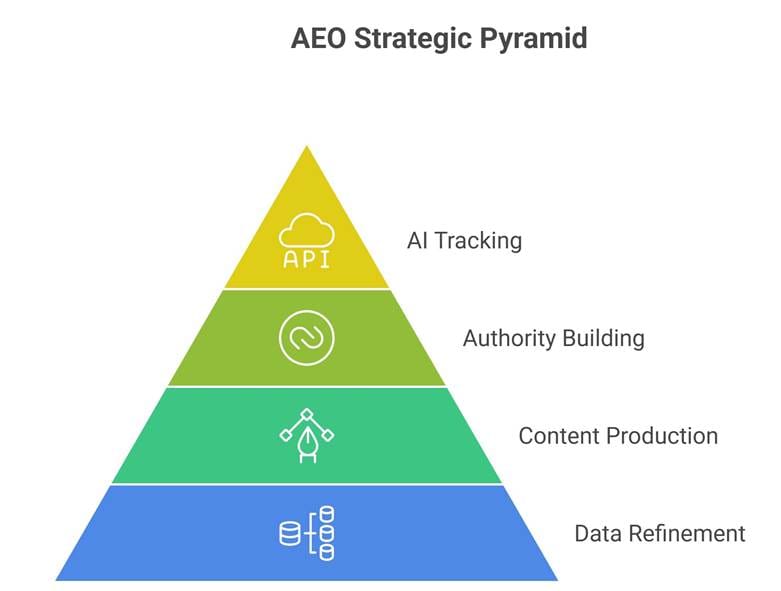
Before dissecting pricing, it’s critical to understand the nature of the AEO work itself. AEO is not a one-time fix; it is a continuous strategic discipline. It demands:
- Continuous Structured Data Refinement: Regularly deploying and verifying advanced Schema types (for example, HowTo, FAQPage, QAPage) to keep the content understandable by machines and citable by Large Language Models (LLMs).
- High-Velocity Content Production: The market data indicates that a very high publishing frequency, usually 20+ articles per month for mid-to-large B2B SaaS companies, is required to signal topical authority and content freshness to generative search engines.
- Citation and Authority Building: Concentrating distinctly on deriving high-quality machine citations from trustworthy external sources that LLMs give the highest priority for factual evidence.
- Proprietary AI Tracking: Measuring citation rates, Share of Voice (SoV) in AI Overviews, and LLM-specific KPIs metrics that are much more intricate than conventional rank tracking.
This sustained, complex, and high-velocity requirement inherently favors a model built for long-term partnership.
Hourly Rates: Precision for Project-Based Technical Audits
The hourly rate model offers a clear, task-focused investment structure ideal for specific, contained, and short-term technical SEO and AEO tasks.
Advantages of the Hourly Model
- Focus on Audit and Consultation: Hourly rates (usually from $150 to over $500 per hour for highly specialized AEO technical consultants) are just right for a one-time, detailed technical SEO audit, site migration, or intricate penalty account analysis. You only pay for the exact time spent on the diagnosis of the problem.
- Budget Control through a Limited Scope: When the work scope is only a handful such as deploying a certain JSON-LD schema across 50 important pages, hourly work offers 100% budget visibility in line with the time estimation that has been already agreed upon.
- Testing Agency Proficiency: For B2B decision-makers, an initial hourly engagement to fix a small, most-felt, technical issue is an efficient, low-risk manner to evaluate an agency’s technical capability and get acquainted with the communication style before a bigger retainer commitment.
Disadvantages and Limitations
- Lack of Strategic Continuity: AEO and enterprise SEO are both dependent on a certain level of consistency. When the hourly project comes to an end, so does the optimization. There is no strategic roadmap, no continuous monitoring, and no adjustment to new LLM updates.
- Cost Overrun Risk: Hourly rates can very quickly lead to budget overruns in the case of an open-ended or complex issue. As an example, the time required to debug a core web vitals issue that is caused by multiple complex systems can easily go from 20 hours to 50 hours without the control of the user.
- Incentive Misalignment: The hourly model, unintentionally, can be a mechanism through which the consultant is indirectly encouraged to take longer instead of focusing on the highest-leverage, fastest path to value. The main focus is on the amount of work done rather than the result obtained.
- Use Case: A B2B company that has a strong content team in-house and is in need of a one-time technical assessment of their existing structured data implementation and a migration plan for a new CMS. In this case, hourly consulting is the right decision.
Monthly Retainers: The Engine for Sustained AEO Growth
The monthly retainer is essentially the subscription model for increases in volume. It is the main pricing mechanism for highly valuable AEO and technical SEO that works the agency’s goal in line with the client’s long-term business objectives. Present prices in the market for a specialized AEO retainer for a medium-to-large enterprise vary generally between $4,000 and $20,000+ per month.
Key Advantages of the Retainer Model
- Strategic Partnership and Accountability: A retainer agreement is the means by which a strategic partnership is formed. In this scenario, the agency becomes responsible for delivering measurable results within a period of 6 to 12 months, mainly focusing on KPIs such as conversion rate, AI citation rate, and organic lead generation, instead of merely completing tasks.
- Consistent Content Velocity and Technical Refinement: Such a model provides the necessary resources to maintain the high-velocity content production and technical aspects, which are crucial for AEO visibility. Moreover, it guarantees that content is always updated for new generative search features.
- Risk Mitigation and Flexibility: The monthly payment allows the agency to cover the risk and the time-consuming nature of the unexpected technical issues (for instance, a sudden Google core update or an indexing bug) without the need for a new change order every time. The scope is flexible, enabling the strategy to change as market conditions or LLM behavior changes.
- Compounding ROI: SEO is the kind of investment that pays off in the long run. Dialed Labs research indicates that while it is possible to make quick wins through project work, it takes more than six months to see significant, compounding returns from sustained strategic efforts. The retainer is what makes this long-term compounding effect possible.
Critical Considerations
- High Initial Investment: The plunge into a minimum of six months, with the upfront costs usually going beyond the four-figure range, is tantamount to a hefty initial financial stake.
- Most Important Factor is Having a Very Clear Plan of Work: Although the retainer can be considered adaptable, if there is no elaborated scope (for instance: What kind of technical work, How many articles, Which key metrics) it is at risk of changing the scope or less than giving what has been promised. Setting deliverables is still considered mandatory.
| Feature | Hourly Rate (Consulting) | Monthly Retainer (Managed Service) |
| Average Cost | $150 – $500+ / hour | $4,000 – $20,000+ / month |
| Best Use Case | Diagnostics, Audits, Specific Fixes, Expertise Vetting | Sustained Organic Growth, AEO Visibility, Competitive Dominance |
| Strategy Focus | Tactical, Immediate Problem Solving | Strategic, Long-Term Channel Ownership |
| Risk Profile | High risk of cost overruns on undefined issues | High risk of upfront investment if agency underperforms |
| ROI Timeline | Immediate/Short-Term Value | Compounding Value (6+ Months for Significance) |
Aligning Pricing with Ambition
Whether to choose an hourly or retainer model is a question of business ambition rather than budget.
- In case your aim is only an isolated, technical diagnosis to fix an immediate, clearly-defined problem, then the hourly model is a tool of surgical precision.
- If your goal is to create a predictable, high-authority organic channel that attracts zero-click AI traffic, Share of Voice (SoV) from competitors is increasing, and your B2B is getting longer-term growth, then the monthly retainer is the necessary vehicle.
For enterprise-level AEO a continuous race to be better optimized for the ever-evolving machine intelligence is the only way the retainer model can support the ongoing content velocity, technical depth, and strategic accountability that are required to be successful in the 2025 digital landscape and beyond.
To find out which model would suit your firm’s specific AEO requirements best, and for a tailored scope of work, please get in touch with our team to arrange an initial strategic consultation.

Jeremy Lee is a seasoned digital marketing director and strategist with over two decades of experience in the industry. As the founder of Sotavento Medios, I manage a diverse portfolio of over 50 businesses, helping brands grow through advanced search strategies and digital innovation. My work focuses on bridging the gap between traditional search engine optimisation and the evolving world of AI-driven answer engines.