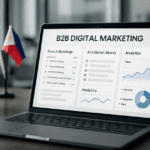
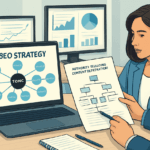
The B2B digital marketing landscape in Singapore and the Philippines is experiencing a profound transformation. As businesses in these dynamic Southeast Asian economies increasingly embrace digital channels, the imperative to connect with decision-makers and technical professionals effectively has never been greater. Traditional marketing approaches are giving way to sophisticated strategies powered by artificial intelligence, deep personalization, and rigorous data analytics. For B2B agencies like Sotavento Medios, understanding and implementing these advanced techniques is not just an advantage; it is a necessity for establishing thought leadership and driving tangible results for clients.
Singapore, a global financial hub and technology leader, boasts a highly mature digital infrastructure and a discerning B2B audience accustomed to cutting-edge solutions. The Philippines, with its rapidly expanding digital economy and a burgeoning tech-savvy workforce, presents immense growth opportunities, albeit with its own unique market nuances. Navigating these distinct yet interconnected markets requires a strategic blend of global best practices and localized execution. This article explores the future of B2B digital marketing in this vibrant region, focusing on how AI, hyper-personalization, and data-driven insights are reshaping engagement, optimizing campaigns, and ultimately, delivering superior return on investment.
The AI Revolution in B2B Marketing: Predictive Power and Efficiency
Artificial intelligence is no longer a futuristic concept; it is an integral component of modern B2B digital marketing. In Singapore and the Philippines, businesses are leveraging AI to automate complex tasks, derive deeper insights from vast datasets, and personalize interactions at an unprecedented scale. The application of AI extends across the entire marketing funnel, from initial lead generation to post-sale engagement.
Predictive Analytics for Smarter Targeting
One of AI’s most impactful contributions is its ability to power predictive analytics. By analyzing historical data, including website visits, content consumption, email engagement, and CRM interactions, AI algorithms can identify patterns and predict future buyer behavior. For B2B marketers, this means moving beyond demographic targeting to anticipate which accounts are most likely to convert, which leads are sales-ready, and which customers are at risk of churn. For example, a software company in Singapore might use AI to predict which small and medium enterprises (SMEs) in the manufacturing sector are most likely to adopt a new ERP system based on their recent online activity and industry trends. This allows for highly focused resource allocation and more effective campaign design.
Content Personalization at Scale
Delivering personalized content is crucial in B2B, but doing so manually for thousands of potential clients is impractical. AI addresses this challenge by enabling content personalization at scale. AI-powered platforms can dynamically adapt website content, email sequences, and ad creatives based on an individual’s browsing history, job role, industry, and stage in the buyer journey. Consider a B2B cybersecurity firm in the Philippines. AI can ensure that a CISO receives whitepapers on threat intelligence, while an IT manager sees case studies on endpoint protection, all within the same campaign framework. This level of relevance significantly boosts engagement rates and moves prospects further down the funnel.
Automated Lead Nurturing and Scoring
AI streamlines lead nurturing by automating the delivery of relevant content and interactions based on predefined triggers and lead behavior. Beyond simple automation, AI enhances lead scoring by assigning dynamic scores based on a multitude of real-time signals, not just static criteria. This ensures that sales teams in both Singapore and the Philippines receive only the highest-quality, most engaged leads. For instance, an AI system might increase a lead’s score if they download a technical whitepaper, attend a webinar, and visit the pricing page within a short period, signaling strong intent. This intelligent automation frees up marketing teams to focus on strategic initiatives rather than manual lead qualification.
Hyper-Personalization Beyond Demographics: Engaging the Individual Buyer
While personalization has been a marketing buzzword for years, its evolution in the B2B space, particularly in Singapore and the Philippines, is reaching new heights. Hyper-personalization moves beyond basic segmentation to deliver truly individualized experiences, recognizing that even within a target account, different stakeholders have unique needs and pain points.
Account-Based Marketing (ABM) Reinvented with Personalization
Account-Based Marketing (ABM) has proven highly effective for B2B organizations targeting high-value accounts. When combined with hyper-personalization, ABM becomes even more potent. Instead of treating an entire company as a single entity, modern ABM strategies leverage data to understand the individual decision-makers and influencers within that account. For a major conglomerate in Singapore, an ABM campaign might involve tailoring specific messages to the Head of IT regarding infrastructure solutions, to the CFO regarding ROI and cost savings, and to the Head of Operations regarding efficiency gains. This multi-threaded approach ensures that every key stakeholder receives content directly relevant to their role and concerns, significantly increasing the chances of securing a deal.
Dynamic Content Delivery and User Experience
The future of B2B digital marketing demands dynamic content that adapts in real-time to user interactions. This goes beyond simple name insertion in emails. It involves websites that reconfigure their layout and featured content based on a visitor’s industry, company size, or previous interactions. Imagine a B2B SaaS provider in Manila whose website dynamically showcases different product features and case studies depending on whether the visitor is from the financial services sector or the logistics industry. This creates a highly relevant and engaging user experience, guiding prospects more efficiently towards conversion points. Tools like Customer Data Platforms (CDPs) are instrumental in aggregating and activating this real-time data for dynamic content delivery.
The Pivotal Role of Customer Data Platforms (CDPs)
Customer Data Platforms (CDPs) are foundational to achieving true hyper-personalization. Unlike traditional CRMs or DMPs, CDPs create a persistent, unified customer profile by collecting and consolidating data from all online and offline sources. This single customer view allows B2B marketers to understand the complete journey of each individual buyer, regardless of the touchpoint. For businesses operating across Singapore and the Philippines, a CDP can unify data from regional websites, local events, sales interactions, and third-party data providers, creating a holistic view that informs every marketing decision. This comprehensive data foundation is essential for delivering consistent, personalized experiences across all channels.
Data-Driven Strategies for Measurable ROI: Optimizing Every Touchpoint
In the competitive B2B landscape of Singapore and the Philippines, demonstrating clear return on investment (ROI) is paramount. Data-driven strategies provide the insights necessary to optimize campaigns, allocate budgets effectively, and prove marketing’s impact on revenue. This involves moving beyond vanity metrics to focus on actionable insights derived from robust analytics.
Building Unified Data Ecosystems
The first step towards truly data-driven marketing is establishing a unified data ecosystem. This means integrating various marketing technologies, sales platforms, and customer service tools to ensure data flows seamlessly across the organization. For a B2B company targeting both Singaporean and Filipino markets, this could involve integrating their CRM (e.g., Salesforce), marketing automation platform (e.g., HubSpot), web analytics (e.g., Google Analytics 4), and advertising platforms (e.g., LinkedIn Ads, Google Ads). A unified ecosystem provides a single source of truth, enabling comprehensive reporting and analysis that reveals the true performance of marketing efforts. Without this integration, data remains siloed, leading to incomplete insights and suboptimal decision-making.
Advanced Attribution Modeling for True Impact
Traditional last-click attribution models often fail to capture the complex, multi-touch B2B buyer journey. Advanced attribution models, such as multi-touch or algorithmic attribution, provide a more accurate picture of which marketing touchpoints contribute to conversions. For example, a B2B software vendor in Singapore might discover that while the final conversion occurs via a direct website visit, the initial awareness was generated by a LinkedIn ad, followed by engagement with an email campaign and a webinar. Understanding these pathways allows marketers to optimize their budget allocation across channels, investing more in the touchpoints that genuinely influence the buyer journey. This level of insight is critical for maximizing ROI in sophisticated B2B sales cycles.
Real-Time Performance Optimization
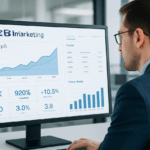
The ability to monitor campaign performance in real-time and make immediate adjustments is a hallmark of data-driven marketing. Dashboards populated with key performance indicators (KPIs) allow marketing teams to identify underperforming campaigns or opportunities for optimization instantly. For instance, if an ad campaign targeting IT decision-makers in the Philippines shows a high click-through rate but a low conversion rate on the landing page, real-time data allows marketers to quickly test different landing page variations or adjust ad copy. This agile approach, informed by continuous data feedback, ensures that marketing spend is always working as efficiently as possible, leading to better outcomes and reduced wasted resources.
Navigating the Ethical and Regulatory Landscape: Trust and Compliance
As B2B digital marketing becomes more sophisticated and data-intensive, navigating the ethical and regulatory landscape is crucial, especially in regions with evolving data privacy laws like Singapore and the Philippines. Building and maintaining trust with target audiences is paramount for long-term success.
Data Privacy: Adhering to PDPA and DPA
Both Singapore and the Philippines have robust data privacy regulations that B2B marketers must strictly adhere to. Singapore’s Personal Data Protection Act (PDPA) and the Philippines’ Data Privacy Act (DPA) govern the collection, use, disclosure, and care of personal data. For B2B companies, this means ensuring transparent data collection practices, obtaining explicit consent where required, providing clear opt-out mechanisms, and implementing robust data security measures. For example, when collecting lead information at a virtual event for the Singaporean market, marketers must clearly state how the data will be used and provide an easy way for individuals to manage their preferences. Non-compliance can lead to significant penalties and severe reputational damage, undermining all marketing efforts.
Building Trust and Transparency in B2B Relationships
Beyond legal compliance, building trust through transparency is a cornerstone of ethical B2B marketing. This involves being upfront about data practices, providing genuine value through content, and avoiding deceptive tactics. In a B2B context, trust is often built over long sales cycles and sustained relationships. Marketers should focus on creating valuable, educational content that addresses client pain points rather than solely pushing products. Demonstrating expertise and authoritativeness through factual, well-researched content, as advocated by the EEAT framework, reinforces trustworthiness. For instance, a whitepaper detailing industry best practices for cloud security, backed by credible sources and practical examples relevant to Southeast Asian businesses, builds far more trust than a purely promotional brochure.
Conclusion: Charting a Data-Driven, Personalized Future
The future of B2B digital marketing in Singapore and the Philippines is dynamic, exciting, and undeniably complex. The convergence of artificial intelligence, hyper-personalization, and data-driven strategies is creating unprecedented opportunities for businesses to connect with their target audiences with precision and impact. For B2B agencies like Sotavento Medios, the mandate is clear: embrace these technological advancements, cultivate deep expertise, and champion ethical practices to deliver exceptional value.
Success in this evolving landscape hinges on several key takeaways:
- Invest in AI Capabilities: Leverage AI for predictive analytics, content personalization, and automated lead management to enhance efficiency and effectiveness.
- Prioritize Hyper-Personalization: Move beyond basic segmentation to deliver individualized experiences across all touchpoints, especially within ABM frameworks.
- Build Unified Data Ecosystems: Integrate platforms to gain a holistic view of the customer journey and enable advanced attribution modeling.
- Champion Data Privacy and Trust: Adhere strictly to regulations like PDPA and DPA, and foster transparency to build enduring relationships.
- Focus on Measurable ROI: Utilize data to optimize campaigns in real-time and clearly demonstrate the financial impact of marketing efforts.
By strategically implementing these advanced approaches, B2B organizations in Singapore and the Philippines can not only navigate the complexities of the digital age but also establish themselves as leaders, driving sustainable growth and fostering meaningful connections with their most valuable clients. The future is here, and it is intelligent, personal, and data-powered.

I am Tricia Huang Mei, an Advertising Partner in Sotavento Medios with over two decades of experience in the Singapore advertising and business sectors. My career is defined by a commitment to driving high-impact marketing campaigns and fostering sustainable growth for the diverse business portfolios I manage.